
Introduction
Experimental aviation and homebuilt aircraft have become increasingly popular among aviation enthusiasts, recreational pilots, and DIY builders who want a more personalized flying experience. Unlike factory-manufactured aircraft, kit planes provide builders with the opportunity to assemble and customize their own aircraft using pre-designed kits and aviation components.
For many aviation hobbyists, building a kit plane is more than simply constructing an aircraft. It is a rewarding educational experience that combines engineering, craftsmanship, aviation knowledge, and hands-on problem-solving. Modern kit aircraft offer impressive performance, advanced avionics options, customizable interiors, and relatively lower ownership costs compared to certified aircraft.
However, beginner builders often feel overwhelmed by the variety of kit plane parts, aircraft systems, materials, tools, FAA regulations, and assembly requirements involved in the process. Understanding how aircraft components work together is essential for building a safe, reliable, and efficient homebuilt aircraft.
This guide explains everything beginner builders should know about kit plane parts, including aircraft structures, avionics systems, engines, landing gear, construction methods, FAA experimental regulations, safety considerations, tools, and how to successfully begin a kit aircraft project.
Real-world use cases include:
- Recreational aircraft building
- DIY aviation projects
- Experimental aircraft customization
- Sport aviation enthusiasts
- Aviation students learning aircraft systems
- Aircraft restoration projects
- Affordable personal aircraft ownership
Evaluation Criteria for Buyers
Before purchasing kit plane parts, builders should evaluate:
- FAA compatibility considerations
- Material quality and durability
- Aircraft compatibility
- Supplier reputation
- Installation complexity
- Maintenance requirements
- Weight efficiency
- Performance expectations
- Technical support availability
- Long-term parts availability
Best for: Beginner aircraft builders, aviation hobbyists, recreational pilots, experimental aviation enthusiasts, and DIY aircraft constructors.
Not ideal for: Commercial airline operations or large-scale certified aircraft manufacturing discussions.
What Are Kit Plane Parts?
Kit plane parts are aircraft components specifically designed for experimental or amateur-built aircraft projects. These parts are supplied individually or as part of complete aircraft kits that allow builders to assemble their own aircraft.
Kit plane components may include:
- Fuselage structures
- Wings
- Empennage systems
- Landing gear
- Engine mounts
- Propeller systems
- Avionics equipment
- Fuel systems
- Flight controls
- Electrical systems
Unlike factory-built aircraft, kit planes are assembled by individual builders under experimental aviation regulations.
Complete Kits vs Partial Kits
Complete Kits
A complete kit generally includes most structural aircraft components required for assembly.
Partial Kits
Partial kits may only include:
- Airframe components
- Wing structures
- Fuselage assemblies
- Specific upgrade systems
Why Kit Planes Are Popular Among Aviation Enthusiasts
Lower Ownership Costs
Kit aircraft can often reduce overall ownership costs compared to certified factory-built aircraft.
Aircraft Customization
Builders can customize:
- Cockpit layouts
- Avionics systems
- Paint schemes
- Interior designs
- Engine options
Educational Value
Building a kit aircraft teaches:
- Aircraft systems knowledge
- Mechanical skills
- Aviation safety principles
- Maintenance understanding
Performance Flexibility
Builders can configure aircraft based on:
- Speed priorities
- Fuel efficiency
- Aerobatic performance
- Cross-country travel
Community Support
Experimental aviation communities provide valuable support and shared learning opportunities.
Recreational Flying Freedom
Kit aircraft provide enjoyable flying experiences for recreational pilots.
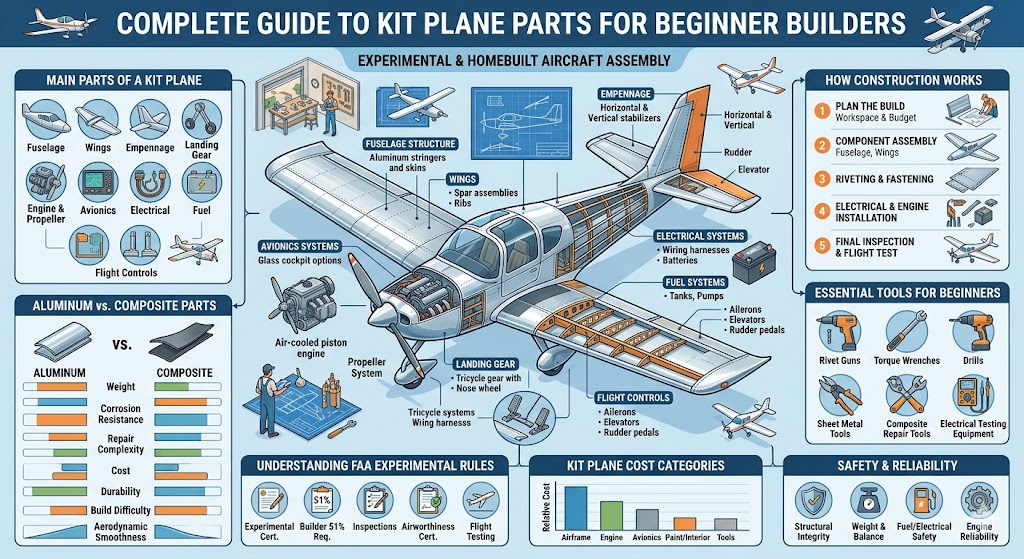
Main Parts of a Kit Plane
Fuselage
The fuselage forms the central body structure of the aircraft.
Main Functions
- Supports cockpit structure
- Connects major aircraft systems
- Houses passengers and cargo
Aluminum vs Composite Fuselage Materials
Aluminum Structures
Benefits include:
- Proven durability
- Easier repairs
- Strong structural integrity
Composite Structures
Benefits include:
- Reduced weight
- Smooth aerodynamic surfaces
- Corrosion resistance
Wings
Wings generate lift and support stable flight operations.
Wing Kits Include
- Spar assemblies
- Wing skins
- Fuel tank integration
- Control surface mounts
Aerodynamic Design
Wing design directly affects:
- Aircraft speed
- Stall behavior
- Fuel efficiency
- Stability
Empennage
The empennage includes the aircraft’s tail structures.
Main Components
- Vertical stabilizer
- Horizontal stabilizer
- Rudder
- Elevator
Purpose
These systems maintain aircraft stability and directional control.
Landing Gear
Landing gear supports aircraft operations during takeoff, landing, and ground movement.
Tricycle Gear
Features:
- Nose wheel configuration
- Easier ground handling
- Beginner-friendly operation
Tailwheel Configuration
Features:
- Traditional aircraft design
- Improved rough-field capability
- Greater pilot skill requirements
Shock Absorption Systems
Landing gear systems absorb landing forces and improve operational safety.
Engine Systems
Aircraft engines provide propulsion and operational performance.
Engine Types
Air-Cooled Engines
Benefits include:
- Simpler maintenance
- Reduced system complexity
Liquid-Cooled Engines
Benefits include:
- Improved temperature management
- Enhanced efficiency
Power Considerations
Builders must select engines appropriate for:
- Aircraft weight
- Performance goals
- Flight mission profiles
Engine Mounting Systems
Proper engine mounting reduces vibration and improves structural integrity.
Propeller Systems
Propellers convert engine power into thrust.
Fixed-Pitch Propellers
Benefits:
- Simpler design
- Lower cost
- Easier maintenance
Constant-Speed Propellers
Benefits:
- Better performance
- Improved fuel efficiency
- Enhanced climb capability
Propeller Materials
Common materials include:
- Aluminum
- Composite materials
- Wood laminates
Avionics Systems
Modern avionics improve navigation, communication, and flight safety.
Common Avionics Components
- GPS systems
- Communication radios
- Navigation displays
- Transponders
- Engine monitoring systems
Glass Cockpit Options
Digital cockpit displays improve pilot awareness and operational efficiency.
Electrical Systems
Aircraft electrical systems power avionics, lighting, and onboard systems.
Main Components
- Wiring harnesses
- Batteries
- Alternators
- Circuit protection systems
Fuel Systems
Fuel systems store and deliver fuel safely to the engine.
Key Components
- Fuel tanks
- Fuel pumps
- Fuel lines
- Fuel selectors
Flight Control Systems
Flight controls allow pilots to maneuver the aircraft.
Main Controls
- Ailerons
- Elevators
- Rudder systems
Aluminum vs Composite Kit Plane Parts
| Feature | Aluminum | Composite |
|---|---|---|
| Weight | Heavier | Lighter |
| Corrosion Resistance | Moderate | Excellent |
| Repair Complexity | Easier | More Specialized |
| Cost | Moderate | Higher |
| Durability | Excellent | Excellent |
| Build Difficulty | Moderate | Advanced |
| Aerodynamic Smoothness | Good | Excellent |
How Kit Plane Construction Works
Planning the Build
Successful aircraft construction begins with detailed planning.
Important Considerations
- Budget
- Workspace
- Tools
- Build timeline
- Technical skill level
Reading Technical Manuals
Builders must carefully study assembly documentation before beginning construction.
Workspace Preparation
A proper workspace should include:
- Adequate lighting
- Ventilation
- Storage organization
- Safety equipment
Component Assembly
Aircraft structures are assembled according to engineering specifications.
Riveting and Fastening
Riveting secures aircraft structural components together.
Wiring and Electrical Installation
Electrical systems require careful planning and organization.
Engine Installation
Proper engine alignment and mounting are critical for safety and performance.
Final Inspection
Before flight testing, aircraft undergo detailed inspections to verify airworthiness.
Essential Tools for Kit Plane Builders
Rivet Guns
Used for fastening aircraft aluminum structures.
Torque Wrenches
Ensure hardware is tightened correctly.
Drill Systems
Required for structural assembly operations.
Sheet Metal Tools
Used for cutting, shaping, and forming aluminum structures.
Composite Repair Tools
Important for composite aircraft construction and repairs.
Electrical Testing Equipment
Supports safe electrical system installation and troubleshooting.
Understanding FAA Experimental Aircraft Rules
Experimental aircraft operate under specific FAA regulations.
Experimental Aircraft Certification
Aircraft must meet amateur-built requirements.
Builder Requirements
Builders must complete a significant portion of the construction process themselves.
Inspection Requirements
Aircraft require inspections before receiving airworthiness approval.
Airworthiness Certificates
Approved aircraft receive experimental airworthiness certification.
Flight Testing Requirements
Newly completed aircraft undergo operational flight testing before unrestricted operation.
Maintenance Responsibilities
Builders are responsible for ongoing aircraft maintenance and inspections.
Common Mistakes Beginner Kit Plane Builders Make
- Poor workspace planning
- Ignoring technical documentation
- Improper weight and balance calculations
- Using incorrect hardware
- Rushing structural assembly
- Poor wiring practices
- Skipping inspections
- Underestimating project costs
- Inadequate tool preparation
- Ignoring safety precautions
How Much Do Kit Plane Parts Cost?
Kit aircraft pricing varies significantly depending on aircraft type and customization level.
Aircraft Type
Larger and more advanced aircraft generally cost more.
Material Selection
Composite materials often increase total project costs.
Avionics Complexity
Advanced avionics systems significantly impact pricing.
Engine Selection
Engine systems represent one of the largest project expenses.
Imported Components
Imported parts may involve shipping and customs costs.
Paint and Interior Systems
Custom finishes increase total investment requirements.
Tool Requirements
Specialized tools add additional startup expenses.
Kit Plane Cost Comparison Table
| Component Category | Cost Impact |
|---|---|
| Airframe kit | Major expense |
| Engine systems | Very high |
| Avionics | Variable |
| Paint and interior | Moderate |
| Tools | Initial investment |
| Electrical systems | Moderate |
Safety Considerations for Homebuilt Aircraft
Structural Integrity
Aircraft structures must meet engineering and operational safety standards.
Weight and Balance
Improper balance can significantly affect aircraft handling and stability.
Electrical Safety
Faulty electrical systems may create operational hazards.
Fuel System Reliability
Fuel leaks and contamination risks must be minimized.
Engine Reliability
Regular inspections and proper installation improve operational safety.
Flight Testing Procedures
Careful testing ensures safe operational performance.
How to Choose the Right Kit Plane Parts Supplier
Supplier Reputation
Experienced suppliers generally provide more reliable products.
Technical Support
Good support services help beginner builders solve technical problems.
Parts Availability
Long-term availability simplifies future maintenance.
Warranty Policies
Warranty coverage provides additional confidence.
Aircraft Compatibility
Always verify compatibility before purchasing components.
Documentation Quality
Clear manuals improve build efficiency and reduce mistakes.
Community Reviews
Builder communities often provide valuable supplier feedback.
Questions Builders Should Ask Before Buying Parts
- Are these parts FAA compatible?
- Which aircraft models support these components?
- What tools are required?
- Is technical support available?
- Are assembly manuals included?
- What maintenance requirements exist?
- Are replacement parts easily available?
- What materials are used?
- How difficult is installation?
- Are upgrades supported?
The Role of Technology in Modern Kit Plane Building
CNC-Machined Aircraft Parts
Precision manufacturing improves assembly accuracy.
3D Modeling Software
Digital planning improves build visualization.
Digital Flight Instrumentation
Modern avionics simplify aircraft operations.
CAD-Assisted Design
Computer-aided design improves engineering accuracy.
Composite Manufacturing Technologies
Advanced composites improve strength-to-weight performance.
Modern Avionics Integration
Builders increasingly install advanced digital flight systems.
Future Trends in Experimental Aviation
Electric Aircraft Systems
Electric propulsion technologies continue developing rapidly.
Lightweight Composite Materials
Modern materials improve efficiency and performance.
AI-Assisted Flight Systems
Artificial intelligence may support future flight operations.
Advanced Avionics Integration
Digital flight systems continue becoming more sophisticated.
Sustainable Experimental Aviation
Environmental efficiency is becoming increasingly important.
Frequently Asked Questions
1. How difficult is building a kit plane?
Difficulty varies depending on aircraft complexity, builder experience, and technical skills. Many beginners successfully complete projects with proper planning.
2. How long does a kit plane build take?
Build timelines vary widely depending on aircraft type, available time, and project complexity.
3. Are kit planes safe?
Properly built and maintained kit planes can operate safely when constructed according to engineering and regulatory standards.
4. What FAA approvals are required?
Experimental aircraft require airworthiness certification and inspections before operation.
5. What tools are necessary?
Builders commonly require riveting tools, drills, torque wrenches, sheet metal tools, and electrical testing equipment.
6. What is the average build cost?
Costs vary significantly depending on aircraft size, avionics complexity, engine choice, and customization level.
7. Are composite aircraft better than aluminum?
Each material offers different advantages regarding weight, durability, maintenance, and repair complexity.
8. Can beginners build kit planes successfully?
Yes. Many successful builders begin with limited experience and learn progressively during construction.
9. What engines are commonly used?
Common engine options include air-cooled piston engines and modern lightweight aviation engines.
10. How are homebuilt aircraft maintained?
Builders and owners are responsible for ongoing inspections, maintenance, and operational safety.
Conclusion
Kit plane building continues growing in popularity among aviation enthusiasts who value customization, hands-on learning, recreational flying, and affordable aircraft ownership opportunities. Understanding kit plane parts, aircraft systems, construction methods, safety principles, FAA regulations, and proper planning is essential for building a reliable and safe experimental aircraft. From fuselage structures and wings to avionics systems and engine installations, every component plays a critical role in overall aircraft performance and operational safety. For beginner builders, patience, technical preparation, quality tools, and proper supplier selection are key factors for successful aircraft construction. As modern aviation technology continues advancing through lightweight composites, digital avionics, and innovative manufacturing methods, the future of experimental aviation and homebuilt aircraft building will continue becoming more accessible, efficient, and exciting for aviation hobbyists around the world.

