
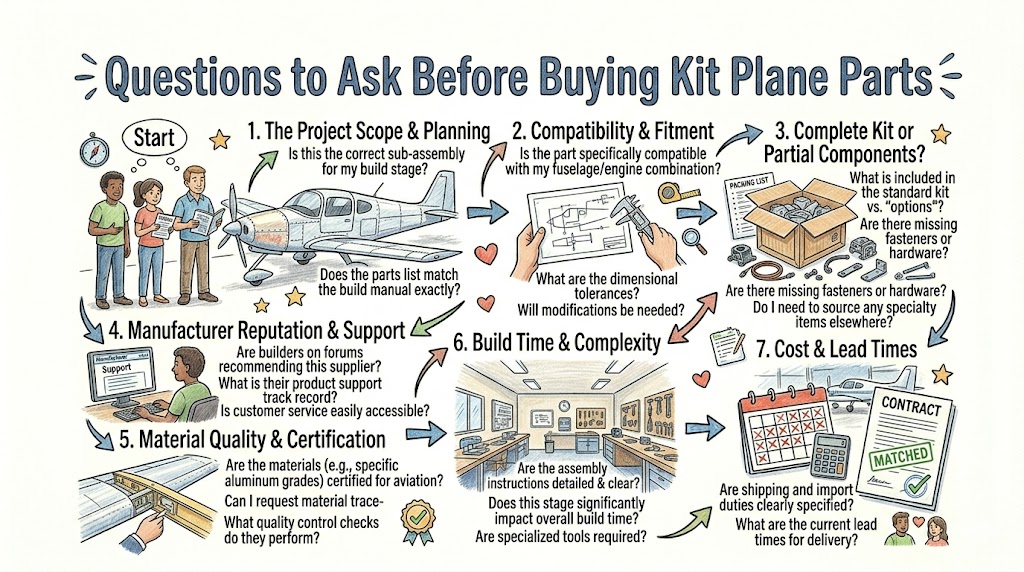
Introduction
Buying the right kit plane parts is one of the most important steps in building, maintaining, or upgrading a kit aircraft. Every part, whether large or small, can affect safety, performance, reliability, and the overall quality of the aircraft build. A simple bracket, fastener, control cable, landing gear component, or avionics-related part may look minor, but if it is not compatible or properly documented, it can create serious issues later.
Kit plane builders often work with many suppliers, part types, materials, and specifications. This makes careful buying decisions essential. Before purchasing any aircraft part, builders should ask the right questions about compatibility, quality, documentation, supplier reliability, installation needs, and long-term use. A well-informed decision can help avoid costly mistakes, delays, rework, and safety risks. Whether you are a first-time builder, an experimental aircraft owner, or a private pilot managing a kit aircraft project, asking the right questions helps create a safer and more reliable aircraft.
Real-world Use Cases
A first-time kit plane builder may need structural components and must confirm that each part matches the aircraft kit design. Ordering the wrong part could delay the build and create fitting problems during assembly.
A builder replacing worn landing gear parts must check strength, material quality, and compatibility before installation. A hobbyist buying avionics-related components should confirm wiring compatibility, documentation, and installation requirements. A private pilot reviewing parts before maintenance may need proper traceability and records to keep the aircraft project organized.
Maintenance-focused buyers often compare low-cost parts with higher-quality options. In these cases, the cheapest part is not always the best choice, especially when safety and reliability are involved.
Evaluation Criteria for Buying Kit Plane Parts
Before buying kit plane parts, evaluate:
- Aircraft kit or model compatibility
- Part condition and history
- Documentation and traceability
- Material quality
- Supplier reliability
- Inspection or testing status
- Installation requirements
- Return or replacement policy
- Safety importance of the part
- Long-term durability
- Shipping and storage needs
- Total value, not just price
These criteria help builders make better buying decisions and reduce unnecessary risks during the aircraft build process.
1- Is This Part Compatible with My Aircraft Kit or Model?
Compatibility should be the first question before buying any kit aircraft part. Even if a part looks similar, small differences in size, shape, mounting points, material, or design can affect fit and performance.
For example, a first-time builder ordering a control system component must confirm that it matches the exact kit model and build configuration. A mismatched part may require rework, delay the project, or create safety concerns.
2- Is the Part New, Used, Refurbished, or Surplus?
The condition of the part matters. New parts may offer better confidence, while used, refurbished, or surplus parts require closer inspection and documentation review.
For example, a used landing gear component may appear affordable, but if its previous usage, stress history, or inspection status is unclear, it may not be the best option for a safety-sensitive area.
3- Does the Part Meet the Required Specifications?
Every part should meet the specifications required for its intended use. This may include size, material grade, strength, load rating, electrical rating, or system compatibility.
For example, a bracket used in a structural area must be made from the correct material and designed for the required load. A part that does not meet specifications can reduce build quality and affect aircraft reliability.
4- Is There Proper Documentation or Traceability?
Documentation helps prove what the part is, where it came from, and whether it is suitable for use. Good records also help builders maintain an organized project history.
For example, a private pilot buying a replacement aircraft part should ask for invoices, part numbers, manufacturer details, inspection notes, or other available records. Poor documentation can create uncertainty during installation or future review.
5- What Material Is the Part Made From?
Material quality affects strength, durability, corrosion resistance, weight, and performance. Aircraft parts are not interchangeable simply because they look similar.
For example, two fasteners may look alike, but one may be made from a material suitable for aircraft use while the other may not be appropriate for aviation loads or environmental exposure.
6- Has the Part Been Inspected or Tested?
Inspection and testing provide confidence that a part is suitable for use. This is especially important for used, refurbished, surplus, or safety-critical parts.
For example, a builder buying a used control surface component should ask whether it has been inspected for cracks, corrosion, wear, or deformation. Visual appearance alone is not enough.
7- Is the Supplier Reliable and Experienced?
The supplier matters as much as the part itself. A reliable aviation parts supplier should understand aircraft parts, provide clear information, answer questions honestly, and support buyers with accurate details.
For example, a first-time builder may need guidance on part compatibility, documentation, and installation considerations. An experienced supplier can help reduce confusion and avoid mismatched purchases.
8- What Is the Return or Replacement Policy?
Even careful buyers may receive the wrong part or discover that a part does not fit their build. A clear return or replacement policy protects the buyer from unnecessary loss.
For example, if a builder orders a component that does not match the aircraft kit configuration, a fair return policy can help correct the mistake without losing the full purchase cost.
9- Are Installation Instructions Included?
Some kit plane parts are simple to install, while others require specific alignment, torque values, fitting procedures, or system checks. Installation instructions help ensure the part is installed correctly.
For example, an avionics-related component may require wiring guidance, mounting instructions, or compatibility notes. Without instructions, installation errors may become more likely.
10- Does the Part Require Special Tools or Expertise?
Certain aircraft parts require special tools, measuring equipment, or experienced installation support. Buyers should know this before purchasing.
For example, a landing gear part, fuel system component, or control system assembly may require careful fitting and inspection. If the builder does not have the right tools or knowledge, professional help may be needed.
11- Is the Part Suitable for Safety-Critical Use?
Not all parts carry the same level of risk. Safety-critical parts affect flight controls, structure, landing gear, fuel systems, brakes, engine operation, or electrical reliability.
For example, choosing a low-quality part for a non-critical cosmetic area may be less risky than using an uncertain part in a control system. Safety-critical parts should be selected with extra care.
12- What Is the Expected Service Life?
Some parts wear out over time, while others may last longer if installed and maintained properly. Understanding expected service life helps with maintenance planning and budgeting.
For example, rubber components, hoses, seals, tires, and moving parts may need replacement sooner than structural parts. Knowing this helps builders plan future aircraft maintenance parts needs.
13- Are There Shipping, Storage, or Handling Concerns?
Aircraft parts can be damaged by poor packaging, moisture, impact, corrosion, or improper storage. Buyers should ask how the part will be shipped and how it should be stored before installation.
For example, sensitive avionics-related components should be packed carefully and kept protected from moisture and static damage. Metal parts may require corrosion protection during long-term storage.
14- Is the Price Realistic Compared to Quality and Risk?
Price is important, but it should not be the only deciding factor. Very low-cost parts may be tempting, but poor quality, missing documentation, or wrong compatibility can become expensive later.
For example, saving money on a part that later causes rework, replacement, or safety concerns may cost more than buying the correct part from a trusted supplier at the beginning.
Benefits of Asking the Right Questions
Asking the right questions before buying kit plane parts helps builders:
- Avoid wrong part purchases
- Improve aircraft build quality
- Reduce safety risks
- Save money over time
- Protect aircraft reliability
- Make installation smoother
- Maintain better project records
- Reduce delays and rework
- Build confidence in the final aircraft
Careful planning creates a stronger and more organized build process.
Informed vs Uninformed Kit Plane Parts Buying
| Factor | Informed Buying | Uninformed Buying |
|---|---|---|
| Safety Confidence | Parts are checked for suitability | Safety may be assumed |
| Compatibility | Verified before purchase | Risk of wrong fit |
| Build Quality | Better consistency and reliability | Higher chance of rework |
| Documentation | Records are organized | Missing or unclear history |
| Long-Term Reliability | Better planning and part selection | More unexpected issues |
| Cost Control | Fewer wasted purchases | Higher risk of repeat spending |
| Installation Efficiency | Instructions and tools are considered | Delays are more likely |
Practical Tips Before Buying Kit Plane Parts
Verify Compatibility First
Always confirm the part number, aircraft kit model, build configuration, and installation location before buying. Do not rely only on appearance or general descriptions.
Review Documentation Carefully
Keep invoices, part labels, inspection notes, manuals, and supplier information organized. Good records help with future maintenance, resale, and troubleshooting.
Avoid Low-Quality or Mismatched Parts
A cheap part that does not fit properly or lacks documentation can create expensive problems. Focus on value, quality, and suitability.
Compare Suppliers
Look for suppliers with aviation knowledge, clear communication, fair policies, and experience with kit aircraft parts. A reliable supplier should help you make informed decisions.
Plan Your Parts Budget
Build a realistic budget that includes parts, shipping, tools, replacement items, inspection support, and possible rework. Budgeting only for purchase price can create surprises later.
Store Parts Safely Before Installation
Keep parts clean, dry, labeled, and protected. Organize them by system or build stage so they are easy to find when needed.
Ask Before Installing Uncertain Parts
If a part’s condition, compatibility, or installation method is unclear, ask an experienced builder, technician, or qualified aviation professional before installing it.
Why Cheaper Parts Can Become Expensive Later
Low-cost kit plane parts may seem like a smart choice at first, but they can become costly if they create fit issues, require replacement, delay the build, or raise safety concerns.
A part with poor documentation may also create problems during future maintenance or sale. Paying for the right part once is often better than paying twice because of a poor first decision.
Common Buying Mistakes to Avoid
- Buying based only on price
- Ignoring documentation
- Assuming similar-looking parts are interchangeable
- Not checking material quality
- Forgetting about shipping and storage
- Overlooking return policies
- Using uncertain parts in safety-critical areas
- Failing to confirm installation requirements
- Not planning for future maintenance needs
- Ordering parts without checking the build manual
Avoiding these mistakes can save time, money, and frustration during the build.
FAQs
1- How do I know if a kit plane part is compatible?
Check the aircraft kit manual, part number, dimensions, supplier details, and intended installation location. If anything is unclear, confirm with the kit manufacturer, supplier, or an experienced aviation professional before buying.
2- Should I buy new or used kit plane parts?
New parts often provide more confidence, while used parts may be acceptable in some cases if properly inspected and documented. Safety-critical parts should be evaluated with extra care before purchase or installation.
3- Why is documentation important when buying aircraft parts?
Documentation helps identify the part, its source, condition, and suitability. Good records also support future maintenance, troubleshooting, project organization, and aircraft value.
4- How do I choose a reliable aviation parts supplier?
Choose suppliers who provide clear part descriptions, documentation, return policies, and knowledgeable support. A reliable supplier should answer compatibility and quality questions honestly.
5- What are safety-critical kit plane parts?
Safety-critical parts include components related to flight controls, structure, landing gear, brakes, fuel systems, engine operation, and electrical reliability. These parts should be selected and installed with extra caution.
6- Why does material quality matter?
Material quality affects strength, weight, durability, corrosion resistance, and long-term reliability. Using the wrong material can affect performance and safety, even if the part appears to fit.
7- Should I check the return policy before buying?
Yes. A clear return or replacement policy protects you if the part is incorrect, damaged, incomplete, or unsuitable for your build. Always understand the policy before placing an order.
8- How should kit plane parts be stored before installation?
Parts should be stored in a clean, dry, labeled, and protected area. Sensitive parts should be kept safe from moisture, impact, corrosion, dust, and improper handling.
9- How should I plan my kit plane parts budget?
Plan for parts, shipping, tools, inspection support, replacement items, and possible delays. A realistic budget helps prevent the project from stopping midway due to unexpected costs.
10- What is the most common mistake buyers make?
One common mistake is buying based only on low price without checking compatibility, documentation, material quality, and supplier reliability. This can lead to rework, delays, and safety concerns.
Conclusion
Buying kit plane parts requires more than comparing prices and placing an order. Every part should be checked for compatibility, condition, documentation, material quality, supplier reliability, and installation requirements. Asking the right questions helps builders avoid wrong purchases, improve build quality, reduce safety risks, and protect long-term aircraft reliability. Whether you are building your first kit aircraft or maintaining an existing experimental aircraft, careful part selection is a major part of responsible aviation ownership. With proper planning, organized records, and a safety-first mindset, kit plane builders can make smarter buying decisions and create a stronger, more reliable aircraft project.

