
Introduction
Building a kit plane is an exciting and rewarding journey, but for first-time builders, it can also feel overwhelming. With dozens of components, safety-critical systems, and precise assembly requirements, having a complete parts checklist is essential. Proper preparation ensures your build is safe, efficient, and compliant with aviation standards, while minimizing delays and potential errors.
A thorough kit plane parts checklist helps first-time builders stay organized, track inventory, and plan the construction process step by step. From structural components to avionics, engines, control systems, and safety equipment, knowing what you need before you begin is the first step toward a successful homebuilt aircraft project.
Real-World Use Cases
A detailed parts checklist is invaluable in various scenarios:
- First-time builders assembling their first experimental aircraft
- Hobbyists learning about aircraft construction and FAA compliance
- Flight enthusiasts preparing for homebuilt aircraft certification
- Builders tracking inventory for long-term assembly projects
- Aviation clubs coordinating group builds
- Builders sourcing parts for custom modifications or upgrades
- Preparing for FAA inspections and documentation
- Maintaining a safe, organized workspace
- Tracking components to avoid missing or delayed parts
- Ensuring critical systems are installed correctly before the first flight
Evaluation Criteria for Builders
When assembling a kit plane, evaluate each part based on:
- Compatibility with your chosen kit and aircraft model
- FAA compliance and certification where required
- Material quality and durability
- Safety-critical components and redundancy
- Completeness of inventory before assembly
- Supplier reliability and parts certification
- Ease of installation and clear assembly instructions
- Availability of spare or replacement parts
- Weight and balance considerations
- Documentation and record-keeping for inspections
Best for
This guide is ideal for first-time kit plane builders, experimental aircraft enthusiasts, and homebuilt aviation hobbyists looking for a structured approach to aircraft assembly.
Not Ideal for
This guide is not intended for commercial airline operators or professional aviation maintenance, as it focuses specifically on homebuilt and experimental kit aircraft.
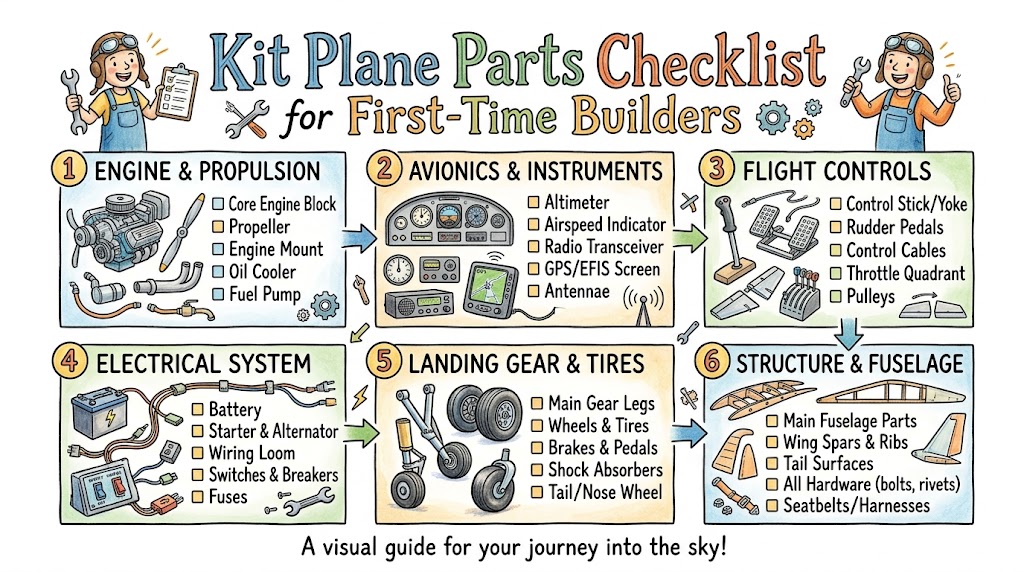
Essential Kit Plane Parts Checklist
1- Airframe Components
- Fuselage structure
- Wing spars and ribs
- Control surfaces (ailerons, elevators, rudder)
- Fasteners, rivets, and brackets
- Landing gear assemblies
2- Engine and Propulsion Components
- Engine mount and engine assembly
- Propeller and spinner
- Fuel system components (tanks, lines, valves)
- Exhaust system
- Cooling system components
3- Avionics and Electrical Systems
- Flight instruments and displays
- Wiring harnesses and connectors
- Battery and power distribution units
- Communication and navigation equipment
- Cabin and exterior lighting
4- Control Systems
- Control cables and pushrods
- Control sticks or yokes
- Rudder pedals
- Trim systems
5- Hydraulic and Brake Systems
- Brake lines and master cylinders
- Hydraulic actuators
- Landing gear actuators and shock absorbers
6- Interior and Cabin Components
- Seats and restraints
- Instrument panel and controls
- Cabin panels and upholstery
- Canopy or doors
7- Exterior Finishing
- Paint and protective coatings
- Wing tips and fairings
- Decals and markings
8- Safety Equipment
- Fire extinguisher
- Emergency locator transmitter
- First aid kit
- Seat belts and harnesses
Comparison Table: Critical vs Optional Parts
| Part Category | Critical for First Flight | Optional for Customization | Notes |
|---|---|---|---|
| Airframe | Yes | Minor fairings | Structural integrity is essential |
| Engine | Yes | Propeller spinner styles | Engine safety is critical |
| Avionics | Yes | Advanced GPS/navigation | Basic instruments required for safe flight |
| Control Systems | Yes | Upgraded trim systems | Redundancy is recommended |
| Brakes & Hydraulic | Yes | Cooling enhancements | Safety critical |
| Cabin | Yes | Upholstery, luxury finishes | Comfort vs necessity |
| Exterior | No | Paint, decals | Aesthetic customization |
| Safety | Yes | None | Required for FAA compliance |
Tips for First-Time Kit Plane Builders
- Verify all parts meet kit specifications and FAA standards
- Organize inventory before starting assembly
- Review assembly manuals thoroughly
- Label parts and fasteners for easy access
- Plan workspace layout for safety and efficiency
- Track weight and balance during assembly
- Double-check critical parts before installation
- Source replacement parts for common wear items
- Maintain installation and maintenance logs for FAA inspections
- Join builder communities for guidance and troubleshooting
Common Mistakes to Avoid
- Beginning assembly without a complete parts inventory
- Overlooking safety-critical components
- Using incompatible or low-quality parts
- Ignoring assembly instructions
- Failing to track part installation sequences
- Neglecting weight and balance calculations
- Delaying engine or avionics installation checks
- Using incorrect fasteners or rivets
- Overlooking spare parts availability
- Avoiding consultation with experienced builders
Frequently Asked Questions
- Why do first-time builders need a parts checklist?
A checklist ensures all essential components are accounted for, reducing errors and delays during assembly. - Which parts are most critical for safety?
Engine, control systems, landing gear, brakes, and airframe components are essential for safe flight. - Can parts from different suppliers be used?
Only if they are FAA-approved and compatible; using incorrect parts can compromise safety. - How should I organize parts for assembly?
Label all parts, separate by category, and maintain an organized workspace for efficiency. - Are avionics optional for first-time builders?
Basic flight instruments are mandatory, while advanced navigation or GPS systems can be added later. - What documentation should be maintained?
Keep installation logs, parts serial numbers, and maintenance records for inspections. - Is it necessary to buy spare parts upfront?
Yes. Having spares for critical components reduces delays during assembly. - Can interior or exterior finishes be customized?
Yes, once all critical systems are installed, cosmetic customizations can enhance comfort and aesthetics. - How can I ensure assembly accuracy?
Follow manufacturer instructions, double-check critical installations, and seek guidance from experienced builders. - What is the most common mistake first-time builders make?
Starting assembly without verifying inventory and quality of all essential components.
Conclusion
For first-time kit plane builders, a complete parts checklist is the foundation of a successful project. Ensuring all airframe, engine, avionics, control, and safety components are accounted for allows for safe and efficient assembly. By following best practices, avoiding common mistakes, and documenting each step, beginner builders can confidently work toward creating a safe, fully operational homebuilt aircraft.

