
Introduction
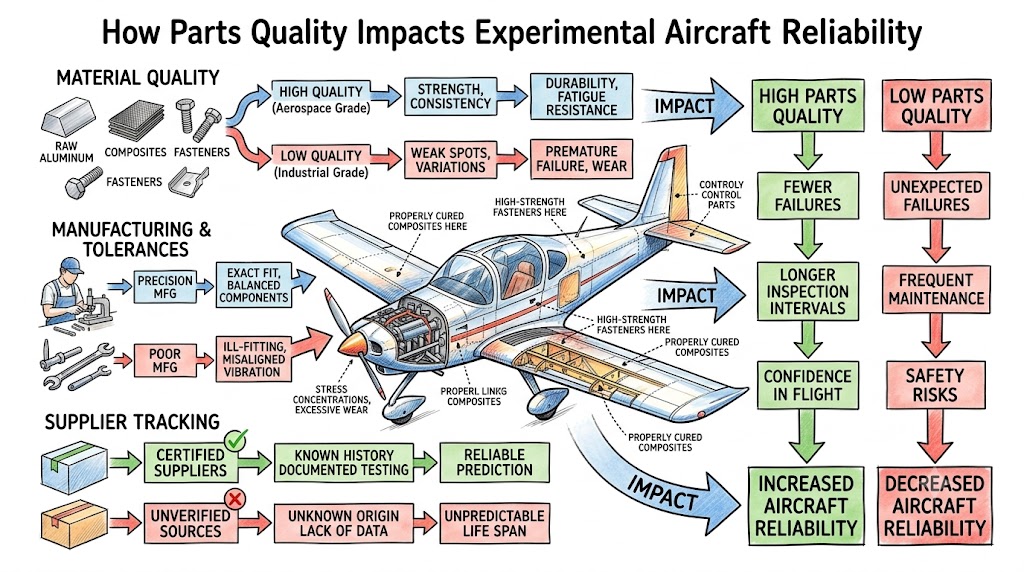
Experimental and homebuilt aircraft offer aviation enthusiasts an exciting opportunity to design, build, and fly their own aircraft. However, unlike factory-built certified aircraft, experimental aviation places a significant responsibility on the builder to select, install, and maintain every component correctly. Among all factors influencing safety and performance, parts quality is one of the most critical determinants of aircraft reliability.
Every bolt, cable, fitting, and system component contributes to how safely and efficiently the aircraft operates. A single low-quality or incompatible part can compromise structural integrity, reduce performance, or even lead to system failure. This is why understanding parts quality is essential for anyone involved in experimental aircraft construction.
This guide explains how parts quality affects aircraft reliability, what risks are involved with poor-quality components, and how builders can make safer and more informed decisions when sourcing and installing parts.
Understanding Experimental Aircraft Builds
Experimental aircraft are typically built from kits or custom plans, allowing builders to assemble the aircraft themselves. Unlike certified production aircraft, responsibility for assembly quality and parts selection largely rests with the builder.
Key characteristics include:
- Builder-controlled assembly process
- Flexible design modifications
- Wide range of component sourcing options
- Emphasis on personal responsibility and documentation
Because of this flexibility, the quality of selected parts plays a direct role in overall aircraft reliability.
Why Parts Quality Matters
Aircraft operate under high stress conditions, including vibration, pressure changes, temperature variations, and continuous aerodynamic loads. High-quality parts ensure the aircraft can withstand these demands safely.
Parts quality affects:
- Structural integrity
- Flight performance
- Maintenance frequency
- Safety margins
- Long-term durability
Even small components such as fasteners or connectors can have a significant impact on system reliability.
High-Quality vs Low-Quality Aircraft Parts
Not all aircraft components are manufactured to the same standards. Understanding the differences is essential for builders.
High-Quality Parts
- Manufactured with aviation-grade materials
- Tested under strict quality control processes
- Designed for load tolerance and fatigue resistance
- Often traceable with documentation
Low-Quality Parts
- May lack consistent material standards
- Limited or no testing certification
- Higher risk of defects or early failure
- Often cheaper but less reliable
Choosing between these options directly affects safety and operational confidence.
Critical Aircraft Components Affected by Parts Quality
Some systems are more sensitive to part quality than others.
Engine Components
Engine parts must withstand extreme heat and mechanical stress. Poor-quality components can lead to:
- Reduced engine efficiency
- Overheating issues
- Mechanical failure risks
Landing Gear
Landing gear absorbs major impact forces during landing.
Low-quality parts may cause:
- Structural deformation
- Shock absorption failure
- Unsafe landing conditions
Flight Control Systems
Control systems must respond accurately and smoothly.
Poor-quality components may result in:
- Control stiffness
- Delayed response
- Increased safety risks
Propeller System
Propellers require precise balance and durability.
Defective parts may cause:
- Excess vibration
- Reduced thrust efficiency
- Structural fatigue
Fuel and Electrical Systems
These systems depend heavily on reliability.
Poor components may lead to:
- Fuel leaks
- Electrical failures
- System instability
How Poor Parts Affect Aircraft Reliability
The use of low-quality or unverified components can significantly reduce aircraft reliability over time.
Common impacts include:
Increased Wear and Tear
Inferior materials degrade faster under stress.
Higher Failure Risk
Weak components are more likely to fail during operation.
Reduced Performance
Aircraft may experience reduced efficiency and stability.
Increased Maintenance Needs
Frequent repairs and replacements become necessary.
Safety Hazards
The most serious consequence is increased operational risk.
Role of Certification and Compliance
In aviation, documentation and compliance play a vital role in ensuring reliability.
Important factors include:
- Material traceability
- Manufacturer specifications
- Compliance with aviation standards where applicable
- Proper documentation for installed parts
Even in experimental aviation, following recognized quality standards improves safety and consistency.
Importance of Proper Sourcing
Where parts come from is just as important as the parts themselves.
Reliable sourcing includes:
- Trusted aviation suppliers
- Verified manufacturers
- Traceable inventory systems
- Avoidance of counterfeit components
Builders should always prioritize reputable sources over low-cost, unverified options.
Inspection and Quality Checks
Before installation, every part should be inspected carefully.
Key checks include:
- Visual inspection for defects
- Dimensional accuracy verification
- Material condition assessment
- Fit and compatibility testing
- Documentation review
These steps help prevent installation of faulty components.
Maintenance and Reliability Connection
Parts quality and maintenance are closely connected.
High-quality components:
- Require less frequent replacement
- Perform more consistently
- Reduce unexpected failures
Preventive maintenance ensures that even high-quality parts continue to operate safely throughout their lifecycle.
Common Mistakes Aircraft Builders Make
Many reliability issues stem from avoidable decisions.
Common mistakes include:
- Choosing parts based only on cost
- Ignoring supplier credibility
- Skipping inspection procedures
- Mixing incompatible components
- Using undocumented parts
Avoiding these mistakes improves both safety and aircraft longevity.
Best Practices for Aircraft Builders
To improve reliability, builders should follow structured practices:
- Use verified and reputable suppliers
- Follow manufacturer guidelines strictly
- Document every installed component
- Conduct thorough inspections before installation
- Replace questionable parts immediately
- Prioritize safety over cost savings
Consistency in these practices leads to more reliable aircraft performance.
Benefits of High-Quality Aircraft Parts
Using high-quality components provides long-term advantages:
Improved Safety
Stronger materials reduce failure risks.
Better Performance
Aircraft operate more efficiently and smoothly.
Lower Maintenance Costs
Fewer breakdowns reduce repair expenses.
Increased Reliability
Systems function consistently under stress.
Longer Aircraft Lifespan
Durable components extend operational life.
Greater Builder Confidence
Pilots trust their aircraft more when quality is assured.
Experimental Aircraft Parts Checklist
Before installing any component:
- Verify supplier reputation
- Check material certification
- Inspect for visible defects
- Confirm compatibility with aircraft design
- Review installation instructions
- Ensure proper documentation
- Record part details in maintenance log
This checklist helps maintain consistent build quality.
Frequently Asked Questions
1. Why does parts quality matter in experimental aircraft?
Parts quality determines structural strength, reliability, and safety of the aircraft under real flight conditions.
2. What happens if low-quality parts are used?
Low-quality parts may fail prematurely, reduce performance, and increase safety risks.
3. How can I verify aircraft part quality?
Check supplier reputation, material certification, documentation, and physical condition of the part.
4. Are certified parts required for experimental aircraft?
Not always, but using certified or aviation-grade parts improves safety and reliability significantly.
5. Which components are most critical?
Engine parts, landing gear, flight controls, and fuel systems are highly critical for safety.
6. How does parts quality affect safety?
Higher-quality parts reduce failure risk and ensure stable aircraft operation.
7. What is the risk of counterfeit parts?
Counterfeit parts may lack proper strength and can fail unexpectedly during flight.
8. How often should parts be inspected?
Inspection frequency depends on usage, but regular pre-flight and scheduled inspections are essential.
9. What documentation should parts have?
Parts should include material details, manufacturer information, and traceability records where possible.
10. How can builders ensure long-term reliability?
By using quality parts, following maintenance schedules, and performing regular inspections.
Conclusion
Parts quality is one of the most important factors influencing experimental aircraft reliability. Since builders have direct responsibility for selecting and installing components, every decision impacts safety, performance, and long-term durability.
High-quality, properly sourced, and well-documented components significantly reduce risks and improve aircraft consistency. Combined with regular inspections and disciplined maintenance practices, quality parts form the foundation of a safe and reliable experimental aircraft.
For builders and aviation enthusiasts, prioritizing quality over cost is not just a preference—it is a critical requirement for safe flight operations.

