
Introduction
Building an experimental aircraft is one of the most rewarding projects an aviation enthusiast can undertake. Whether you’re assembling a kitplane for recreational flying, personal transportation, or educational purposes, the process requires patience, precision, and careful planning. A typical experimental aircraft project involves thousands of individual parts, ranging from tiny rivets and fasteners to wings, landing gear, avionics, engine components, and cockpit instruments.
Without a well-organized system, it’s surprisingly easy to misplace hardware, damage sensitive components, or spend valuable hours searching for the right part. Poor organization can also lead to assembly errors, project delays, unnecessary expenses, and frustration throughout the build.
Establishing an efficient parts organization system before assembly begins helps keep your workshop tidy, protects valuable components, simplifies inspections, and makes the entire building experience more enjoyable. Whether you’re a first-time builder or an experienced homebuilt aircraft enthusiast, investing time in organization pays significant dividends throughout the project.
This guide provides practical tips for organizing experimental aircraft parts during a build, helping you save time, reduce mistakes, and complete your project with greater confidence.
Why Organization Matters in Experimental Aircraft Building
Experimental aircraft kits often arrive in multiple shipments containing hundreds or even thousands of components. Managing these parts effectively is essential for maintaining an efficient workflow and ensuring build quality.
Good organization offers several advantages:
- Reduces the risk of losing parts
- Prevents installation mistakes
- Saves valuable build time
- Improves workshop efficiency
- Protects expensive aircraft components
- Simplifies inspections
- Makes inventory management easier
- Creates a safer working environment
An organized workshop allows builders to focus on aircraft assembly instead of constantly searching for tools or hardware.
Preparing Your Workshop Before Parts Arrive
Successful organization begins before the first aircraft component enters your workshop.
Clean the Workspace
Remove unnecessary items and create sufficient room for aircraft assemblies, workbenches, storage shelves, and tools.
Establish Dedicated Storage Areas
Separate your workshop into clearly defined zones for:
- Aircraft components
- Hardware
- Tools
- Documentation
- Completed assemblies
- Sensitive electronics
Dedicated storage areas reduce confusion during construction.
Install Adequate Shelving
Strong shelving keeps larger components safely off the floor while making them easily accessible.
Create an Efficient Workbench
Your workbench should provide enough space for:
- Measuring
- Drilling
- Riveting
- Assembly
- Inspection
A clean work surface improves accuracy and productivity.
Improve Lighting
Bright lighting makes it easier to identify part numbers, inspect components, and perform detailed assembly work.
Control the Environment
Protect aircraft parts from:
- Excessive moisture
- Dust
- Direct sunlight
- Temperature extremes
Proper environmental conditions help preserve component quality.
Keep Safety Equipment Nearby
Include:
- Fire extinguisher
- First-aid kit
- Safety glasses
- Hearing protection
- Gloves
A safe workshop supports productive building.
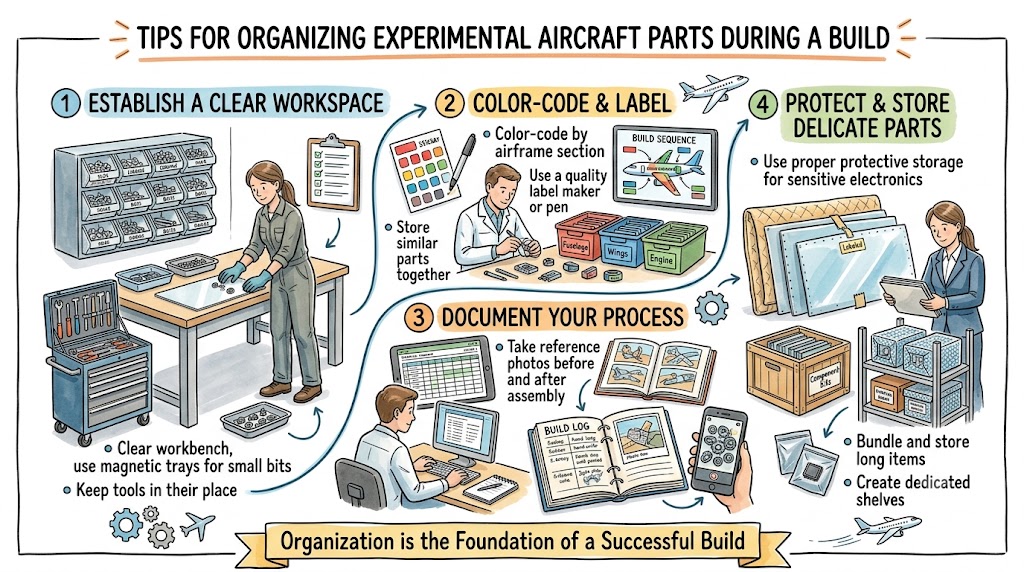
Tips for Organizing Aircraft Parts During a Build
Sort Parts by Assembly
One of the simplest organizational methods is grouping parts according to the aircraft section where they will be installed.
Examples include:
Wing Components
Store spars, ribs, skins, brackets, and associated hardware together.
Fuselage Components
Group structural sections, frames, panels, and mounting hardware.
Empennage Components
Keep horizontal stabilizer, vertical stabilizer, elevators, rudder, and trim system parts together.
Landing Gear
Organize wheels, brakes, axles, fairings, and installation hardware separately.
Engine Components
Store engine accessories, mounts, hoses, filters, and related hardware in dedicated containers.
Avionics
Keep displays, radios, antennas, wiring, and connectors together in protected storage.
Interior Components
Organize seats, upholstery, harnesses, side panels, and cabin accessories.
Electrical System
Separate wiring, switches, relays, connectors, circuit protection devices, and electrical accessories.
Grouping components by assembly simplifies workflow and reduces unnecessary searching.
Label Everything Clearly
Clear labeling is one of the most valuable organizational habits.
Labels should include:
- Part name
- Part number
- Assembly location
- Quantity
- Storage location
Some builders also use color coding or barcode systems for additional efficiency.
Well-labeled containers reduce errors and speed up assembly.
Use Storage Bins and Containers
Different parts require different storage solutions.
Useful storage options include:
- Plastic bins
- Small drawer cabinets
- Hardware organizers
- Stackable containers
- Compartment boxes
- Portable parts trays
Transparent containers make identification even easier.
Keep Fasteners Organized
Aircraft hardware includes many similar-looking components.
Separate:
- Bolts
- Nuts
- Washers
- Rivets
- Screws
- Cotter pins
- Locknuts
- Spacers
Mixing fasteners can lead to incorrect installations and unnecessary delays.
Using divided hardware organizers keeps everything accessible.
Protect Sensitive Components
Certain aircraft parts require extra care during storage.
These include:
- Avionics
- Electronic displays
- Wiring harnesses
- Composite components
- Plexiglass windows
- Instruments
- Upholstery
Store sensitive items in protective packaging and avoid exposure to dust, moisture, or accidental impacts.
Maintain a Digital Inventory
A digital inventory provides excellent visibility throughout the project.
Track:
- Part numbers
- Quantities
- Storage locations
- Delivery dates
- Installation status
- Missing items
Simple spreadsheets or inventory software can significantly improve project management.
Photographs also help identify stored components quickly.
Store Documentation Properly
Aircraft documentation is just as important as the physical parts.
Organize:
- Assembly manuals
- Engineering drawings
- Parts catalogs
- Service bulletins
- Inspection records
- Build notes
Using binders or digital document folders makes information easy to locate during construction.
Create a Build Progress Checklist
Tracking completed tasks helps prevent missed steps.
Your checklist may include:
- Completed assemblies
- Installed hardware
- Outstanding tasks
- Required inspections
- Pending deliveries
Progress tracking keeps the project moving efficiently.
Separate Used and New Parts
If components are removed during fitting or testing, avoid mixing them with unused inventory.
Keeping these groups separate reduces installation errors and inventory confusion.
Inspect Parts Before Storage
Every shipment should be inspected immediately after arrival.
Check for:
- Shipping damage
- Missing hardware
- Corrosion
- Manufacturing defects
- Incorrect quantities
Resolving issues early prevents delays later in the build.
Common Organization Mistakes to Avoid
Leaving Parts in Shipping Boxes
Original packaging may not provide long-term protection or efficient organization.
Transfer parts into labeled storage systems after inspection.
Mixing Hardware Sizes
Many aircraft fasteners appear similar but differ slightly in size or specification.
Always store hardware separately.
Poor Labeling
Unmarked containers quickly create confusion during assembly.
Clear labels save countless hours later.
Cluttered Workspaces
A crowded workshop increases the risk of damaging aircraft parts and reduces productivity.
Ignoring Documentation
Accurate documentation supports quality control and simplifies inspections.
Improper Storage Conditions
Moisture, heat, dust, and sunlight can damage certain aircraft components.
Losing Small Hardware
Tiny fasteners are easily misplaced.
Use compartment organizers for all small parts.
Delaying Inventory Updates
Inventory records should be updated whenever parts are received, moved, or installed.
Current records reduce confusion.
Benefits of Good Parts Organization
Effective organization offers advantages throughout the project.
Faster Assembly
Builders spend less time searching for components.
Fewer Errors
Proper labeling reduces installation mistakes.
Better Quality Control
Organized work areas simplify inspections.
Lower Costs
Lost or damaged parts often require expensive replacements.
Improved Workshop Safety
Clean workspaces reduce trip hazards and accidental damage.
Easier Project Management
Builders can monitor progress more accurately.
Reduced Stress
A tidy workshop creates a more enjoyable building experience.
Better Protection of Components
Proper storage helps preserve valuable aircraft parts.
More Efficient Inspections
Inspectors can easily verify installed components and documentation.
Greater Build Satisfaction
Good organization contributes to smoother project completion.
Recommended Workshop Organization Checklist
| Organization Task | Why It Matters |
|---|---|
| Label all storage containers | Prevents misplaced parts |
| Separate assemblies | Improves workflow |
| Store hardware by size | Reduces installation mistakes |
| Protect sensitive electronics | Prevents damage |
| Maintain inventory records | Tracks missing items |
| Organize manuals | Simplifies reference |
| Keep workspace clean | Improves safety |
| Photograph stored parts | Supports identification |
| Update build checklist | Tracks progress |
| Inspect incoming shipments | Identifies issues early |
Best Practices for Long-Term Aircraft Build Success
Successful builders develop consistent organizational habits throughout the project.
Helpful practices include:
- Clean the workshop after each work session.
- Return tools to designated storage locations.
- Review inventory regularly.
- Update documentation immediately.
- Protect completed assemblies.
- Schedule periodic workspace inspections.
- Replace damaged storage containers when necessary.
- Keep frequently used hardware easily accessible.
Maintaining organization throughout the build is easier than reorganizing later.
Why KITPLANEPART.COM Is a Valuable Aviation Resource
Building an experimental aircraft requires reliable information, careful planning, and access to quality components. KITPLANEPART.COM provides educational resources, practical building guidance, parts management tips, workshop organization advice, and aviation maintenance insights to help experimental aircraft builders complete their projects efficiently and confidently.
Frequently Asked Questions
1. Why is parts organization important during an aircraft build?
Proper organization reduces lost parts, prevents assembly mistakes, improves efficiency, protects valuable components, and simplifies project management throughout the build.
2. What is the best way to organize aircraft hardware?
Store bolts, nuts, washers, rivets, screws, and other fasteners in labeled compartment organizers sorted by size, type, and intended assembly.
3. How should avionics and sensitive parts be stored?
Sensitive components should remain in protective packaging whenever possible and be stored in clean, dry areas away from dust, moisture, and physical impacts.
4. Should builders maintain a digital inventory?
Yes. Digital inventories make it easier to track part locations, quantities, deliveries, installation status, and missing components throughout the project.
5. How can I avoid losing small aircraft parts?
Use divided hardware organizers, label every compartment clearly, return unused hardware after each work session, and keep small parts off open work surfaces.
6. What workshop storage systems work best?
Plastic bins, drawer cabinets, shelving units, stackable containers, and compartment organizers provide flexible storage solutions for aircraft projects.
7. How often should inventory be updated?
Inventory should be updated whenever new shipments arrive, parts are relocated, or components are installed to maintain accurate records.
8. What documents should be organized during the build?
Builders should organize assembly manuals, engineering drawings, parts catalogs, inspection records, service bulletins, and personal build notes.
9. How can organization reduce construction mistakes?
Clearly labeled parts, organized hardware, accurate documentation, and structured workflows reduce confusion and help ensure the correct components are installed in the proper locations.
10. What are the biggest organization mistakes first-time builders make?
Common mistakes include poor labeling, mixing hardware, leaving parts in shipping boxes, ignoring inventory tracking, maintaining cluttered workspaces, and failing to protect sensitive components.
Conclusion
Organizing experimental aircraft parts is one of the most important steps in a successful kitplane build. A well-planned storage system, clear labeling, accurate inventory management, and an organized workshop can save countless hours, reduce assembly errors, protect valuable components, and make the entire building process more efficient and enjoyable. Developing good organizational habits from the beginning also supports higher build quality, smoother inspections, and better long-term project management.
Whether you’re building your first experimental aircraft or adding another project to your workshop, investing time in organization is an investment in the success of your build. By creating a clean, structured workspace and using practical inventory and storage methods, you can focus more on craftsmanship and less on searching for misplaced parts. Resources like KITPLANEPART.COM can help you learn effective building practices and support your journey toward completing a safe, reliable, and well-organized experimental aircraft.

