
Introduction
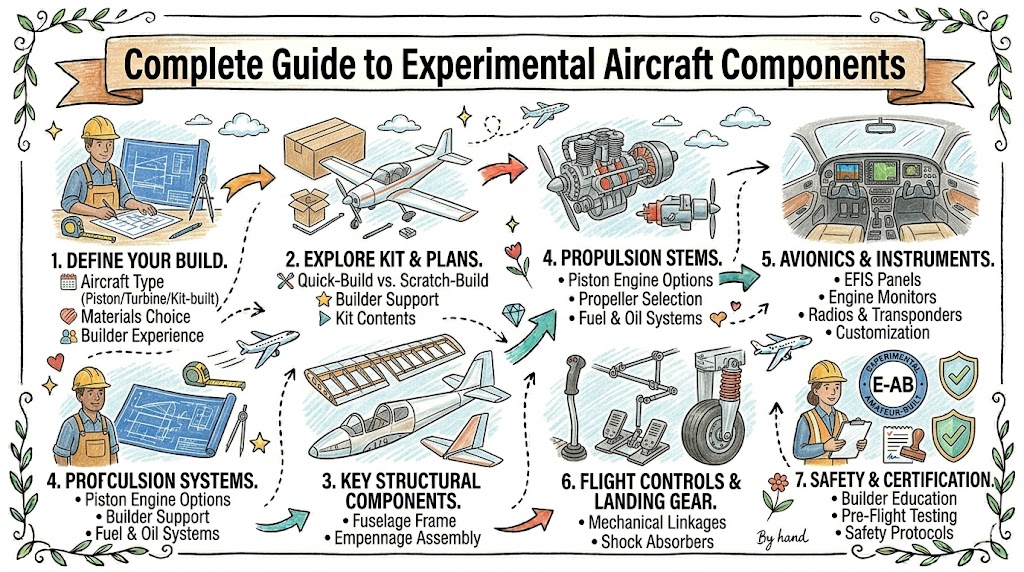
Experimental aircraft components are the parts, materials, systems, and hardware used to build, maintain, repair, or upgrade experimental and homebuilt aircraft. These components may include airframe parts, wing sections, landing gear, engine-related items, avionics, fuel system parts, electrical components, propeller parts, cabin fittings, fasteners, brackets, and structural materials. For kit plane builders and experimental aircraft owners, every component choice affects safety, performance, reliability, build quality, maintenance, and long-term aircraft value.
Experimental aircraft give builders more flexibility than standard certified aircraft, but flexibility also requires responsibility. Builders must carefully follow aircraft plans, kit instructions, accepted aviation practices, and safety-focused decision-making. A part that looks correct may not always be compatible with a specific design, load requirement, material system, or installation method. Whether someone is building their first kit plane, upgrading avionics, replacing landing gear parts, or planning long-term maintenance, understanding experimental aircraft components helps create a safer, more reliable, and more confident flying experience.
Real-world Use Cases
A first-time kit plane builder may need help selecting the right kit plane parts for the airframe, control surfaces, electrical system, and landing gear. A homebuilt aircraft owner may want to upgrade avionics for better navigation and cockpit awareness. A builder comparing metal and composite components may need to understand weight, strength, maintenance, and installation differences.
A private pilot replacing landing gear parts must confirm compatibility, strength, and documentation before installation. An experimental aircraft owner reviewing fuel system components must focus on safety, routing, leak prevention, and material suitability. A maintenance learner checking hardware and fasteners must understand why small parts can have a major impact on aircraft reliability.
These examples show why careful component selection is an important part of experimental aviation.
Evaluation Criteria for Choosing Experimental Aircraft Components
Before choosing experimental aircraft parts, builders should evaluate:
- Compatibility with aircraft plans or kit instructions
- Component quality and material suitability
- Safety-critical role of the part
- Documentation and traceability
- Manufacturer or supplier reputation
- Installation requirements
- Maintenance and inspection needs
- Weight and balance impact
- Long-term durability
- Cost and replacement availability
- Upgrade potential
- Builder skill level
- Fit with aircraft performance goals
The best component choice is not always the cheapest or most advanced option. It is the part that fits the aircraft design, supports safety, and can be installed and maintained properly.
What Experimental Aircraft Components Mean
Experimental aircraft components are parts used in aircraft that are built, modified, or operated under experimental aviation categories. These aircraft are often built from kits, plans, or custom designs.
For example, a kit plane builder may purchase pre-formed wing ribs, landing gear parts, avionics wiring, and hardware kits. Each part must match the aircraft design and be installed correctly. Even though experimental aircraft allow more builder flexibility, safety-focused component selection remains essential.
Airframe Components
Airframe components form the main structure of the aircraft. They may include fuselage sections, bulkheads, longerons, ribs, frames, panels, skins, tubes, and structural supports.
These parts matter because they carry loads during flight, landing, and ground handling. For example, a builder assembling a fuselage must ensure that each airframe component is aligned, secured, and compatible with the aircraft plans. Poor fit or weak materials can affect structural strength and safety.
Wing and Control Surface Parts
Wing and control surface parts include spars, ribs, skins, ailerons, flaps, hinges, control rods, cables, bellcranks, and attachment hardware. These components directly affect lift, stability, roll control, and handling.
For example, if a builder installs aileron hardware incorrectly, the aircraft may not respond properly in flight. Wing and control surface components should be checked carefully for fit, movement, clearance, and secure attachment.
Landing Gear Components
Landing gear components include wheels, tires, axles, struts, springs, brakes, mounts, fairings, and related hardware. These parts handle takeoff, landing, taxiing, and ground loads.
For example, a private pilot replacing landing gear parts should confirm the correct size, strength, alignment, and mounting requirements. Landing gear components must be durable because they absorb repeated stress during normal aircraft operations.
Engine and Powerplant Components
Engine and powerplant components include engine mounts, cooling systems, exhaust parts, oil systems, ignition components, carburetor or fuel injection parts, hoses, controls, and firewall-forward hardware.
These components matter because they support reliable power, safe operation, cooling, vibration control, and engine monitoring. For example, an experimental aircraft owner installing an engine mount must ensure that it matches the selected engine and aircraft structure.
Fuel System Components
Fuel system components may include tanks, fuel lines, filters, pumps, valves, vents, fittings, drains, selectors, and fuel quantity sensors. These parts must be carefully selected and installed because fuel system problems can create serious safety risks.
For example, a builder reviewing fuel system components should confirm material compatibility, proper routing, leak resistance, and access for inspection. Fuel lines should not rub against sharp edges or heat sources.
Electrical System Components
Electrical system components include batteries, alternators, wiring, switches, breakers, fuses, connectors, grounding points, lighting, and power distribution parts. These systems support avionics, lighting, starting, charging, communication, and monitoring.
For example, a builder installing wiring should use proper routing, circuit protection, labeling, and secure connections. Poor electrical work can cause intermittent faults, instrument problems, or safety concerns.
Avionics and Instrument Components
Avionics and instrument components include radios, transponders, GPS units, displays, engine monitors, antennas, intercoms, autopilot systems, and flight instruments. These components improve communication, navigation, aircraft monitoring, and pilot awareness.
For example, a homebuilt aircraft owner upgrading avionics should consider panel space, power requirements, antenna placement, wiring complexity, and future maintenance. A clean avionics installation improves cockpit usability and reliability.
Propeller Components
Propeller components include blades, hubs, spinners, governors, mounting bolts, spacers, and related hardware. The propeller converts engine power into thrust and directly affects aircraft performance.
For example, a builder choosing a propeller should match it to the engine, aircraft mission, expected speed, climb performance, and operating limits. Incorrect propeller selection can affect performance, vibration, and engine operation.
Cabin and Interior Components
Cabin and interior components include seats, harnesses, panels, trim, flooring, ventilation parts, lighting, controls, soundproofing, and storage areas. These parts affect comfort, usability, safety, and cockpit organization.
For example, seatbelt and harness components must be installed securely because they are safety-related. Interior choices should also consider weight, access to inspection points, and pilot control clearance.
Fasteners, Brackets, and Hardware
Fasteners, brackets, and hardware may seem small, but they are critical to aircraft integrity. These include bolts, nuts, washers, rivets, screws, clamps, hinges, brackets, pins, and safety wire.
For example, a maintenance learner checking aircraft hardware should confirm correct size, material, grip length, torque, and locking method. A wrong fastener can reduce strength or create vibration-related problems.
Composite, Metal, and Fabric Materials
Experimental aircraft may use composite, metal, fabric, or mixed construction. Each material type has different strengths, installation methods, inspection needs, and repair considerations.
For example, composite parts may offer smooth shapes and weight benefits, but require careful bonding and inspection. Metal parts may be easier to inspect visually but require corrosion prevention. Fabric-covered components require proper tension, sealing, and protection.
Safety-Critical Components
Safety-critical components are parts whose failure could seriously affect aircraft control, structure, propulsion, fuel delivery, braking, or safe landing. These may include control system parts, engine mounts, landing gear, fuel components, propeller hardware, brakes, and structural fittings.
For example, a builder should never choose low-quality hardware for flight control connections. Safety-critical components deserve extra attention, reliable sourcing, proper installation, and careful inspection.
Documentation and Traceability
Documentation and traceability help builders understand where components came from, what they are, and whether they are suitable for the project. Good records also help with maintenance, inspections, resale, and future troubleshooting.
For example, a builder should keep invoices, part numbers, supplier details, manuals, installation notes, and component specifications organized. Well-kept records make the aircraft easier to maintain over time.
Compatibility with Aircraft Plans or Kit Instructions
Every component should be checked against the aircraft plans, kit instructions, or builder guidance. A part that works on one aircraft design may not work on another.
For example, a bracket or control cable length may be correct for one kit model but wrong for another. Builders should verify part numbers, dimensions, material type, and installation location before drilling, cutting, or installing.
Maintenance and Inspection Requirements
Experimental aircraft components should be selected with future maintenance in mind. Some parts require regular inspection, lubrication, adjustment, replacement, or access during condition inspections.
For example, fuel filters, brake pads, cables, hinges, and engine hoses should be easy to inspect and service. Choosing parts that are difficult to access can make future maintenance more time-consuming.
Replacement and Upgrade Planning
Aircraft components may need replacement or upgrades over time. Builders should consider availability, compatibility, cost, and future support before selecting parts.
For example, an avionics upgrade may require panel space, wiring changes, antenna installation, and power planning. A builder who thinks ahead can reduce future rework and improve long-term aircraft usability.
Benefits of Choosing the Right Experimental Aircraft Components
Choosing the right experimental aircraft components helps builders:
- Improve aircraft safety
- Build with more confidence
- Reduce installation errors
- Improve aircraft performance
- Support easier maintenance
- Reduce future replacement costs
- Protect aircraft value
- Create a more reliable flying experience
- Improve documentation quality
- Support long-term ownership planning
Good component selection is one of the strongest foundations of a successful aircraft build.
Experimental Aircraft Components vs Certified Aircraft Components
| Factor | Experimental Aircraft Components | Certified Aircraft Components |
|---|---|---|
| Flexibility | More builder choice and customization | More regulated and standardized |
| Cost | May offer wider budget options | Often higher due to certification requirements |
| Documentation | Varies by part and supplier | Typically more formal documentation |
| Installation | Builder responsibility is higher | Often follows stricter approved procedures |
| Safety Confidence | Depends on quality, compatibility, and installation | Supported by certification process |
| Maintenance Needs | Builder must plan carefully | More standardized maintenance guidance |
| Long-Term Reliability | Depends on selection and workmanship | Depends on certified design and maintenance |
New vs Used Experimental Aircraft Components
| Factor | New Components | Used Components |
| Condition | Usually clearer and more predictable | Requires careful inspection |
| Cost | Often higher | May reduce upfront cost |
| Documentation | Usually easier to obtain | May be incomplete |
| Installation Confidence | Often stronger | Depends on condition and history |
| Best For | Safety-critical or long-term use | Non-critical parts when properly verified |
| Risk Level | Lower when sourced well | Higher if history is unclear |
Metal vs Composite Components
| Factor | Metal Components | Composite Components |
| Strength | Strong and familiar in aircraft construction | Strong when properly designed and built |
| Weight | Can be lightweight depending on design | Often weight-efficient |
| Inspection | Easier visual inspection in many cases | May require careful damage evaluation |
| Repair | Often straightforward with proper skill | Requires composite repair knowledge |
| Corrosion | Needs corrosion protection | Not affected by metal corrosion |
| Build Skill | Requires cutting, drilling, riveting, or forming | Requires layup, bonding, curing, and finishing |
Budget-Focused vs Safety-Focused Component Selection
| Factor | Budget-Focused Selection | Safety-Focused Selection |
| Main Priority | Lowest upfront price | Suitability, quality, and reliability |
| Documentation | May be overlooked | Reviewed carefully |
| Compatibility | May be assumed | Verified before purchase |
| Long-Term Cost | May increase through rework | Better controlled over time |
| Safety Confidence | Lower if parts are uncertain | Stronger due to careful checks |
| Best Use | Non-critical items with caution | All important and safety-related systems |
Practical Tips for Choosing Experimental Aircraft Components
Verify Compatibility Before Purchase
Always compare components with aircraft plans, kit instructions, part numbers, drawings, and dimensions. Do not rely only on photos or general descriptions.
Review Part Quality and Documentation
Choose parts from reliable suppliers and keep all documentation organized. Records help with inspections, future repairs, upgrades, and resale confidence.
Avoid Low-Quality or Mismatched Components
A cheap part can become expensive if it causes rework, poor fit, safety concerns, or performance problems. Prioritize quality for safety-critical systems.
Plan a Kit Plane Parts Budget
Budget for structural parts, hardware, avionics, engine components, wiring, tools, finishing materials, shipping, replacement parts, and unexpected needs.
Organize Parts During the Build
Label parts clearly, group components by aircraft section, keep hardware sorted, and protect sensitive items from damage, moisture, dust, and corrosion.
Inspect Components Before Installation
Check for cracks, corrosion, wrong dimensions, missing hardware, poor finish, damaged threads, incorrect labels, or signs of improper storage before installing any part.
Decide When to Upgrade or Replace Components
Upgrade when a component improves safety, reliability, usability, or maintainability. Replace parts when condition, compatibility, wear, or documentation creates concern.
Ask for Experienced Guidance When Unsure
If a component affects structure, controls, fuel, propulsion, brakes, or electrical reliability, get guidance from experienced builders, qualified mechanics, or trusted aviation professionals.
Common Mistakes to Avoid When Buying Components
Builders should avoid:
- Buying parts without checking compatibility
- Choosing only by lowest price
- Ignoring documentation
- Using unknown hardware in critical areas
- Mixing materials without understanding requirements
- Poorly storing parts before installation
- Skipping inspection before use
- Assuming all experimental parts are interchangeable
- Not planning for future maintenance
- Overcomplicating upgrades during the build
Avoiding these mistakes helps reduce risk and improve build quality.
Why Component Organization Matters During a Kit Plane Build
A kit plane project may involve hundreds or thousands of parts. Without organization, builders can lose hardware, mix similar components, install the wrong part, or damage sensitive items.
Good organization saves time and improves accuracy. Builders should label bags, protect fragile parts, separate structural hardware, keep manuals nearby, and update build notes regularly. A clean build process supports a safer aircraft.
How Good Documentation Supports Long-Term Ownership
Documentation is useful long after the aircraft is built. It helps owners understand what parts were installed, when upgrades were completed, where components came from, and how maintenance should be planned.
Good records are also valuable during inspections, troubleshooting, and resale. A well-documented experimental aircraft gives future owners and maintainers more confidence in the aircraft’s history and build quality.
FAQs
1- What are experimental aircraft components?
Experimental aircraft components are parts, materials, systems, and hardware used to build, maintain, repair, or upgrade experimental and homebuilt aircraft. They may include airframe parts, avionics, landing gear, engine components, fuel system parts, and hardware.
2- How do I choose the right kit plane parts?
Start with the aircraft plans or kit instructions. Check part numbers, dimensions, material requirements, supplier reputation, documentation, and installation needs before buying or installing any component.
3- Why is compatibility with aircraft plans important?
Compatibility ensures the part fits the design, load requirements, system layout, and installation method. A mismatched part can cause fit problems, performance issues, or safety concerns.
4- Should I buy new or used experimental aircraft components?
New components often provide stronger confidence, while used components may reduce cost if properly inspected and documented. Avoid used parts for safety-critical areas unless their condition and suitability are clear.
5- What are safety-critical components?
Safety-critical components include parts related to flight controls, structure, landing gear, brakes, fuel systems, engine installation, propeller systems, and electrical reliability. These parts require extra care and verification.
6- Why are documentation and traceability important?
Documentation helps show where parts came from, what they are, and how they were selected or installed. Good traceability supports maintenance, inspections, troubleshooting, and long-term aircraft value.
7- Are metal or composite parts better?
Neither is automatically better. Metal parts may be easier to inspect and repair in some cases, while composite parts can offer design and weight advantages. The right choice depends on aircraft design, builder skill, and maintenance needs.
8- Can I upgrade avionics in an experimental aircraft?
Yes, experimental aircraft often allow more flexibility for avionics upgrades. Builders should consider panel space, wiring, power needs, antenna placement, usability, and future maintenance before upgrading.
9- What maintenance do experimental aircraft components need?
Maintenance needs depend on the component type. Fuel systems, control linkages, brakes, landing gear, electrical connections, propellers, and engine-related parts should be inspected regularly and serviced as needed.
10- What mistakes should I avoid when buying components?
Avoid buying based only on price, ignoring compatibility, using undocumented parts in critical systems, skipping inspection, and assuming similar-looking parts are interchangeable. Careful planning protects safety and build quality.
Conclusion
Experimental aircraft components should be selected with careful attention to safety, compatibility, quality, documentation, and long-term maintenance needs. While experimental aviation gives builders flexibility and creativity, every component must support the aircraft’s design, performance goals, and safe operation. From airframe parts and control systems to fuel components, avionics, landing gear, hardware, and materials, each choice affects the final aircraft. Builders who verify compatibility, organize parts properly, inspect before installation, and keep strong records create a more reliable and maintainable aircraft. With good planning and a safety-first approach, experimental aircraft components can help turn a kit plane project into a confident and rewarding flying experience.

