
Introduction
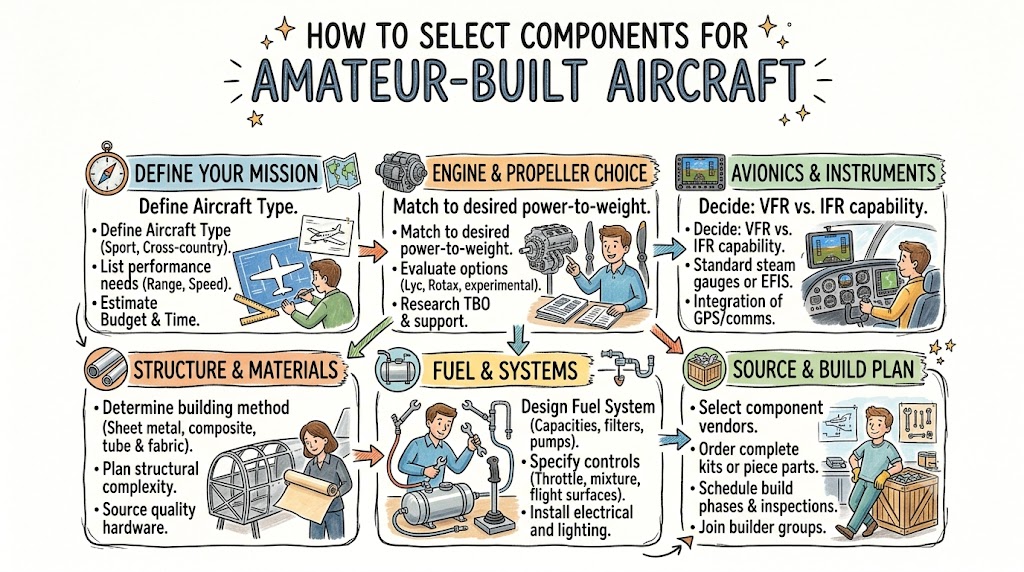
Building an amateur-built aircraft is one of the most rewarding projects an aviation enthusiast can undertake. It combines engineering, craftsmanship, problem-solving, and a passion for flight into a unique experience. However, the success of any homebuilt aircraft depends heavily on selecting the right components. Every part—from the engine and propeller to avionics, landing gear, and electrical systems—plays a vital role in the aircraft’s safety, performance, reliability, and long-term maintenance.
For first-time builders, the wide variety of available components can make the selection process challenging. Choosing parts based only on cost or appearance may lead to compatibility issues, increased maintenance, or reduced performance. Careful planning and informed decisions help ensure that each component works efficiently as part of the complete aircraft system.
This guide explains how to select components for amateur-built aircraft, highlights the factors to consider, and provides practical tips to help builders create a safe, dependable, and enjoyable aircraft.
Why Component Selection Matters
Every aircraft is a combination of interconnected systems. A single component can influence the performance of several others, making thoughtful selection essential.
Choosing suitable components helps:
- Improve flight safety
- Increase aircraft reliability
- Enhance overall performance
- Simplify maintenance
- Extend aircraft service life
- Reduce long-term operating costs
- Improve resale value
- Increase builder confidence
Planning ahead reduces the likelihood of expensive modifications later in the project.
Understand Your Aircraft Design
Before purchasing any components, understand the purpose of your aircraft.
Ask yourself:
- Will it be used for recreational flying?
- Will it be used for cross-country travel?
- Will it carry one or more passengers?
- What cruising speed do you expect?
- What payload capacity is required?
- What operating environment will it fly in?
The answers help determine which components best match your aircraft’s intended mission.
Follow the Aircraft Design Specifications
Every kit aircraft is designed with specific engineering recommendations.
These often include:
- Engine limits
- Weight restrictions
- Propeller compatibility
- Landing gear options
- Fuel system requirements
- Electrical system recommendations
Following the aircraft designer’s guidance helps maintain structural integrity and predictable flight characteristics.
Prioritize Quality Over Price
While budgeting is important, selecting components solely because they cost less can create future problems.
High-quality components generally provide:
- Better durability
- Improved reliability
- Longer service life
- Easier maintenance
- Greater operational confidence
Investing in dependable components often reduces long-term ownership costs.
Choose the Right Engine
The engine is one of the most significant decisions in an amateur-built aircraft project.
Consider factors such as:
Horsepower
The engine should provide adequate performance without exceeding aircraft design limits.
Weight
Engine weight affects:
- Balance
- Center of gravity
- Takeoff performance
- Climb performance
Fuel Efficiency
Efficient engines reduce operating costs while increasing practical range.
Maintenance
Select engines with:
- Readily available parts
- Proven reliability
- Good maintenance support
- Strong service documentation
Cooling System
Understand whether the engine uses:
- Air cooling
- Liquid cooling
Each system has different installation and maintenance considerations.
Select the Appropriate Propeller
The propeller directly influences aircraft performance.
Important considerations include:
Fixed-Pitch Propellers
Advantages:
- Simpler design
- Lower maintenance
- Lower cost
Suitable for many recreational aircraft.
Adjustable or Constant-Speed Propellers
Advantages:
- Better climb performance
- Improved cruise efficiency
- Greater operational flexibility
These systems may require additional maintenance.
Propeller Material
Common materials include:
- Wood
- Composite
- Aluminum
Each material offers unique advantages in weight, durability, and maintenance.
Choose Reliable Avionics
Modern avionics improve navigation, communication, and situational awareness.
Typical systems include:
- Flight displays
- GPS navigation
- Radios
- Engine monitoring
- Transponders
- Backup instruments
Choose equipment appropriate for your flying requirements and aircraft design.
Select Landing Gear Components Carefully
Landing gear absorbs significant loads during takeoff and landing.
Consider:
Fixed Landing Gear
Benefits:
- Simplicity
- Lower maintenance
- Lower weight
- Reliability
Retractable Landing Gear
Advantages:
- Reduced aerodynamic drag
- Improved cruise performance
However, retractable systems increase mechanical complexity.
Tires and Brakes
Choose durable components capable of supporting expected operating conditions.
Regular inspection remains essential.
Build a Reliable Electrical System
The electrical system supports numerous aircraft functions.
Essential components include:
- Battery
- Alternator
- Wiring
- Circuit breakers
- Switches
- Exterior lighting
- Interior lighting
Proper installation and organization simplify troubleshooting and future maintenance.
Select an Appropriate Fuel System
Reliable fuel delivery is critical for safe flight.
Important components include:
- Fuel tanks
- Fuel pumps
- Fuel filters
- Fuel lines
- Fuel valves
- Fuel gauges
Use components compatible with the selected engine and fuel type.
Choose Comfortable Interior Components
Although safety comes first, comfort contributes to an enjoyable flying experience.
Consider:
- Adjustable seats
- Seat belts
- Cabin materials
- Control placement
- Visibility
- Ergonomics
Proper cockpit layout reduces pilot fatigue during longer flights.
Use Approved Hardware
Small hardware components have a major impact on structural integrity.
Examples include:
- Bolts
- Nuts
- Rivets
- Washers
- Hinges
- Fasteners
Always use hardware designed for aviation applications.
Avoid substituting general-purpose hardware where aviation-specific parts are required.
Manage Aircraft Weight Carefully
Every component affects total aircraft weight.
Excess weight may reduce:
- Climb performance
- Fuel efficiency
- Payload
- Range
- Handling characteristics
Maintaining proper weight and balance throughout the build is essential.
Consider Future Maintenance
When selecting components, think beyond initial installation.
Ask:
- Are replacement parts readily available?
- Is technical support available?
- Can routine maintenance be performed easily?
- Are service manuals available?
Choosing components with good long-term support simplifies ownership.
Check Component Compatibility
Not every aircraft component works well with every aircraft.
Confirm compatibility between:
- Engine and propeller
- Electrical systems
- Avionics
- Fuel system
- Landing gear
- Instrument panel
- Structural mounting points
Compatibility reduces installation problems and improves reliability.
Keep Accurate Documentation
Maintain organized records throughout the project.
Useful documentation includes:
- Component specifications
- Installation manuals
- Purchase records
- Maintenance instructions
- Warranty information
- Inspection notes
Good documentation simplifies future inspections and maintenance.
Common Mistakes When Selecting Components
Many first-time builders encounter avoidable problems.
Examples include:
- Choosing incompatible parts
- Ignoring aircraft weight limits
- Purchasing low-quality hardware
- Focusing only on initial cost
- Mixing incompatible electrical systems
- Skipping manufacturer recommendations
- Poor documentation
- Not planning future maintenance
Learning from these common mistakes improves project success.
Benefits of Choosing the Right Components
Careful component selection offers many long-term advantages.
Better Safety
Reliable components improve overall aircraft dependability.
Improved Performance
Properly matched systems deliver smoother operation and better flight characteristics.
Easier Maintenance
Compatible components simplify inspections and repairs.
Longer Aircraft Life
Quality materials help reduce wear and extend service life.
Better Resale Value
Well-documented aircraft built with quality components are often more attractive to future buyers.
Greater Confidence
Knowing the aircraft has been built with dependable components provides peace of mind during every flight.
Amateur-Built Aircraft Component Checklist
Before Purchasing:
- Define aircraft mission
- Review design specifications
- Confirm compatibility
- Compare quality
- Evaluate maintenance needs
- Consider long-term support
Essential Components:
- Engine
- Propeller
- Avionics
- Landing gear
- Electrical system
- Fuel system
- Interior
- Flight controls
- Hardware
- Safety equipment
Frequently Asked Questions
1. What is an amateur-built aircraft?
An amateur-built aircraft is an aircraft constructed primarily for education or recreation by individuals rather than commercial manufacturers, often using kits or custom-built components.
2. How do I choose compatible aircraft components?
Review the aircraft design recommendations, manufacturer specifications, and compatibility guidelines to ensure all systems work together safely and efficiently.
3. Should I prioritize quality over price?
Yes. High-quality aviation components generally provide better reliability, durability, and long-term value while reducing maintenance concerns.
4. How do I select the right engine?
Choose an engine that matches the aircraft’s design specifications, performance goals, weight limitations, and maintenance requirements.
5. Which avionics are essential?
Most builders require communication equipment, navigation systems, engine monitoring instruments, and primary flight displays appropriate for the intended operation.
6. Why is weight management important?
Every component contributes to aircraft weight and balance, directly affecting safety, handling, fuel efficiency, and overall performance.
7. Can components be upgraded later?
Many aircraft components can be upgraded, provided the modifications remain compatible with the aircraft design and applicable operating requirements.
8. How should aircraft components be maintained?
Follow manufacturer maintenance schedules, inspect components regularly, replace worn parts promptly, and maintain detailed service records.
9. Where should I purchase aircraft components?
Purchase components from reputable aviation suppliers that provide quality products, technical support, documentation, and reliable customer service.
10. Why is compatibility so important?
Compatible components operate together efficiently, reduce installation challenges, improve reliability, and contribute to safer aircraft operation.
Conclusion
Selecting components for an amateur-built aircraft is one of the most important decisions in the entire construction process. Every part—from the engine and propeller to avionics, electrical systems, landing gear, and hardware—plays a crucial role in determining the aircraft’s safety, performance, reliability, and ease of maintenance. Taking time to understand your aircraft’s design, choosing quality components, verifying compatibility, and planning for future maintenance will help create an aircraft that performs as intended and provides years of dependable service.
Whether you are building your first kit aircraft or expanding your experience in experimental aviation, thoughtful component selection is an investment in both your aircraft and your confidence as a builder and pilot.

