
Introduction
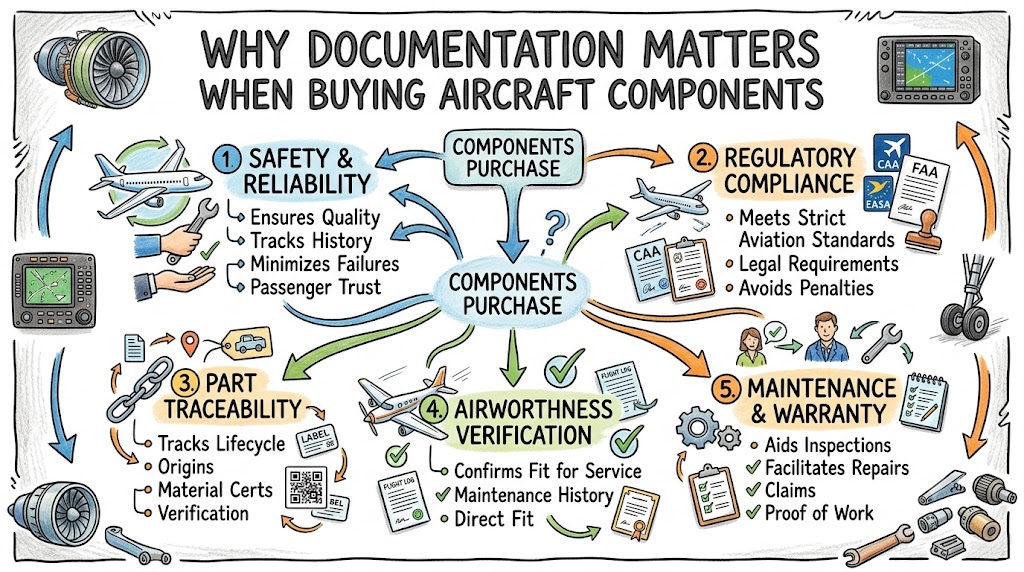
Purchasing aircraft components is an important responsibility for aircraft owners, maintenance organizations, and kit aircraft builders. Whether replacing a worn part, upgrading a system, or assembling a new aircraft, every component plays a role in ensuring safe and reliable operation. However, the quality of an aircraft part is only one aspect to consider. Equally important is the documentation that accompanies it.
Proper documentation provides valuable information about a component’s identity, maintenance history, inspections, and traceability. It helps buyers confirm that the correct part is being installed, supports maintenance planning, and contributes to long-term aircraft reliability. Missing or incomplete documentation can create uncertainty, complicate maintenance, and reduce confidence in a component’s history.
This guide explains why documentation matters when buying aircraft components, what records buyers should review, and how organized documentation supports safety, maintenance, and long-term aircraft value.
What Is Aircraft Component Documentation?
Aircraft component documentation is the collection of records that identifies a component and provides information about its history throughout its service life.
Typical documentation may include:
- Part number
- Serial number
- Manufacturer information
- Inspection records
- Maintenance history
- Repair history
- Installation records
- Purchase information
These records help establish confidence in the component before installation.
Why Documentation Supports Aircraft Safety
Every aircraft component contributes to safe flight operations.
Documentation supports safety by helping maintenance personnel:
- Identify components correctly
- Verify compatibility
- Review maintenance history
- Confirm inspections
- Track replacement intervals
- Reduce installation errors
Good documentation improves decision-making during maintenance.
Understanding Component Traceability
Traceability refers to the ability to follow a component throughout its operational life.
Effective traceability includes:
- Manufacturing information
- Serial number tracking
- Installation history
- Maintenance records
- Repair history
- Ownership history
Traceability provides valuable information whenever maintenance or inspections are performed.
Identify Components Accurately
Aircraft often contain thousands of individual parts.
Documentation helps identify:
- Correct part numbers
- Model compatibility
- Component configuration
- Approved replacement options
Accurate identification reduces the possibility of installing unsuitable components.
Maintenance Records and Component History
Maintenance records provide insight into how a component has been maintained over time.
Useful records include:
- Inspection history
- Repair documentation
- Replacement records
- Service intervals
- Operating hours
Understanding component history supports better maintenance planning.
Inspection Documentation
Aircraft components are inspected throughout their service life.
Inspection records may include:
- Visual inspections
- Functional testing
- Scheduled maintenance inspections
- Condition assessments
These records help maintenance personnel evaluate the current condition of the component.
Repair History
Knowing whether a component has previously undergone repairs can help maintenance teams better understand its service history.
Repair documentation may describe:
- Repair dates
- Maintenance performed
- Replacement parts used
- Inspection results
Complete records improve maintenance continuity.
Documentation and Regulatory Compliance
Maintaining organized records supports compliance with applicable maintenance requirements and approved procedures.
Documentation often helps demonstrate:
- Proper maintenance
- Inspection completion
- Component identification
- Maintenance tracking
- Continuing airworthiness support
Accurate documentation contributes to organized aircraft maintenance.
Verifying Aircraft Components Before Purchase
Before purchasing a component, buyers should carefully review available documentation.
Important items to verify include:
Part Number
Confirm that the part number matches the aircraft application.
Serial Number
Verify the serial number matches the accompanying documentation.
Manufacturer Information
Review manufacturer details to confirm component identity.
Physical Condition
Inspect the component for visible damage, corrosion, or unusual wear.
Compatibility
Ensure the component is appropriate for the intended aircraft and installation.
Maintenance History
Review available maintenance records to understand previous servicing.
Why Serial Numbers Matter
Serial numbers help distinguish one component from another.
Benefits include:
- Better traceability
- Accurate maintenance records
- Easier inspection tracking
- Improved inventory management
Serial numbers simplify long-term component management.
Organizing Aircraft Documentation
Well-organized documentation saves time during inspections and maintenance.
Consider maintaining:
- Digital copies
- Printed records
- Organized folders
- Clearly labeled files
- Backup storage
Good organization improves accessibility.
Common Documentation Mistakes Buyers Make
Many documentation issues can be avoided through careful review.
Common mistakes include:
- Accepting incomplete records
- Ignoring maintenance history
- Overlooking serial numbers
- Failing to verify part numbers
- Poor record organization
- Not reviewing compatibility
Attention to detail reduces these risks.
Best Practices for Documentation Management
Maintaining organized documentation is an ongoing responsibility.
Helpful practices include:
Keep Digital Copies
Electronic records provide convenient backup storage.
Maintain Physical Files
Paper documentation remains valuable for reference.
Update Records Promptly
Record installations, inspections, and maintenance as they occur.
Organize by Component
Maintain separate records for major aircraft systems and components.
Store Records Securely
Protect documentation from loss, moisture, and damage.
Documentation and Aircraft Maintenance
Maintenance becomes more efficient when complete documentation is available.
Benefits include:
- Faster inspections
- Easier troubleshooting
- Better maintenance planning
- Improved replacement scheduling
- More efficient record keeping
Accurate records reduce uncertainty during maintenance activities.
Documentation and Aircraft Resale Value
Well-documented aircraft components may contribute to greater buyer confidence.
Complete documentation helps demonstrate:
- Consistent maintenance
- Organized ownership
- Traceable component history
- Responsible aircraft management
Buyers often appreciate organized maintenance records.
Benefits of Complete Documentation
Maintaining complete records offers many advantages.
Improved Safety
Maintenance personnel have better information when evaluating components.
Easier Maintenance
Well-organized records simplify inspection planning.
Greater Traceability
Component history becomes easier to follow throughout its service life.
Better Organization
Maintenance documentation remains accessible when needed.
Increased Buyer Confidence
Complete records provide reassurance during aircraft transactions.
Long-Term Value
Organized documentation supports responsible aircraft ownership.
Aircraft Component Documentation Checklist
Before Purchasing:
- Verify part number
- Confirm serial number
- Review maintenance records
- Inspect physical condition
- Confirm compatibility
- Review manufacturer information
After Purchase:
- File documentation
- Record installation
- Update maintenance records
- Organize digital copies
- Maintain backup records
Frequently Asked Questions
1. Why is documentation important when buying aircraft components?
Documentation provides information about component identity, maintenance history, inspections, and traceability, helping buyers make informed decisions.
2. What records should accompany aircraft components?
Useful records include part numbers, serial numbers, maintenance history, inspection documentation, repair records, and manufacturer information.
3. How do serial numbers improve traceability?
Serial numbers uniquely identify individual components, allowing maintenance history and inspections to be tracked accurately.
4. Why are maintenance records valuable?
Maintenance records provide insight into previous inspections, repairs, and servicing, helping maintenance personnel understand component history.
5. How can I verify component authenticity?
Review documentation carefully, verify identification information, inspect the component, and purchase from reputable suppliers whenever possible.
6. What happens if documentation is missing?
Missing documentation can make it more difficult to understand a component’s history, verify compatibility, and plan future maintenance.
7. How should aircraft documentation be stored?
Maintain both digital and physical copies in organized, secure storage systems with regular backups.
8. Can documentation improve resale value?
Complete maintenance records often increase buyer confidence by demonstrating responsible aircraft ownership and organized maintenance.
9. Why is traceability important?
Traceability helps identify component history, maintenance activities, inspections, and previous installations throughout the component’s operational life.
10. What should buyers inspect before purchasing components?
Review documentation, verify identification numbers, inspect physical condition, confirm compatibility, and understand maintenance history before purchase.
Conclusion
Documentation plays an essential role when purchasing aircraft components because it provides the information needed to understand a part’s identity, history, and maintenance background. Accurate records support safer maintenance decisions, improve traceability, simplify inspections, and help owners maintain organized aircraft records throughout the life of the aircraft.
Whether purchasing components for a kit aircraft, maintaining an existing aircraft, or replacing worn parts, carefully reviewing documentation before installation helps reduce uncertainty and supports long-term aircraft reliability. By maintaining organized records and verifying component information, aircraft owners and maintenance professionals can build greater confidence in every maintenance decision while protecting both safety and the long-term value of their aircraft.

