
Introduction
An aircraft engine mount may look like a simple metal frame, but it performs one of the most important jobs in the entire aircraft. It holds the engine in the correct position, transfers engine loads into the airframe, supports proper alignment, and helps control vibration.
For kit aircraft builders and experimental aircraft owners, choosing the right engine mount is not only a matter of convenience. It directly affects structural strength, aircraft balance, propeller clearance, maintenance access, and long-term reliability.
A mount that looks strong may still be unsuitable if it does not match the aircraft design, engine model, attachment points, or weight requirements. Small compatibility problems can create serious issues during installation and operation.
What Is an Aircraft Engine Mount?
An aircraft engine mount is the structural system that connects the engine to the aircraft firewall or supporting airframe structure.
Its main purpose is to hold the engine securely while the aircraft is operating on the ground and in flight.
The mount helps:
- Support the weight of the engine
- Maintain the correct engine position
- Transfer thrust and torque into the airframe
- Control engine movement
- Support proper propeller alignment
- Reduce harmful vibration
- Maintain clearance around nearby components
The engine mount is not simply a bracket. It is part of the aircraft’s load-carrying structure.
During operation, the mount must handle engine weight, propeller thrust, vibration, acceleration, turbulence, and changes in power. It must perform these tasks without bending, cracking, loosening, or shifting out of position.
Why the Right Engine Mount Matters
The correct engine mount supports more than the engine itself. It affects the way the aircraft is assembled and how it behaves over time.
A properly matched mount helps maintain:
- Structural strength
- Correct engine alignment
- Suitable center-of-gravity position
- Proper propeller clearance
- Stable handling
- Reduced vibration
- Easier maintenance access
- Reliable long-term operation
A poorly matched mount may require forced installation, incorrect drilling, unsafe modifications, or unusual component routing.
Even when two engines appear similar, they may have different mounting points, weights, accessory positions, or vibration characteristics.
Builders should never assume that an engine mount will work only because the engine looks similar to another model.
How Engine Mounts Handle Aircraft Loads
Aircraft engine mounts experience several different types of force.
Engine Weight
The mount supports the engine while the aircraft is parked, taxiing, taking off, flying, and landing.
The engine’s weight does not always act in the same direction. During turns, climbs, turbulence, and landing, the load can change.
Propeller Thrust
When the propeller produces thrust, that force must travel through the engine mount and into the aircraft structure.
The mount must support this force without unwanted movement or distortion.
Engine Torque
As the engine turns the propeller, an opposite twisting force acts on the mount.
This torque can place stress on tubes, welds, bolts, and firewall attachment points.
Vibration
Aircraft engines naturally create vibration. The mount and its isolators help control how much of that vibration reaches the airframe.
Flight and Landing Loads
The mount can also experience forces during:
- Acceleration
- Deceleration
- Turbulence
- Hard landings
- Sudden power changes
- Maneuvering
- Emergency situations
Because these forces act in different directions, the mount must be designed for the complete aircraft and engine combination.
Common Materials Used in Engine Mounts
Many aircraft engine mounts use welded steel tubing because it provides strength while keeping weight under control.
However, material selection depends on the aircraft design and engineering requirements.
Important material-related factors include:
- Tube quality
- Wall thickness
- Weld quality
- Corrosion resistance
- Protective coating
- Correct hardware
- Suitable vibration isolators
A mount may also include bushings, bolts, brackets, and other attachment parts.
Every part must work together as a system.
A high-quality mount can still fail if incorrect bolts, damaged isolators, or unsuitable attachment hardware are used.
Why Engine Alignment Is Important
Correct engine alignment is essential for aircraft performance and safe installation.
The engine must sit in the position specified by the aircraft design.
Incorrect alignment may cause:
- Unwanted yaw
- Handling difficulties
- Propeller clearance problems
- Cowling fit issues
- Increased vibration
- Uneven structural loads
- Exhaust alignment problems
- Poor control cable routing
- Incorrect weight distribution
Some aircraft designs include a planned engine offset. This may help manage propeller effects or aircraft handling.
Builders should not assume that the engine must point exactly straight ahead. They should follow the approved drawings and installation instructions for the specific aircraft.
Vibration Control and Engine Isolators
Every aircraft engine produces vibration.
The amount and type of vibration may depend on:
- Engine design
- Propeller type
- Engine speed
- Engine balance
- Mount design
- Isolator condition
- Installation quality
Vibration isolators are fitted between the engine and mount to reduce the amount of vibration entering the airframe.
They may be made from rubber-like materials or other engineered compounds.
Correct isolators help protect:
- Instruments
- Electrical wiring
- Fuel lines
- Oil lines
- Brackets
- Fasteners
- Airframe structure
- Passenger comfort
Excessive vibration can lead to:
- Loose hardware
- Cracked brackets
- Damaged wires
- Hose fatigue
- Instrument problems
- Airframe fatigue
- Unusual cabin noise
- More frequent maintenance
Isolators must be suitable for the engine, mount, and aircraft design. Old, damaged, incorrectly installed, or over-compressed isolators may not work properly.
Common Types of Aircraft Engine Mounts
Aircraft engine mounts come in different designs.
Ring Mounts
A ring mount supports the engine through a circular or partly circular structure.
This type is common in some radial engine and specific aircraft installations.
Bed Mounts
A bed mount supports the engine from lower rails or structural members.
The engine sits on the mount in a way similar to equipment resting on a frame.
Dynafocal Mounts
A dynafocal mount positions the isolators so their force lines point toward a common area.
This design can help manage engine vibration when properly matched to the aircraft and engine.
Conical Mounts
Conical mounts use angled mounting points and specially shaped isolators.
They are found on some light aircraft engines.
Custom Welded Mounts
A custom mount may be designed for a particular aircraft and engine combination.
Custom mounts require proper engineering, accurate fabrication, suitable materials, and professional inspection.
No single design is best for every aircraft. The correct choice depends on the engine, airframe, intended operation, and approved design.
Matching the Mount to the Aircraft and Engine
Compatibility is one of the most important parts of engine mount selection.
Before choosing a mount, confirm:
- Exact aircraft model
- Exact engine model
- Engine weight
- Mounting pattern
- Firewall attachment locations
- Propeller position
- Cowling dimensions
- Exhaust routing
- Fuel line clearance
- Oil line clearance
- Control cable routing
- Accessory locations
- Center-of-gravity effect
A mount designed for a similar engine may still be unsuitable.
Even small differences in starter position, exhaust layout, accessory case, oil system, or engine weight can create major installation problems.
Firewall and Airframe Connection
The engine mount transfers loads into the firewall and nearby airframe structure.
This means the firewall attachment area must also be strong and correctly prepared.
Builders should inspect:
- Firewall condition
- Attachment points
- Reinforcement plates
- Structural backing
- Bolts and washers
- Hole condition
- Corrosion
- Cracks
- Distortion
A strong engine mount cannot correct a weak or damaged firewall.
The mount, firewall, and supporting structure must work together.
Using incorrect hardware or drilling new holes without proper guidance can change how loads move through the aircraft.
Builders should follow the approved installation sequence and torque values provided for the aircraft.
Manufacturing and Welding Quality
Engine mount manufacturing quality is extremely important.
The mount should be checked for:
- Cracked welds
- Incomplete welds
- Porosity
- Tube misalignment
- Distorted brackets
- Poor fit
- Damaged coating
- Corrosion
- Incorrect dimensions
- Signs of previous repair
Welds should be inspected carefully, especially where several tubes meet or where loads enter the structure.
A mount should not be forced into position. If the attachment points do not line up, the cause must be investigated.
Structural welding or modification should be performed only by qualified professionals using suitable materials, approved methods, and proper engineering information.
Common Engine Mount Problems
Engine mounts can develop problems because of age, vibration, corrosion, heat, poor installation, or previous damage.
Common issues include:
Cracks Near Welds
Cracks may form near welded joints or high-stress areas.
They can be small and difficult to see without careful inspection.
Corrosion
Damaged paint or coating can allow moisture to reach the metal.
Corrosion may weaken the tube or attachment area.
Loose Fasteners
Bolts and nuts may loosen because of vibration, incorrect torque, damaged locking devices, or installation errors.
Worn Isolators
Engine isolators may harden, crack, deform, or lose their ability to control vibration.
Bent Tubes
A hard landing, accident, forced installation, or improper handling may bend the mount.
Elongated Holes
Movement around bolts can enlarge attachment holes, reducing the quality of the connection.
Heat Damage
Exhaust systems and other hot components can damage paint, isolators, hoses, wiring, or nearby mount areas.
Poor Component Clearance
Hoses, wires, cables, and exhaust parts may rub against the mount if they are routed incorrectly.
Warning Signs That Need Attention
Builders and owners should investigate any unusual change.
Warning signs may include:
- New vibration
- Rattling sounds
- Engine movement
- Loose hardware
- Visible cracks
- Rust
- Damaged coating
- Uneven isolator compression
- Changes in cowling alignment
- Reduced propeller clearance
- Chafed wires
- Stretched hoses
- Exhaust contact
- Oil or fuel lines under tension
A new vibration or alignment change should not be ignored.
It may indicate a mount, isolator, propeller, engine, or attachment problem.
Engine Mount Inspection and Maintenance
Regular inspection helps identify small problems before they become serious.
A basic engine mount inspection may include:
- Checking the complete mount visually
- Examining welded joints
- Looking for cracks
- Checking for corrosion
- Inspecting paint and coating
- Checking fasteners
- Verifying locking devices
- Inspecting isolators
- Checking firewall attachments
- Confirming clearances
- Looking for rubbing or chafing
- Inspecting heat-exposed areas
- Checking hose and wire routing
- Looking for movement marks
Inspection intervals should follow the aircraft, engine, mount, and component instructions.
No single inspection schedule is correct for every aircraft.
Aircraft that operate in humid, coastal, dusty, or high-vibration environments may require closer attention.
New vs Used Engine Mounts
Both new and used engine mounts may be available for kit aircraft projects.
New Engine Mounts
Possible benefits include:
- Known condition
- No previous operating history
- Better documentation
- Fresh protective coating
- Easier inspection
However, a new mount must still be checked for correct fit, compatibility, manufacturing quality, and shipping damage.
Used Engine Mounts
A used mount may reduce cost, but its history matters.
It should be checked for:
- Accident history
- Hard landing history
- Previous repairs
- Hidden cracks
- Corrosion
- Distortion
- Heat damage
- Modified brackets
- Missing documentation
- Incorrect hardware
A used mount is not automatically unsafe, but it should be inspected carefully by a qualified professional.
Custom Engine Mounts and Modifications
Custom engine installations sometimes require a specially designed mount.
This may happen when:
- Installing a different engine
- Changing the propeller system
- Modifying the cowling
- Moving accessories
- Changing aircraft weight
- Adjusting center of gravity
- Creating a unique experimental aircraft design
A custom mount must be engineered for expected loads, vibration, alignment, clearances, and attachment points.
It should not be designed by copying a mount that only looks similar.
Custom structural work requires:
- Proper engineering analysis
- Correct material selection
- Accurate dimensions
- Qualified welding
- Suitable hardware
- Professional inspection
- Complete documentation
Builders should avoid cutting, bending, drilling, or welding an engine mount without approved information and expert support.
How to Choose the Right Engine Mount
A careful selection process reduces installation problems.
Step 1: Confirm the Aircraft Model
Identify the exact aircraft design, version, and firewall arrangement.
Step 2: Confirm the Engine Model
Check the full engine designation, weight, configuration, and mounting system.
Step 3: Review Approved Documents
Use builder manuals, drawings, engineering information, and manufacturer instructions.
Step 4: Verify Attachment Points
Confirm that the mount aligns with the correct firewall locations.
Step 5: Check Engine Position
Review propeller position, thrust line, planned offset, and cowling alignment.
Step 6: Confirm Isolator Compatibility
Use isolators specified for the mount and engine combination.
Step 7: Review Component Clearances
Check space for:
- Exhaust
- Starter
- Alternator
- Oil filter
- Fuel lines
- Oil lines
- Control cables
- Wiring
- Cowling
Step 8: Inspect Manufacturing Quality
Look at welds, tubes, coating, brackets, and dimensions.
Step 9: Review Documentation
Make sure installation and compatibility information is available.
Step 10: Ask for Professional Help
When anything is unclear, consult a qualified aircraft mechanic, engineer, technical adviser, or experienced builder.
Questions to Ask Before Buying
Before purchasing an aircraft engine mount, ask:
- Is it designed for the exact aircraft and engine combination?
- What material is used?
- What mounting system does it support?
- Which isolators are required?
- What hardware is needed?
- Are installation instructions available?
- Has the mount been repaired or modified?
- Is there any known damage history?
- What clearances must be checked?
- Who should inspect the mount?
- Is the mount new, used, or reconditioned?
- Are drawings or part references available?
Clear answers help reduce uncertainty during the build.
Correct vs Poorly Matched Engine Mount
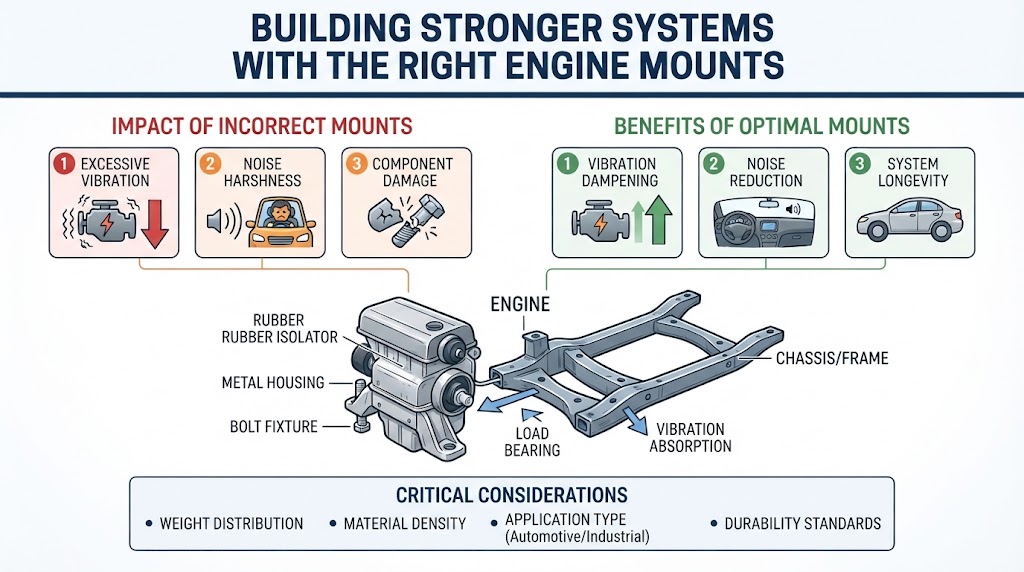
| Selection Factor | Correct Engine Mount | Incorrect or Poorly Matched Mount |
|---|---|---|
| Engine compatibility | Designed for the selected engine | May not match the engine pattern |
| Structural fit | Connects correctly to the airframe | May create uneven loads |
| Alignment | Supports the planned engine position | May affect handling and clearance |
| Vibration control | Works with suitable isolators | May transfer excessive vibration |
| Installation | Fits approved attachment points | May require unsafe changes |
| Maintenance | Allows suitable access | May block components |
| Durability | Designed for expected loads | May crack, loosen, or distort |
| Documentation | Supported by clear information | May have unknown specifications |
| Cowling fit | Supports correct engine placement | May cause fit problems |
| Component routing | Provides planned clearances | May create rubbing or heat exposure |
Final suitability should always be confirmed using the aircraft design, engine documentation, and qualified professional guidance.
Engine Mount Inspection Checklist
Before installation or during maintenance, check:
- Exact mount model
- Aircraft compatibility
- Engine compatibility
- Firewall attachment points
- Tube condition
- Weld condition
- Corrosion
- Paint or coating damage
- Bent or distorted areas
- Bolt condition
- Correct fasteners
- Locking devices
- Isolator condition
- Engine alignment
- Propeller clearance
- Cowling clearance
- Exhaust clearance
- Hose routing
- Cable routing
- Wire routing
- Signs of rubbing
- Heat damage
- Repair history
- Installation documents
Common Mistakes to Avoid
Builders should avoid:
- Choosing a mount only by appearance
- Assuming similar engines use the same mount
- Ignoring engine weight differences
- Forcing the mount into position
- Drilling new holes without proper guidance
- Reusing damaged bolts
- Installing incorrect isolators
- Ignoring firewall condition
- Modifying the mount without engineering support
- Painting over cracks or corrosion
- Ignoring propeller clearance
- Skipping professional inspection
- Using undocumented repaired parts
These shortcuts can create more work and increase structural risk.
How kitplanepart.com Fits Into the Building Process
Building a kit aircraft requires many components to work together correctly.
Builders exploring suitable parts for aircraft projects can use kitplanepart.com as part of their component research and planning process.
The most important goal is to select parts that are compatible, well-documented, correctly manufactured, and suitable for the intended aircraft and engine.
A careful parts-selection process helps reduce installation problems and supports a more organized aircraft build.
Frequently Asked Questions
1. What does an aircraft engine mount do?
An aircraft engine mount connects the engine to the firewall or supporting airframe structure. It supports engine weight, transfers thrust and torque, controls movement, and helps maintain correct alignment.
2. Why is engine mount compatibility important?
Compatibility ensures that the mount matches the aircraft, engine, firewall attachment points, weight, clearances, and vibration requirements. An incompatible mount may require unsafe modifications.
3. Can one mount fit different aircraft engines?
Sometimes a mount may support more than one approved engine configuration, but this must be confirmed through reliable documentation. Similar-looking engines do not always use the same mount.
4. What materials are used for aircraft engine mounts?
Many mounts use welded steel tubing. Materials, tube thickness, coatings, and hardware depend on the aircraft design and expected loads.
5. How do engine mounts reduce vibration?
The mount works with vibration isolators to reduce the amount of engine vibration transferred into the airframe. Correct isolator selection and installation are essential.
6. What are the signs of a damaged engine mount?
Possible signs include cracks, corrosion, loose bolts, bent tubes, damaged coating, unusual vibration, engine movement, alignment changes, and uneven isolator compression.
7. Can a cracked engine mount be repaired?
Some mounts may be repairable, but repair suitability depends on the damage, material, design, and approved repair information. A qualified professional should inspect and repair structural mounts.
8. Are used engine mounts safe?
A used mount may be suitable if its condition and history are known and it passes a proper inspection. Accident damage, repairs, corrosion, heat exposure, and modifications must be checked.
9. How often should an engine mount be inspected?
Inspection intervals should follow the aircraft, engine, mount, and component instructions. The mount should also be checked whenever unusual vibration, damage, or alignment changes are noticed.
10. Who should install or inspect an aircraft engine mount?
Installation and inspection should involve a qualified aviation professional, experienced builder, aircraft mechanic, engineer, or other person authorized for the aircraft category and location.
Conclusion
The engine mount is a critical part of an aircraft’s structural system. It supports the engine, controls loads, maintains alignment, and helps manage vibration.
Choosing the right mount requires more than finding a frame that looks strong. The mount must match the exact aircraft, engine, attachment points, weight, isolators, propeller position, and component clearances.
Regular inspection is equally important. Cracks, corrosion, worn isolators, loose fasteners, and alignment changes can affect the complete engine installation.
Builders should follow approved drawings, use correct hardware, avoid unsupported modifications, and seek professional guidance whenever necessary.

