
Introduction
For kit plane builders, ordering the right aircraft parts is one of the most critical steps in ensuring a safe, efficient, and successful build. Mistakes in part selection can lead to compatibility issues, increased costs, delays, or even safety hazards. By understanding what to consider before placing an order, builders can streamline their project, maintain regulatory compliance, and ensure that every component contributes to a high-quality aircraft. Proper planning and informed decisions during the ordering process are essential for a smooth build from start to finish.
Real-world Use Cases
A builder working on a two-seat kit plane may initially purchase an engine without verifying its compatibility with the airframe, only to discover it requires additional modifications. Another common scenario involves ordering avionics components that don’t match the wiring harness or cockpit layout, causing costly delays. Experienced builders ensure every part aligns with their aircraft specifications, manufacturer recommendations, and regulatory standards, preventing setbacks and unnecessary expenses.
Evaluation Criteria for Builders
Before ordering, builders should consider part compatibility, manufacturer certification, supplier reliability, cost, lead time, and maintenance requirements. Careful evaluation minimizes risk, ensures airworthiness, and allows for better planning of assembly sequences, avoiding downtime caused by missing or incorrect components.
Key Considerations Before Ordering Aircraft Parts
1- Verify Part Numbers and Specifications
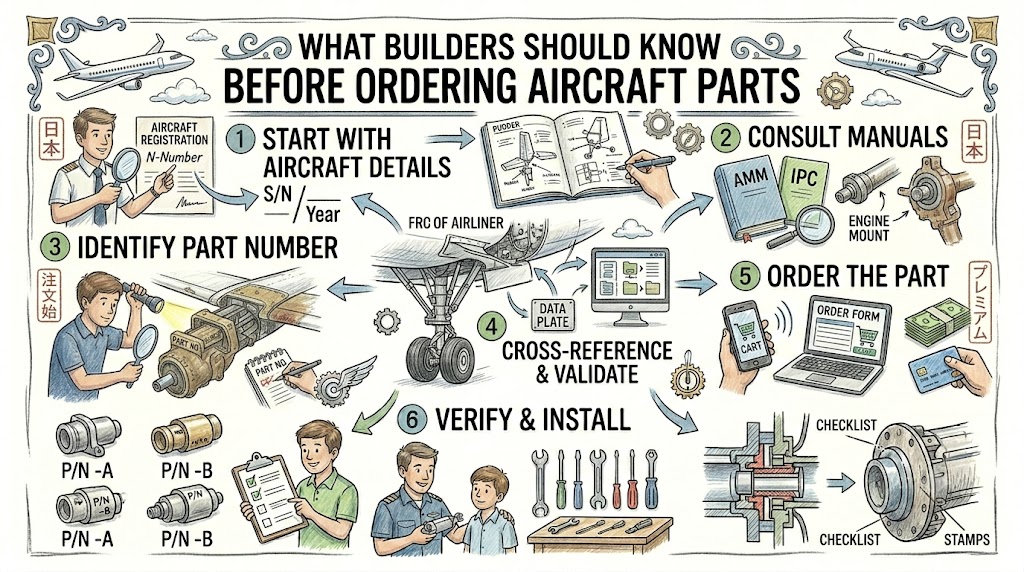
Always cross-check part numbers with the aircraft’s assembly manual and manufacturer documentation. This ensures that every component matches the model, configuration, and design requirements.
2- Understand OEM vs. Aftermarket Parts
Original Equipment Manufacturer (OEM) parts provide guaranteed compatibility and reliability, while aftermarket parts can be cost-effective but require careful verification for safety and certification compliance.
3- Check Certifications and Compliance
Ensure parts meet FAA, EASA, or equivalent aviation authority certifications. Certified parts have been tested for safety and performance, which is critical for structural and mechanical components.
4- Source from Trusted Suppliers
Purchase only from authorized dealers or verified suppliers. Reliable suppliers reduce the risk of counterfeit or substandard components, which can compromise safety.
5- Plan for Lead Times
Some parts may require long lead times due to manufacturing or shipping schedules. Order critical components early to avoid delays in the assembly process.
6- Consider Compatibility with Other Components
Before ordering, ensure new parts integrate seamlessly with existing components, wiring, or avionics systems to prevent modification issues during assembly.
7- Budget Accordingly
Include all associated costs such as shipping, taxes, handling, and possible import duties. Separately account for emergency or replacement parts to maintain financial flexibility.
8- Maintain Detailed Records
Track part numbers, purchase dates, certifications, and supplier information. Accurate records help with warranty claims, inspections, and resale value.
Practical Tips for Builders
- Consult fellow builders or aviation forums for supplier and part recommendations.
- Avoid purchasing based solely on cost; prioritize safety and compatibility.
- Keep a contingency fund for unexpected part replacements or upgrades.
- Schedule parts delivery to align with assembly milestones for efficiency.
- Double-check manuals and diagrams before finalizing orders.
Comparison Notes
OEM parts guarantee design compatibility and often come with warranties, whereas aftermarket or refurbished parts may save money but require careful verification. Builders must balance cost, quality, and certification when deciding which components to order, prioritizing safety and airworthiness above all else.
FAQs
1- How do I ensure a part is compatible with my kit plane?
Check the assembly manual, cross-reference part numbers, and confirm with the manufacturer or supplier.
2- Can I use aftermarket parts to save costs?
Yes, but only if they meet safety standards, certifications, and manufacturer recommendations.
3- Are all aircraft parts certified?
Critical structural and mechanical parts must be certified; cosmetic or non-critical parts may not require certification.
4- How far in advance should I order parts?
Order essential components early, considering lead times, shipping, and supplier availability.
5- What if a part arrives damaged or defective?
Work with the supplier for replacement or warranty claims. Maintain detailed purchase records for support.
6- Is it safe to buy used or refurbished parts?
Yes, if they are inspected, certified, and documented, ensuring they meet airworthiness standards.
7- How can I avoid counterfeit parts?
Purchase only from verified suppliers or authorized dealers and verify certifications before installation.
8- Do I need special tools for installation?
Some parts may require specific tools or professional assistance. Review manuals to determine installation requirements.
9- Should I order spare parts in advance?
Yes. Having backup critical components helps avoid assembly delays or unexpected downtime.
10- Can improper parts affect flight safety?
Absolutely. Using incorrect or substandard components can compromise airworthiness, structural integrity, and system performance.
Conclusion
Ordering aircraft parts is a foundational step in any kit plane project. By verifying specifications, prioritizing certified components, sourcing from trusted suppliers, and planning for lead times, builders can avoid costly mistakes and maintain safety and compliance. Careful budgeting, record-keeping, and attention to compatibility ensure a smoother assembly process and a successful final build. With these considerations in mind, builders can confidently move forward, turning their aviation projects into reliable, high-performing aircraft.

