
Introduction
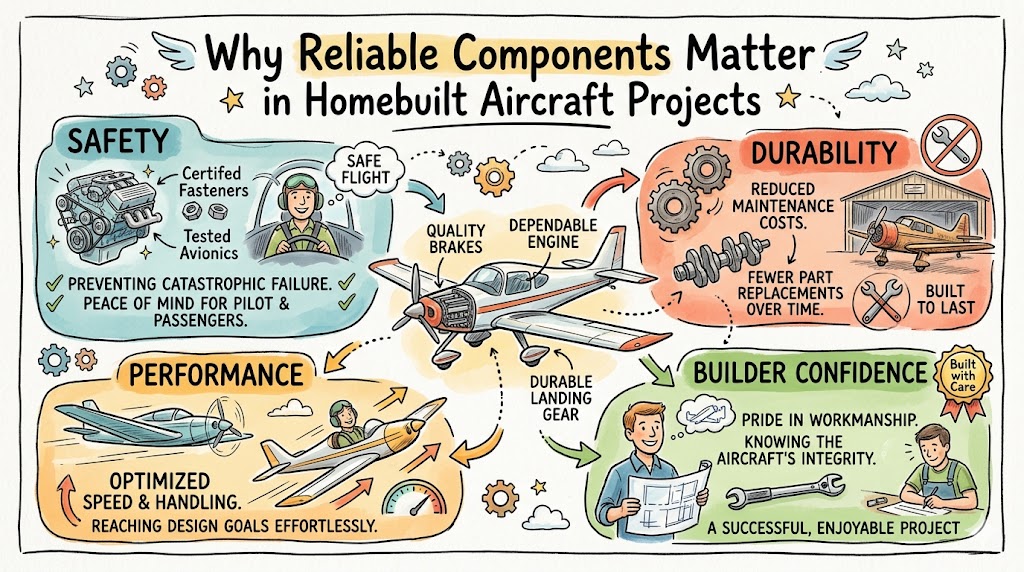
Building a homebuilt aircraft is an exciting and rewarding journey for aviation enthusiasts. However, success and flight safety depend heavily on the quality and reliability of every component used in the project. From engines and propellers to control surfaces, landing gear, avionics, and fasteners, each part contributes to the aircraft’s structural integrity, performance, and operational safety. Using substandard or unreliable components can lead to mechanical failures, accidents, costly repairs, and compromised airworthiness.
Homebuilt aircraft projects require careful selection, proper assembly, and ongoing maintenance. Even minor deviations in part quality or improper installation can create significant risk. Builders must prioritize certified, tested, and durable components to ensure their aircraft is safe, dependable, and capable of performing as intended during flight. Reliable parts also support compliance with aviation regulations, enhance longevity, and improve resale value should the aircraft ever be sold.
Real-World Use Cases
Reliable components are critical in practical scenarios for kit plane builders:
- Hobbyists avoiding mechanical failures during first test flights.
- Amateur pilots ensuring safe takeoffs, landings, and maneuvering.
- Kit plane builders meeting FAA or experimental aircraft airworthiness standards.
- Teams constructing experimental aircraft for competitions or demonstrations.
- Operators reducing long-term maintenance costs and repairs.
- Students and DIY enthusiasts learning correct assembly and component handling.
- Builders planning resale with strong documentation of reliable parts.
Evaluation Criteria for Component Selection
When selecting components for a homebuilt aircraft, consider:
- Manufacturer reputation and quality certifications
- Compliance with FAA or experimental aircraft guidelines
- Material strength, durability, and corrosion resistance
- Precision and tolerance of parts
- Compatibility with kit design and aircraft model
- Operational reliability under stress conditions
- Availability of replacement parts
- Documentation, assembly instructions, and test reports
- Technical support from suppliers
- Safety performance history
Best for
This guide is ideal for homebuilt aircraft enthusiasts, experimental aviation hobbyists, DIY kit builders, and amateur pilots seeking to ensure safety, durability, and performance in their aircraft projects.
Not Ideal for
It is not a substitute for professional aircraft mechanics, FAA-certified inspections, or official kit manuals. Builders must always follow manufacturer instructions, regulatory requirements, and certified safety protocols.
Why Reliable Components Are Critical
1- Flight Safety
Reliable components prevent mechanical failures mid-flight, reduce accident risk, and ensure predictable performance under operational conditions.
2- Airworthiness and Compliance
Using high-quality parts helps builders meet experimental aircraft airworthiness requirements and maintain compliance with FAA or local aviation regulations.
3- Mechanical Reliability
Durable components reduce the likelihood of control issues, engine problems, or structural failures, ensuring consistent aircraft operation.
4- Long-Term Performance
Reliable components contribute to long-lasting aircraft performance, minimize maintenance needs, and improve the overall lifespan of the kit plane.
5- Cost vs Value
While higher-quality parts may cost more upfront, they prevent expensive repairs, delays, and safety issues, providing better long-term value for builders.
Key Components That Require Reliability
Airframe and Structural Parts
- Fuselage panels, wing spars, ribs, and bulkheads
- Require material integrity, corrosion resistance, and precise fit
Engine and Propeller Components
- Engine mounts, propellers, and fuel system parts
- Must maintain tolerances, balance, and vibration resistance
Control Surfaces and Linkages
- Cables, pulleys, rods, hinges, and trim systems
- Must ensure smooth, responsive, and secure operation
Landing Gear and Brakes
- Struts, wheels, tires, shock absorbers, and brake assemblies
- Require load-bearing reliability and stress tolerance
Avionics and Electrical Components
- Navigation, communication, GPS, wiring, and batteries
- Must provide accurate and consistent performance under operational conditions
Fasteners and Hardware
- Bolts, nuts, rivets, washers
- Must be certified, corrosion-resistant, and load-rated
Comparison Table: Reliable vs Substandard Components
| Component Area | Reliable Parts | Substandard Parts | Impact on Safety & Performance |
|---|---|---|---|
| Airframe | Certified, corrosion-resistant, precise | Cheap or mismatched | Structural failures, fatigue cracks |
| Engine | Properly rated mounts and propellers | Low-quality or imbalanced | Vibration, engine inefficiency |
| Control Surfaces | Smooth, tested linkages | Loose or untested | Poor responsiveness, potential control loss |
| Landing Gear | Certified struts and brakes | Inferior or worn parts | Hard landings, collapse risk |
| Avionics | Calibrated, tested | Faulty or untested | Navigation errors, communication failures |
| Fasteners | Load-rated, corrosion-resistant | Weak or improper | Joint failure, assembly instability |
Tips for Choosing Reliable Components
- Verify manufacturer reputation and certifications
- Check compatibility with your kit plane model
- Inspect for material quality, corrosion resistance, and durability
- Use certified fasteners and load-rated hardware
- Maintain documentation for inspections and replacements
- Prioritize engine, control, and landing gear parts for reliability
- Avoid substitutes without testing or certification
- Plan long-term maintenance and replacement schedules
Common Mistakes Builders Should Avoid
- Using low-cost, uncertified components
- Ignoring supplier documentation or test reports
- Skipping inspection of incoming parts
- Failing to replace worn or damaged hardware promptly
- Mixing incompatible materials or hardware
- Neglecting engine or propeller balance checks
- Overlooking corrosion prevention
- Assembling without proper torque or guidance
- Delaying component maintenance
- Underestimating impact of substandard parts on flight safety
Frequently Asked Questions
- Why are reliable components critical for homebuilt aircraft?
They ensure flight safety, structural integrity, and predictable performance, reducing the risk of accidents or mechanical failure. - Can low-cost parts be used safely?
Substandard components often compromise safety and reliability. Investing in certified, high-quality parts is essential. - Which components are most critical in kit planes?
Engine, propeller, control surfaces, landing gear, airframe, avionics, and fasteners are essential for safe and reliable operation. - How can I verify component quality?
Look for manufacturer certifications, test reports, FAA compliance (if applicable), and supplier reputation. - Do reliable components affect long-term costs?
Yes. Upfront investment in quality parts reduces maintenance costs, repairs, and potential safety incidents. - How does component reliability affect assembly?
High-quality parts fit correctly, maintain structural integrity, and reduce assembly errors, improving build quality. - Can unreliable components cause mid-flight issues?
Yes. Engine failures, control malfunctions, landing gear problems, or structural failures can result from substandard parts. - Are there standards for homebuilt aircraft components?
Components should meet FAA experimental aircraft standards, manufacturer guidelines, or recognized aviation material certifications. - How should I maintain reliable parts?
Follow manufacturer recommendations, inspect for wear or corrosion, and replace proactively. - Where can I source reliable kit plane components?
Purchase from reputable suppliers, certified aviation parts vendors, or authorized kit manufacturers.
Conclusion
In homebuilt aircraft projects, component reliability is fundamental for safety, performance, and long-term success. Every part—from airframe and engine to control systems, landing gear, and avionics—must meet high-quality standards to ensure predictable operation and structural integrity. Builders who prioritize certified, durable components reduce risks, improve assembly quality, and create aircraft capable of performing safely for years. For hobbyists, DIY builders, and experimental aviation enthusiasts, investing in reliable components is not just a choice—it is essential for safe, successful, and enjoyable homebuilt aircraft projects.

