
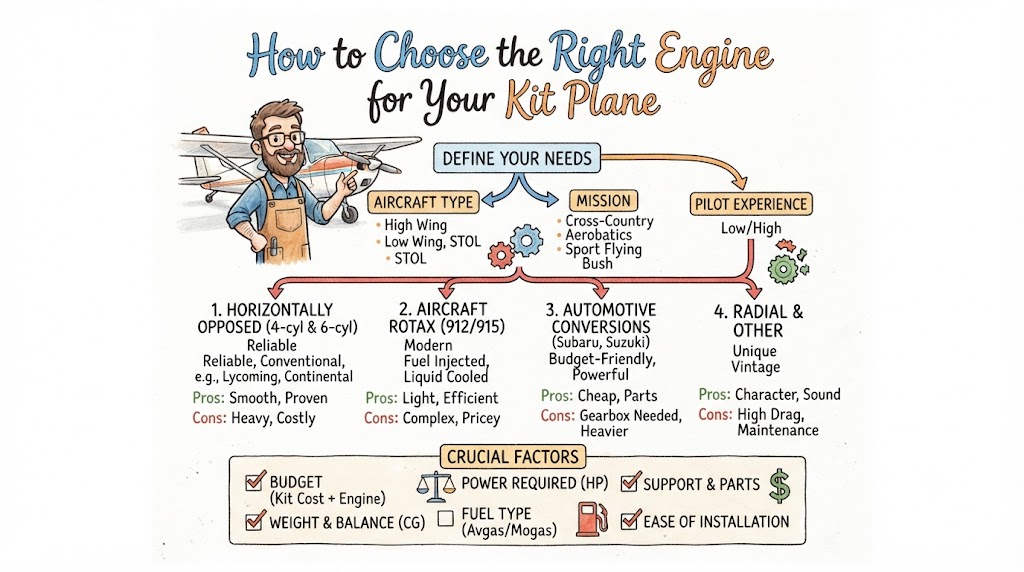
Introduction
Building a kit plane is an exciting journey that combines engineering, craftsmanship, and aviation passion. Among all the decisions a builder must make, selecting the right engine is one of the most important. The engine is not only responsible for producing power but also affects aircraft performance, weight balance, handling characteristics, maintenance requirements, and overall flying experience.
A common mistake among new builders is choosing an engine based only on power output or price. While these factors matter, the correct engine must match the aircraft design, intended mission, operating environment, and builder’s maintenance capabilities.
The ideal engine for a kit aircraft is one that provides the right balance of performance, reliability, efficiency, weight, and support availability. A recreational aircraft may require different engine characteristics compared with a long-distance cruiser or a performance-focused experimental aircraft.
Why Engine Selection Matters for a Kit Plane
The engine is one of the most important components of any aircraft because it directly influences how the aircraft performs.
A properly selected engine can help provide:
- Reliable operation
- Suitable aircraft performance
- Balanced weight distribution
- Efficient fuel usage
- Easier maintenance
- Better ownership experience
An unsuitable engine choice may create challenges such as:
- Weight and balance issues
- Installation difficulties
- Increased maintenance complexity
- Reduced aircraft efficiency
- Performance limitations
Every kit aircraft has specific design characteristics, so engine selection should always consider aircraft requirements rather than focusing only on engine specifications.
What Makes an Engine Suitable for a Kit Plane?
A suitable kit plane engine should match the aircraft’s design and intended purpose.
Important considerations include:
- Aircraft size
- Airframe structure
- Maximum weight limits
- Flight mission
- Performance expectations
- Maintenance requirements
For example:
A lightweight recreational aircraft may benefit from a simple and efficient engine, while a larger experimental aircraft designed for longer flights may require different power characteristics.
Understanding Kit Plane Engine Types
Different types of engines can be used in experimental and kit aircraft depending on aircraft design and builder goals.
Aircraft Piston Engines
Piston engines are among the most common powerplants used in many kit aircraft.
They operate using internal combustion principles similar to other piston-powered aircraft engines.
Advantages of Piston Engines
Benefits may include:
- Familiar technology
- Wide maintenance experience
- Availability of parts
- Easier servicing
- Proven operating history
Considerations
Builders should evaluate:
- Weight
- Fuel requirements
- Maintenance needs
- Compatibility with the aircraft design
Turbine Engines for Kit Aircraft
Some experimental aircraft use turbine powerplants.
Turbine engines operate differently from piston engines and provide unique performance characteristics.
Potential Advantages
- High power output
- Smooth operation
- Different performance capabilities
Considerations
Builders should evaluate:
- Installation complexity
- Cost
- Maintenance requirements
- Aircraft compatibility
Turbine engines are not suitable for every kit aircraft design.
Electric and Hybrid Power Systems
Electric and hybrid propulsion technologies continue to develop within aviation.
These systems may offer advantages such as:
- Reduced mechanical complexity
- Alternative energy options
- New aircraft design possibilities
However, builders must consider:
- Battery technology
- Flight duration requirements
- Weight impact
- Charging infrastructure
Factors to Consider When Choosing a Kit Plane Engine
1. Aircraft Compatibility
The first question should always be:
“Is this engine suitable for my aircraft design?”
Consider:
- Engine mounting requirements
- Aircraft structure
- Weight limitations
- Propeller compatibility
- Manufacturer recommendations
A powerful engine is not automatically the right engine if it does not match the aircraft.
2. Engine Weight
Engine weight directly affects aircraft balance and handling.
A heavier engine may influence:
- Center of gravity
- Payload capacity
- Aircraft performance
- Structural requirements
A lighter engine is not always better because the aircraft must maintain proper balance and stability.
3. Power Requirements
Engine power should match the aircraft’s intended mission.
Consider:
Recreational Flying
May prioritize:
- Reliability
- Simplicity
- Efficiency
Long-Distance Cruising
May require:
- Endurance
- Fuel efficiency
- Consistent performance
Performance Flying
May require:
- Higher power capability
- Strong aircraft compatibility
The correct power level depends on aircraft design and intended use.
4. Reliability
Reliability is one of the most important engine considerations.
Evaluate:
- Operating history
- Manufacturer reputation
- Maintenance support
- Availability of technical information
A reliable engine reduces operational uncertainty and improves confidence for aircraft owners.
5. Fuel Efficiency
Fuel efficiency affects operating costs and aircraft range.
Important factors include:
- Engine design
- Aircraft weight
- Flight speed
- Operating conditions
- Flight mission
A fuel-efficient engine should still meet the aircraft’s performance requirements.
6. Maintenance Requirements
Builders should understand the maintenance responsibilities associated with their engine choice.
Consider:
- Availability of replacement parts
- Technical support
- Inspection requirements
- Maintenance experience needed
An engine that is easy to maintain can improve the ownership experience.
7. Installation Complexity
Engine installation involves more than attaching the engine to the aircraft.
Builders may need to consider:
- Engine mounts
- Cooling systems
- Fuel connections
- Electrical systems
- Exhaust systems
- Instrument integration
A compatible engine can simplify the construction process.
New Engine vs Used Engine for Kit Planes
Choosing between a new and used engine is an important decision.
New Engine Advantages
Benefits may include:
- Known condition
- Manufacturer support
- Updated components
- Reduced uncertainty
Used Engine Advantages
Potential benefits include:
- Lower initial purchase cost
- Proven operating history
- Availability
However, used engines require careful evaluation.
Considerations Before Buying a Used Engine
Before purchasing a used aircraft engine, review:
- Maintenance records
- Previous operating history
- Inspection results
- Component condition
- Documentation availability
A lower purchase price does not always mean lower ownership cost.
Matching Engine Choice With Aircraft Mission
The best engine depends heavily on how the aircraft will be used.
Recreational Flying
Builders focused on recreational flying often prioritize:
- Reliability
- Simplicity
- Easy maintenance
- Balanced performance
Long-Distance Cruising
Cruising aircraft may require attention to:
- Fuel efficiency
- Endurance
- Comfort
- Consistent operation
Performance-Oriented Flying
Performance aircraft may focus on:
- Power capability
- Aircraft structure
- Aerodynamic design
- Operating requirements
Utility and Experimental Applications
Some builders need aircraft for specialized purposes.
Considerations may include:
- Payload requirements
- Operating environment
- Reliability
- Adaptability
Engine Installation Considerations
A successful engine installation requires careful planning.
Important areas include:
Engine Mounting
The engine must be securely integrated with the aircraft structure.
Cooling System
Proper cooling is essential for maintaining engine operation.
Propeller Compatibility
The engine and propeller combination must work effectively together.
Fuel System Integration
Fuel delivery systems must match engine requirements.
Electrical Integration
Modern aircraft engines may require integration with:
- Sensors
- Displays
- Monitoring systems
Aircraft Engine Maintenance Planning
Proper maintenance helps protect engine reliability.
Important practices include:
- Regular inspections
- Oil monitoring
- Component checks
- Maintenance documentation
- Early issue identification
Good maintenance planning helps builders understand engine condition throughout ownership.
Common Engine Selection Mistakes
Choosing Only Based on Price
The cheapest option may not provide the best long-term value.
Consider:
- Maintenance
- Parts availability
- Reliability
- Support
Selecting Too Much Power
More power is not always better.
An oversized engine may affect:
- Weight balance
- Aircraft handling
- Efficiency
- Structural requirements
Ignoring Aircraft Manufacturer Guidance
Builders should always consider approved recommendations and aircraft design requirements.
Forgetting Maintenance Support
An engine should be supported by:
- Available parts
- Technical information
- Qualified assistance
Not Considering Future Use
Choose an engine based on how the aircraft will actually be used.
How to Evaluate an Aircraft Engine Supplier
A reliable supplier should provide:
Quality Products
Parts and engines should meet appropriate aviation quality expectations.
Technical Support
Good support helps builders during installation and maintenance.
Documentation
Proper records and information are important for aircraft construction.
Aviation Experience
Experienced suppliers understand experimental aircraft requirements.
Kit Plane Engine Selection Checklist
| Consideration | Why It Matters |
|---|---|
| Aircraft Compatibility | Ensures proper fit and operation |
| Engine Weight | Affects balance and handling |
| Power Requirements | Matches aircraft mission |
| Reliability | Supports safe operation |
| Maintenance Support | Helps long-term ownership |
| Fuel Requirements | Influences operating efficiency |
| Installation Needs | Affects construction complexity |
| Budget | Supports realistic planning |
| Intended Mission | Determines performance needs |
| Supplier Support | Provides technical assistance |
New Engine vs Used Engine Comparison
| Feature | New Engine | Used Engine |
|---|---|---|
| Condition | Known history | Requires evaluation |
| Initial Cost | Usually higher | May be lower |
| Documentation | Usually available | Depends on history |
| Support | Manufacturer support possible | Depends on supplier |
| Maintenance History | New records | Previous records required |
| Reliability Confidence | Higher predictability | Depends on condition |
| Inspection Needs | Standard checks | More evaluation needed |
| Ownership Planning | Easier forecasting | Requires assessment |
| Availability | Depends on production | Depends on market |
| Component Condition | New components | Variable condition |
| Risk Level | Lower uncertainty | Higher uncertainty |
| Long-Term Support | Often clearer | Depends on availability |
| Installation Planning | Manufacturer guidance available | May require additional planning |
| Operating History | None | Existing history available |
| Purchase Decision | Based on specifications | Based on condition |
Frequently Asked Questions
1. How do I choose the right engine for my kit plane?
Choose an engine based on aircraft compatibility, mission requirements, weight, reliability, maintenance needs, and manufacturer guidance.
2. Why is engine selection important for kit aircraft?
The engine affects aircraft performance, balance, efficiency, and overall flying experience.
3. What type of engines are used in kit planes?
Common options include piston engines, turbine engines, and emerging electric or hybrid systems depending on aircraft design.
4. Should I buy a new or used aircraft engine?
The choice depends on budget, reliability expectations, documentation, support availability, and aircraft requirements.
5. How does engine weight affect a kit plane?
Engine weight influences aircraft balance, handling, payload, and structural considerations.
6. How much power does my kit plane need?
Power requirements depend on aircraft design, weight, mission, and performance goals.
7. Can any engine be installed in a kit plane?
No. Engine compatibility depends on aircraft design, structure, and installation requirements.
8. What maintenance does a kit plane engine require?
Maintenance depends on engine type but commonly includes inspections, servicing, monitoring, and record keeping.
9. What should I check before buying a used aircraft engine?
Review maintenance records, operating history, inspection information, and component condition.
10. Why is supplier support important?
Technical support and parts availability can make aircraft building and maintenance easier.
Conclusion
Choosing the right engine for your kit plane is one of the most important decisions during aircraft construction. The best engine is not always the most powerful or the least expensive option. Instead, it should match the aircraft design, intended mission, maintenance capability, and long-term ownership goals.
Successful engine selection requires careful evaluation of compatibility, weight, reliability, installation requirements, and support availability. By researching options and understanding the needs of your specific aircraft, builders can make better decisions and create a safer, more enjoyable flying experience.

