
Introduction
Building a kit aircraft is an exciting journey that combines engineering, craftsmanship, and a passion for aviation. Among all the decisions a builder makes, selecting the right engine is one of the most important steps. The engine is the heart of an aircraft and directly influences performance, reliability, efficiency, maintenance requirements, and overall flying experience.
Choosing an engine for a kit plane is not simply about selecting the highest available power output. Builders must consider aircraft design, weight limitations, intended mission, fuel requirements, installation compatibility, and long-term maintenance support.
A properly selected engine can help an aircraft achieve balanced performance and dependable operation. On the other hand, an unsuitable engine choice can create installation challenges, affect aircraft handling, and increase maintenance complexity.
Understanding the Role of an Aircraft Engine in a Kit Plane
The aircraft engine provides the power required to generate thrust and maintain flight. However, its role goes beyond producing horsepower. The engine must work together with the aircraft structure, propeller, fuel system, and overall design.
A suitable engine affects:
- Takeoff performance
- Climb capability
- Cruise efficiency
- Aircraft balance
- Reliability
- Maintenance requirements
Every kit aircraft has specific design characteristics. An engine that works well for one aircraft may not be suitable for another because differences in weight, aerodynamics, and mission requirements can significantly affect performance.
Before selecting an engine, builders should understand their aircraft’s requirements and follow recommended engine guidelines provided by the aircraft manufacturer.
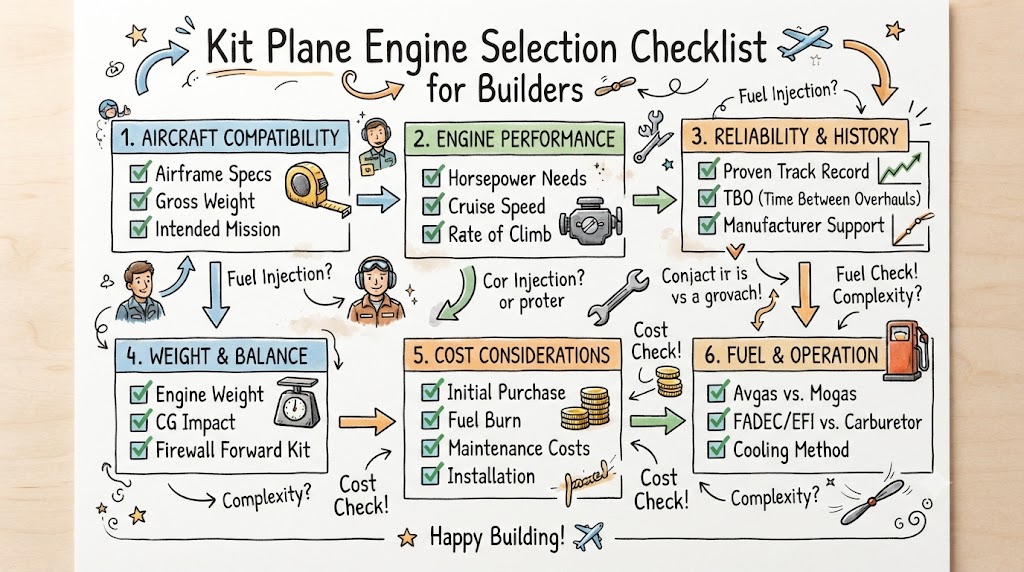
Kit Plane Engine Selection Checklist for Builders
1. Understand Your Aircraft Requirements
The first step in engine selection is understanding what the aircraft is designed to achieve.
Builders should evaluate:
- Aircraft model specifications
- Recommended engine options
- Maximum takeoff weight
- Intended flying purpose
- Expected operating conditions
A recreational aircraft may require different engine characteristics compared with a long-distance touring aircraft or an aerobatic aircraft.
Before purchasing an engine, builders should clearly define their mission:
- Weekend recreational flying
- Cross-country travel
- Training operations
- Experimental aviation projects
- Performance-focused flying
The aircraft’s purpose should guide the engine decision.
2. Match Engine Power Requirements
Engine power is an important factor, but selecting the most powerful engine available is not always the best approach.
Too little power can reduce aircraft performance, while excessive power can increase weight, complexity, and installation challenges.
Builders should consider:
- Horsepower requirements
- Aircraft weight
- Expected performance
- Propeller compatibility
- Manufacturer recommendations
A balanced power selection helps achieve better efficiency, handling, and reliability.
3. Check Engine Compatibility
Engine compatibility is one of the most critical considerations during a kit aircraft project.
Builders should confirm that the selected engine works properly with:
- Aircraft structure
- Engine mounting system
- Propeller configuration
- Fuel system
- Electrical system
- Cooling requirements
An engine may have excellent specifications but still create problems if it does not integrate properly with the aircraft design.
Careful compatibility checks can prevent costly modifications later in the build process.
4. Consider Engine Weight and Aircraft Balance
Aircraft weight distribution plays a major role in safe operation.
The engine is one of the heaviest components installed on an aircraft, and its weight affects the center of gravity.
Builders should evaluate:
- Engine weight
- Mounting position
- Aircraft balance
- Handling characteristics
A heavier engine may change aircraft performance and require adjustments to other components.
Maintaining proper weight balance helps ensure predictable aircraft behavior.
5. Evaluate Engine Reliability
Reliability is one of the most important factors when selecting an aircraft engine.
A dependable engine should provide consistent operation and have a strong maintenance history.
Builders should research:
- Manufacturer experience
- Engine operating history
- Technical documentation
- Maintenance requirements
- User experiences
For experimental aircraft, reliability becomes especially important because builders often manage installation, inspection, and maintenance decisions themselves.
6. New Engine vs Used Engine Considerations
Builders often decide between purchasing a new engine or selecting a used option.
New Engines
Advantages include:
- New components
- Manufacturer support
- Known operating history
- Updated technology
New engines may provide confidence regarding condition and documentation.
Used Engines
Advantages may include:
- Lower initial expense
- Availability of proven engine models
- Existing operational experience
However, builders should carefully evaluate:
- Engine condition
- Maintenance records
- Operating hours
- Previous usage
A complete inspection and proper evaluation are important before choosing a used aircraft engine.
7. Maintenance and Service Support
Long-term ownership depends heavily on maintenance support.
Before selecting an engine, builders should consider:
- Availability of replacement parts
- Technical manuals
- Maintenance knowledge
- Support network
- Builder community experience
An engine with strong support resources can make future maintenance easier.
Limited parts availability or lack of technical information can create challenges during ownership.
8. Fuel Type and Efficiency
Fuel requirements are another important consideration for kit aircraft builders.
Builders should evaluate:
- Available fuel options
- Fuel system compatibility
- Operating efficiency
- Travel requirements
An efficient engine can help improve operating economics and extend aircraft range.
However, fuel selection should always match aircraft design requirements and approved operating procedures.
9. Engine Cooling Requirements
Proper cooling is essential for engine reliability and performance.
Different engines may use different cooling approaches.
Air-Cooled Engines
Advantages may include:
- Simpler design
- Fewer cooling components
- Easier maintenance considerations
Liquid-Cooled Engines
Advantages may include:
- Controlled temperature management
- Consistent cooling performance
Builders should consider installation requirements, operating environment, and aircraft design before selecting a cooling system.
10. Propeller Compatibility
The engine and propeller must work together as a complete system.
Builders should evaluate:
- Propeller size requirements
- Engine rotation specifications
- Performance goals
- Aircraft mission
An incorrectly matched engine and propeller combination can affect efficiency and aircraft performance.
Selecting compatible components helps achieve better overall operation.
Common Mistakes Builders Make When Choosing Aircraft Engines
Selecting Only Based on Power
More horsepower does not always mean better performance. Engine weight and aircraft balance are equally important.
Ignoring Aircraft Manufacturer Recommendations
Aircraft designs are developed with specific performance requirements. Ignoring recommended engine options may create unnecessary challenges.
Overlooking Maintenance Support
An engine that lacks available parts or technical resources can become difficult to maintain.
Not Considering Installation Complexity
Some engines may require significant modifications, increasing project time and effort.
Choosing Without Research
Engine decisions should be based on aircraft requirements, technical information, and experienced guidance.
Popular Engine Categories Used in Kit Aircraft
Air-Cooled Engines
Air-cooled engines are commonly considered for their simpler design and straightforward maintenance requirements.
They can be suitable for builders looking for traditional aircraft engine solutions.
Liquid-Cooled Engines
Liquid-cooled engines provide controlled temperature management and may offer advantages in specific aircraft applications.
However, they often require additional cooling system components.
Conventional Aircraft Engines
Traditional aircraft engines are designed specifically for aviation applications and are widely used in many experimental aircraft projects.
Alternative Engine Solutions
Some builders explore alternative engine approaches for experimental aircraft.
These options require careful evaluation of:
- Reliability
- Installation requirements
- Aircraft compatibility
- Support availability
Aircraft Engine Selection Comparison Checklist
| Selection Factor | Why It Matters |
|---|---|
| Engine Power | Determines aircraft performance capability |
| Weight | Affects aircraft balance and handling |
| Reliability | Supports safer and more dependable operation |
| Maintenance Support | Helps with long-term ownership |
| Fuel Requirements | Influences operating planning |
| Installation Compatibility | Prevents modification challenges |
| Parts Availability | Supports easier repairs and maintenance |
| Cost Considerations | Helps manage project planning |
Steps Before Installing a Kit Plane Engine
Research Aircraft Requirements
Review aircraft documentation and understand recommended engine specifications.
Consult Experienced Builders
Experienced aircraft builders can provide valuable practical knowledge about engine selection and installation.
Review Technical Documentation
Study engine manuals, installation guides, and technical information before beginning installation.
Plan Maintenance Support
Ensure future access to parts, service information, and technical assistance.
Complete Proper Testing
Before regular operation, builders should complete required inspections and testing procedures.
Safety Considerations During Engine Selection
Safety should always be the priority when selecting and installing a kit aircraft engine.
Builders should focus on:
- Following aircraft design guidelines
- Proper engine installation
- Correct mounting procedures
- Fuel system safety
- Electrical system reliability
- Regular inspections
A carefully selected and properly installed engine contributes to a safer aircraft operation.
Future Trends in Kit Aircraft Engines
The experimental aviation industry continues to evolve with improvements in efficiency, materials, and technology.
Future developments may include:
- More efficient engine designs
- Lightweight aviation power systems
- Improved electronic monitoring
- Alternative propulsion technologies
As kit aircraft become more advanced, builders will continue looking for engines that provide reliability, efficiency, and compatibility with modern aircraft designs.
Frequently Asked Questions
1. How do I choose the right engine for my kit plane?
Builders should consider aircraft specifications, intended use, engine compatibility, weight, reliability, and maintenance support before selecting an engine.
2. Why is engine weight important in aircraft building?
Engine weight affects aircraft balance, center of gravity, and overall handling characteristics.
3. How much horsepower does a kit aircraft need?
The required horsepower depends on aircraft design, weight, mission purpose, and manufacturer recommendations.
4. Should builders choose new or used aircraft engines?
Both options can work depending on project goals. Builders should evaluate condition, support, documentation, and long-term reliability.
5. How important is engine compatibility?
Engine compatibility is essential because the engine must work correctly with the aircraft structure, fuel system, propeller, and electrical components.
6. What factors affect aircraft engine reliability?
Reliability depends on engine design, maintenance history, installation quality, operating conditions, and available support.
7. Can any engine be installed in a kit aircraft?
No. Engines must match aircraft requirements and installation specifications to ensure proper operation.
8. How do builders maintain kit plane engines?
Maintenance involves inspections, following technical guidance, replacing worn components, and maintaining proper operating procedures.
9. What should beginners consider before buying an aircraft engine?
Beginners should research aircraft requirements, seek experienced advice, and consider reliability and support availability.
10. How does engine selection affect aircraft performance?
Engine selection influences speed, efficiency, handling, reliability, and overall flying experience.
Conclusion
Selecting the right engine is one of the most important decisions in building a kit aircraft. A successful engine choice requires more than comparing power ratings. Builders must evaluate compatibility, weight, reliability, maintenance support, fuel requirements, and aircraft mission goals.
A carefully selected engine helps create a balanced, reliable, and enjoyable aircraft. By following a structured selection checklist and researching available options, builders can make informed decisions that support a successful aircraft project.

