
Introduction
Building a homebuilt aircraft is one of the most rewarding experiences in aviation. Whether you’re assembling a kit plane for recreational flying, cross-country travel, or sport aviation, every component plays an important role in the aircraft’s performance and safety. Among all the decisions builders make, selecting the right engine is one of the most critical.
The engine serves as the heart of any aircraft, providing the power needed for takeoff, climb, cruise, and overall flight performance. An engine that matches the aircraft’s design, weight, and intended mission can contribute to smoother operation, improved efficiency, and easier long-term maintenance. On the other hand, selecting an incompatible or poorly suited engine may create installation challenges, affect weight and balance, and increase maintenance complexity.
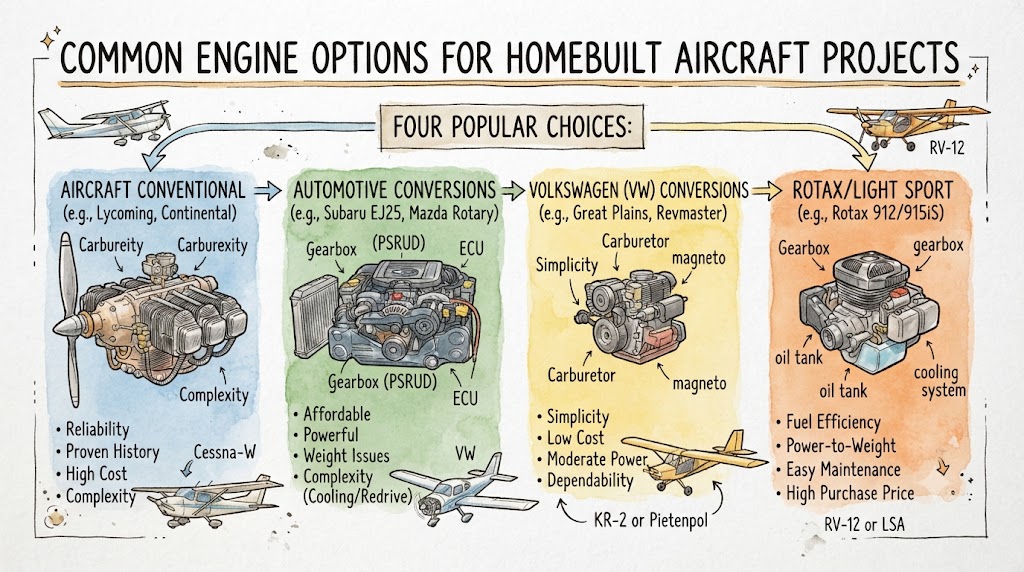
Homebuilt aircraft builders have access to a wide range of engine options, including traditional aircraft engines, automotive conversions, diesel engines, rotary engines, and emerging electric propulsion systems. Each option offers unique characteristics that may suit different aircraft designs and flying goals.
Why Engine Selection Is Critical for Homebuilt Aircraft
Engine selection affects nearly every aspect of an aircraft’s performance and operation.
The engine influences:
- Takeoff performance
- Climb capability
- Cruise speed
- Fuel efficiency
- Payload capacity
- Reliability
- Maintenance requirements
Selecting an engine involves more than choosing horsepower. Builders must also consider aircraft compatibility, weight distribution, cooling requirements, fuel systems, propeller matching, and long-term maintenance support.
A carefully selected engine helps ensure that the completed aircraft performs as intended while remaining safe and practical to operate.
Factors to Consider Before Choosing an Aircraft Engine
Aircraft Design Compatibility
Every aircraft is designed with certain engine characteristics in mind.
Builders should review:
- Aircraft designer recommendations
- Firewall-forward compatibility
- Engine mount requirements
- Structural limitations
- Propeller compatibility
Following recommended engine combinations generally simplifies installation and improves overall compatibility.
Engine Power Requirements
Power requirements depend on the aircraft’s intended mission.
Consider:
- Aircraft weight
- Passenger capacity
- Cruise performance goals
- Climb performance
- Operating environment
An engine with too little power may limit aircraft performance, while excessive power may increase weight and installation complexity.
Weight and Balance
Proper weight and balance are essential for safe aircraft operation.
Builders should evaluate:
- Engine weight
- Center of gravity
- Airframe limitations
- Payload capacity
Selecting an engine that fits within the aircraft’s design limits helps maintain predictable handling characteristics.
Fuel Type
Different engine types use different fuels.
Possible fuel options include:
- Aviation gasoline
- Approved automotive gasoline (where applicable)
- Diesel fuel
- Jet fuel for certain engine types
Fuel availability, operating environment, and aircraft design all influence fuel selection.
Maintenance Requirements
Long-term maintenance should be considered before selecting an engine.
Important factors include:
- Inspection schedules
- Parts availability
- Technical documentation
- Service support
- Maintenance complexity
An engine with readily available parts and support can simplify long-term ownership.
Common Engine Options for Homebuilt Aircraft
1. Air-Cooled Horizontally Opposed Engines
Air-cooled horizontally opposed engines are among the most commonly used engines in homebuilt aircraft.
Their simple design and long history in general aviation make them a popular choice for many builders.
Advantages
- Proven aircraft design
- Good reliability when properly maintained
- Relatively simple cooling system
- Broad industry familiarity
- Wide range of compatible aircraft
Considerations
- Air cooling depends on proper airflow management.
- Engine weight varies by model.
- Installation should follow manufacturer and aircraft designer recommendations.
Common Applications
- Sport aircraft
- Cross-country aircraft
- Recreational homebuilt airplanes
- Utility aircraft
2. Liquid-Cooled Aircraft Engines
Liquid-cooled engines use coolant systems to regulate engine temperatures.
These engines may provide more consistent temperature control under varying operating conditions.
Advantages
- Stable operating temperatures
- Improved cooling management
- Modern engine designs
Considerations
- More complex cooling systems
- Additional plumbing
- Increased installation requirements
- More maintenance components
Common Applications
- Experimental aircraft
- Custom homebuilt projects
- High-performance designs
3. Automotive Engine Conversions
Some homebuilt aircraft builders choose to adapt automotive engines for aviation use.
These conversions require significant engineering and specialized modifications.
Advantages
- Potential parts availability
- Familiar engine platforms
- Builder customization opportunities
Considerations
- Extensive modifications
- Cooling system adaptation
- Propeller speed reduction requirements where applicable
- Reliability depends on engineering quality
Automotive conversions require careful planning and should only be considered after thorough research.
4. Diesel Aircraft Engines
Diesel aircraft engines have become increasingly popular in certain applications due to their fuel efficiency and operational characteristics.
Advantages
- Efficient fuel consumption
- Availability of suitable fuels in many regions
- Good torque characteristics
Considerations
- Higher initial system complexity
- Specialized maintenance
- Engine weight considerations
Common Applications
- Cross-country flying
- Long-range operations
- Certain experimental aircraft
5. Rotary Engines
Rotary engines are known for their compact design and favorable power-to-weight characteristics.
Although less common, they continue to interest some experimental aircraft builders.
Advantages
- Compact engine size
- Smooth operation
- Good power-to-weight ratio
Considerations
- Cooling requirements
- Fuel consumption
- Specialized installation
- Limited support compared with traditional aircraft engines
Common Applications
- Experimental aircraft
- Performance-focused projects
6. Electric Propulsion Systems
Electric propulsion represents one of the newest developments in experimental aviation.
While still evolving, electric systems are attracting interest among homebuilt aircraft enthusiasts.
Advantages
- Quiet operation
- Reduced mechanical complexity
- Lower routine maintenance
- Zero direct engine emissions during operation
Considerations
- Battery limitations
- Flight endurance
- Charging infrastructure
- Technology availability
Common Applications
- Experimental research aircraft
- Light recreational aircraft
- Educational aviation projects
Engine Comparison Table
| Engine Type | Typical Advantages | Primary Considerations | Common Applications |
|---|---|---|---|
| Air-Cooled Horizontally Opposed | Proven design, reliability, simple cooling | Proper airflow management | Recreational and cross-country aircraft |
| Liquid-Cooled | Stable temperatures, modern design | Cooling system complexity | Experimental and performance aircraft |
| Automotive Conversion | Builder flexibility, familiar platforms | Engineering and installation complexity | Custom experimental projects |
| Diesel | Fuel efficiency, strong torque | Specialized maintenance | Long-range and touring aircraft |
| Rotary | Compact size, smooth operation | Cooling and fuel consumption | Performance-focused experimental aircraft |
| Electric | Quiet operation, fewer moving parts | Battery capacity and endurance | Light experimental aircraft |
Choosing the Right Engine for Your Aircraft Project
Define Your Mission
Understanding how the aircraft will be used helps narrow engine choices.
Examples include:
- Recreational flying
- Cross-country travel
- Flight training
- Sport aviation
- STOL operations
Mission requirements influence engine size, fuel capacity, and performance expectations.
Consider Long-Term Maintenance
Before selecting an engine, evaluate:
- Spare parts availability
- Maintenance documentation
- Technical support
- Inspection requirements
- Service network
An engine with strong long-term support can simplify ownership.
Evaluate Installation Complexity
Builders should understand installation requirements before purchasing an engine.
Consider:
- Firewall-forward systems
- Cooling arrangements
- Fuel system integration
- Electrical systems
- Exhaust routing
- Propeller compatibility
Simpler installations often reduce build time and troubleshooting.
Follow Aircraft Designer Recommendations
Aircraft designers typically recommend engines that have already demonstrated compatibility with the airframe.
Following these recommendations generally provides:
- Better performance
- Easier installation
- Improved weight and balance
- Greater reliability
Common Engine Installation Challenges
Even well-planned projects may encounter installation challenges.
Common examples include:
Cooling System Design
Proper airflow or coolant circulation is essential for reliable engine operation.
Engine Mount Alignment
Accurate alignment helps minimize vibration and supports safe operation.
Fuel System Integration
Fuel delivery systems must be compatible with the selected engine.
Exhaust Installation
Proper exhaust routing affects both engine performance and safety.
Electrical Wiring
Modern engines may require careful electrical integration for ignition, monitoring, and instrumentation.
Weight Distribution
Incorrect weight distribution may affect aircraft handling and center of gravity.
Propeller Matching
The propeller should be selected to match engine performance characteristics and aircraft design.
Engine Maintenance Best Practices
Routine maintenance helps maximize engine reliability.
Perform Regular Inspections
Inspect the engine according to manufacturer recommendations and applicable maintenance schedules.
Maintain the Oil System
Regular oil inspections and servicing help protect internal engine components.
Inspect the Fuel System
Check fuel lines, filters, pumps, and fittings for proper operation.
Monitor the Ignition System
Reliable ignition contributes to smooth engine performance.
Maintain Cooling Systems
Whether air-cooled or liquid-cooled, proper temperature management remains essential.
Inspect the Propeller
Regular propeller inspections help identify damage, imbalance, or wear before they become larger concerns.
Common Mistakes Builders Should Avoid
Choosing Based Only on Horsepower
Engine selection should balance power, weight, reliability, and compatibility.
Ignoring Weight and Balance
An unsuitable engine may negatively affect aircraft handling.
Underestimating Cooling Requirements
Cooling system design is essential for long-term engine reliability.
Using Incompatible Components
Mixing incompatible systems may create installation and maintenance challenges.
Ignoring Maintenance Planning
Builders should consider long-term service needs before selecting an engine.
Overlooking Manufacturer Recommendations
Aircraft designers and engine manufacturers provide valuable guidance that helps improve compatibility and reliability.
Homebuilt Aircraft Engine Selection Checklist
Before selecting an engine, review this checklist:
- Define the aircraft’s intended mission.
- Review aircraft designer recommendations.
- Verify engine compatibility.
- Calculate weight and balance.
- Evaluate fuel requirements.
- Review maintenance support.
- Confirm parts availability.
- Plan firewall-forward installation.
- Understand inspection requirements.
- Consult experienced builders or qualified aviation professionals when needed.
A structured checklist helps simplify the decision-making process.
Future Trends in Homebuilt Aircraft Engines
Homebuilt aircraft engine technology continues to evolve.
Emerging developments include:
Electronic Engine Management
Advanced electronic controls improve engine monitoring and performance management.
Improved Fuel Efficiency
Modern engine designs continue to reduce fuel consumption while maintaining reliable performance.
Hybrid Propulsion
Hybrid systems combine traditional engines with electric technologies to improve efficiency.
Electric Aircraft Technology
Battery technology continues to advance, supporting new opportunities for light experimental aircraft.
Advanced Lightweight Materials
Modern materials help reduce engine weight while maintaining durability.
Digital Engine Monitoring
Real-time engine monitoring systems provide valuable operational information and support preventive maintenance.
Frequently Asked Questions
1. What is the most common engine type used in homebuilt aircraft?
Air-cooled horizontally opposed engines remain among the most widely used engine types in many homebuilt aircraft projects.
2. How do I choose the right engine for my aircraft project?
Consider aircraft compatibility, intended mission, weight and balance, maintenance requirements, fuel availability, and manufacturer recommendations.
3. Are automotive engine conversions suitable for homebuilt aircraft?
Some builders successfully use automotive engine conversions, but these projects require extensive engineering, careful installation, and thorough testing.
4. What factors affect engine selection?
Important factors include power requirements, aircraft design, weight, fuel type, maintenance support, installation complexity, and operating environment.
5. Why is weight and balance important?
Proper weight and balance help maintain safe aircraft handling, stability, and predictable flight characteristics.
6. How often should aircraft engines be inspected?
Inspection schedules vary depending on engine type, manufacturer recommendations, operating conditions, and applicable aviation regulations.
7. What maintenance should builders expect?
Routine maintenance generally includes inspections, oil servicing, fuel system checks, ignition system inspections, cooling system maintenance, and propeller inspections.
8. Are electric aircraft engines practical for homebuilt aircraft?
Electric propulsion is an emerging technology that may be suitable for certain light experimental aircraft, although battery capacity and flight endurance remain important considerations.
9. Can I install any engine in a kit aircraft?
No. Engine selection should always consider aircraft compatibility, structural limitations, and aircraft designer recommendations.
10. Why should builders follow aircraft designer recommendations?
Recommended engine combinations are typically selected to provide appropriate performance, weight distribution, installation compatibility, and long-term reliability.
Conclusion
Selecting the right engine is one of the most important decisions in any homebuilt aircraft project. The engine influences performance, reliability, weight and balance, maintenance requirements, and the overall flying experience. Builders should carefully evaluate aircraft compatibility, intended mission, fuel options, installation complexity, and long-term support before making a final decision.
Whether choosing an air-cooled horizontally opposed engine, a liquid-cooled design, a diesel engine, an automotive conversion, a rotary engine, or an emerging electric propulsion system, thoughtful planning and informed decision-making are essential. Following aircraft designer recommendations, using compatible components, and maintaining the engine according to approved procedures contribute to safer and more reliable aircraft operations.

