
Introduction
Building a kit plane is a rewarding experience that combines engineering decisions, aviation knowledge, and personal craftsmanship. Among all the choices a builder must make, selecting the right aircraft engine is one of the most important decisions because the engine directly affects performance, reliability, handling, and overall flight characteristics.
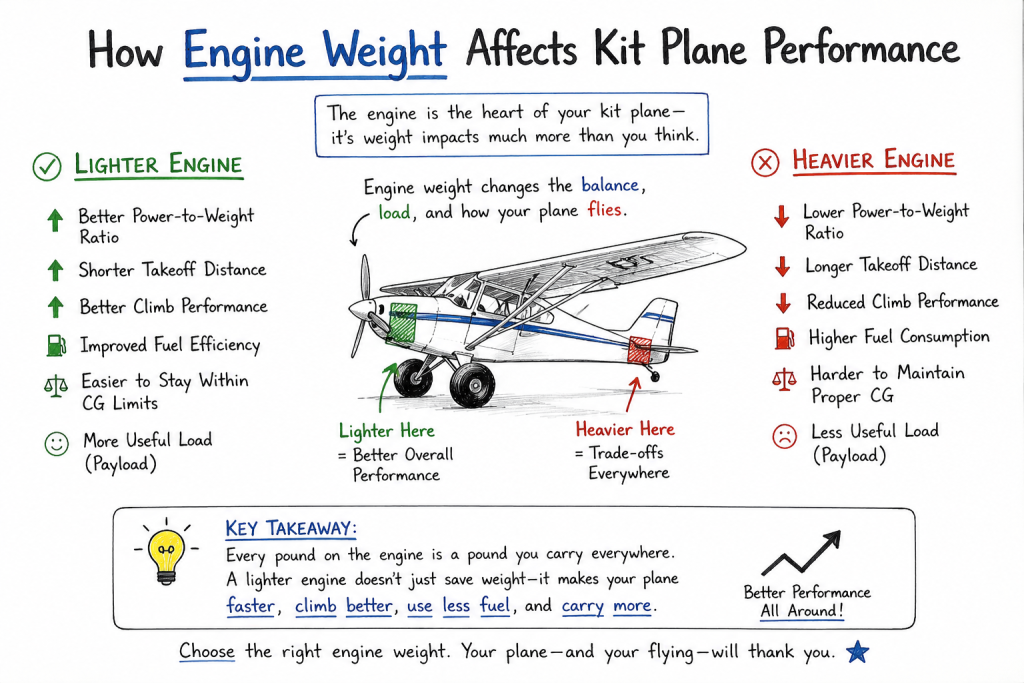
Many builders naturally focus on engine power when selecting an aircraft engine. While horsepower is important, engine weight is equally critical. A powerful engine that adds excessive weight can negatively affect aircraft balance, efficiency, and handling. On the other hand, a lightweight engine with appropriate power can improve aircraft performance and provide better flying characteristics.
Engine weight influences almost every aspect of a kit aircraft, including takeoff performance, climb rate, fuel consumption, center of gravity, and pilot experience. Understanding this relationship helps builders make smarter decisions when designing or upgrading their aircraft.
Understanding Engine Weight in Kit Aircraft
Engine weight refers to the total mass of the engine system installed in an aircraft. Many builders initially look only at the manufacturer’s listed engine weight, but the actual installed weight can be significantly higher.
The complete engine installation may include:
- Engine assembly
- Engine mount
- Propeller system
- Exhaust components
- Cooling equipment
- Electrical systems
- Fuel system components
- Accessories and controls
The difference between the engine’s basic weight and the final installed weight can have a major impact on aircraft performance.
Dry Engine Weight vs Installed Engine Weight
Dry Engine Weight
This refers to the engine weight without additional operating components.
It usually excludes:
- Oil
- Accessories
- Mounting hardware
- Exhaust systems
- Cooling systems
Installed Engine Weight
This represents the complete operational engine system attached to the aircraft.
For kit plane builders, installed weight is the more important measurement because it represents the actual aircraft configuration.
Why Engine Weight Matters in Kit Plane Performance
Aircraft performance depends heavily on the relationship between power and weight.
A heavier aircraft requires more energy to:
- Accelerate
- Climb
- Maintain altitude
- Maneuver efficiently
A lighter aircraft generally requires less power to achieve similar performance levels. m=8kgF_g=78.4Ng=9.8 m/s^2Fg=mg
However, choosing the lightest possible engine is not always the correct solution. The engine must provide enough power while maintaining proper aircraft balance and structural compatibility.
Impact of Engine Weight on Aircraft Weight and Balance
One of the most important effects of engine weight is its influence on the aircraft’s center of gravity.
The engine is usually installed at the front of the aircraft, meaning even a small weight difference can significantly affect balance.
Forward Center of Gravity
A heavier engine may move the center of gravity forward.
Possible effects include:
- Increased control forces
- Reduced climb performance
- Longer takeoff distance
- More difficult rotation during takeoff
A nose-heavy aircraft may still be controllable, but it can reduce overall flying efficiency.
Rear Center of Gravity
A lighter engine may shift the center of gravity backward.
Possible effects include:
- Reduced stability
- More sensitive handling
- Increased pilot workload
Proper balance is essential because both excessive forward and rear weight conditions can affect aircraft safety.
Effect of Engine Weight on Takeoff Performance
Takeoff performance is directly influenced by aircraft weight.
A heavier engine installation increases total aircraft weight, which can affect:
- Ground acceleration
- Rotation speed
- Takeoff distance
- Initial climb
During takeoff, the aircraft requires sufficient power to overcome weight and aerodynamic resistance.
A well-matched engine provides enough thrust while maintaining a reasonable aircraft weight.
Example
Consider two similar kit aircraft:
Aircraft A:
- Lightweight engine
- Lower total aircraft weight
- Moderate power output
Aircraft B:
- Heavier engine
- Higher horsepower
- Increased aircraft weight
Aircraft B may have more available power, but the additional weight could reduce some performance advantages.
The best choice depends on aircraft design and intended mission.
Influence on Climb Performance
Climb performance is one of the areas where engine weight has a noticeable effect.
A lighter aircraft generally benefits from:
- Better power-to-weight ratio
- Faster altitude gain
- Improved climb efficiency
A heavier engine can reduce climb performance if the additional weight exceeds the benefits of increased horsepower.
Important factors include:
- Engine power output
- Aircraft weight
- Propeller efficiency
- Aerodynamic design
- Operating conditions
For builders who frequently operate from shorter runways or higher-altitude locations, engine weight becomes an especially important consideration.
Impact on Cruise Performance
Engine weight also influences cruise performance.
A heavier aircraft may experience:
- Increased fuel consumption
- Reduced efficiency
- Higher operating costs
However, engine selection involves balancing multiple factors.
A heavier but more efficient engine may still provide good cruise performance if it offers:
- Better fuel efficiency
- Improved reliability
- Longer service life
The goal is not simply choosing the lightest engine but selecting the most suitable engine for the aircraft mission.
Effect on Aircraft Handling Characteristics
Engine weight affects how an aircraft feels during flight.
Changes may influence:
- Control response
- Stability
- Maneuverability
- Pilot workload
A properly balanced aircraft usually provides:
- Predictable handling
- Smooth control response
- Better pilot confidence
Poor engine weight selection can create handling characteristics that make the aircraft less enjoyable or more challenging to operate.
Engine Weight and Fuel Efficiency
Aircraft weight directly affects fuel requirements.
A heavier aircraft generally requires more energy to maintain flight.
Additional engine weight may increase:
- Fuel consumption
- Operating costs
- Required engine workload
For builders interested in long-distance flying, weight management becomes an important part of aircraft efficiency.
Factors affecting fuel efficiency include:
- Engine design
- Aircraft weight
- Propeller selection
- Aerodynamic efficiency
- Flight conditions
Lightweight vs Heavy Aircraft Engines
| Feature | Lightweight Engine | Heavier Engine |
|---|---|---|
| Aircraft Weight | Lower | Higher |
| Climb Performance | Often improved | May require additional power |
| Fuel Efficiency | Potentially better | May increase fuel requirements |
| Handling | More responsive | May provide additional stability |
| Installation | May require fewer modifications | May require stronger structures |
| Power Capability | Depends on design | Often higher output options |
The correct choice depends on aircraft design, flying goals, and operational requirements.
Choosing the Right Engine for a Kit Plane
Selecting an aircraft engine requires more than comparing horsepower numbers.
Builders should evaluate:
Aircraft Compatibility
The engine must match:
- Airframe design
- Structural limitations
- Mounting requirements
- Propeller compatibility
Performance Requirements
Consider:
- Desired cruise speed
- Takeoff requirements
- Payload needs
- Flight distance
Weight and Balance
Builders should calculate:
- Engine position
- Center of gravity limits
- Aircraft loading conditions
Reliability
Important considerations include:
- Maintenance availability
- Replacement parts
- Engine support
- Long-term durability
Common Engine Selection Mistakes
Choosing Maximum Power Without Considering Weight
More horsepower does not always mean better performance.
An oversized engine may create:
- Weight problems
- Balance issues
- Increased fuel consumption
Ignoring Installed Weight
Builders sometimes consider only engine specifications and forget additional installation components.
Selecting an Engine Without Considering Aircraft Mission
A recreational aircraft and a cross-country aircraft may require different engine characteristics.
Ignoring Maintenance Requirements
An engine should not only perform well but also remain practical to maintain.
Engine Installation Considerations
Engine installation affects the final aircraft weight and performance.
Important installation factors include:
Engine Mount
The mounting system must support the engine while maintaining proper weight distribution.
Cooling System
Cooling components add weight and must be properly designed.
Exhaust System
Exhaust selection affects:
- Weight
- Performance
- Installation complexity
Propeller Compatibility
The engine and propeller must work together efficiently.
Electrical and Fuel Systems
Supporting systems contribute to total aircraft weight.
Importance of Weight and Balance Calculations
Weight and balance calculations are essential for safe aircraft operation.
Builders should evaluate:
- Empty aircraft weight
- Maximum takeoff weight
- Center of gravity range
- Passenger loading
- Fuel loading
Accurate calculations help ensure:
- Predictable handling
- Better performance
- Safer flight operations
How Builders Can Optimize Kit Plane Performance
Builders can improve aircraft performance by:
- Choosing the correct engine size
- Maintaining proper weight balance
- Selecting compatible components
- Using quality aircraft parts
- Following aircraft design recommendations
- Performing careful testing
Performance optimization is about creating a balanced aircraft rather than simply adding more power.
Importance of Quality Aircraft Components
Every component contributes to aircraft reliability and performance.
Quality parts help support:
- Safety
- Durability
- Proper installation
- Long-term reliability
From engine accessories to mounting components, each part plays a role in the aircraft’s final performance.
Choosing reliable aviation components is an important step in successful aircraft construction.
Why Kit Plane Builders Choose KitPlanePart
Kit plane builders need access to reliable components and aviation resources throughout the construction process.
KitPlanePart supports experimental aircraft enthusiasts by helping builders find suitable aircraft parts and components for their projects.
A careful approach to component selection helps builders create aircraft that deliver:
- Better reliability
- Improved performance
- Greater confidence
- Safer operation
Kit Plane Engine Selection Checklist
Before Choosing an Engine
- Understand aircraft mission requirements
- Compare engine weight specifications
- Evaluate power requirements
- Review compatibility
- Consider maintenance support
Before Installation
- Confirm mounting compatibility
- Calculate weight and balance
- Review supporting components
- Verify propeller selection
Before First Flight
- Complete inspections
- Confirm aircraft balance
- Review performance expectations
- Conduct proper testing
Frequently Asked Questions
1. Why does engine weight matter in kit planes?
Engine weight affects aircraft balance, performance, fuel efficiency, and handling characteristics. Selecting the correct engine weight helps maintain better aircraft performance.
2. Is a lighter engine always better for a kit aircraft?
Not always. The ideal engine must provide the required power while maintaining proper weight balance and compatibility.
3. How does engine weight affect aircraft handling?
Engine weight influences the center of gravity, which affects stability, control response, and pilot workload.
4. Can a heavier engine improve aircraft performance?
A heavier engine may provide more power, but the additional weight must be balanced against performance benefits.
5. What is installed engine weight?
Installed engine weight includes the complete engine system, including mounts, accessories, cooling systems, and other components.
6. How does engine weight affect fuel consumption?
Additional aircraft weight generally increases the energy required for flight, which may increase fuel consumption.
7. Why is center of gravity important in kit aircraft?
Center of gravity affects aircraft stability, handling, and safe operation.
8. What factors should builders consider when selecting an engine?
Builders should consider weight, power, compatibility, reliability, maintenance needs, and aircraft mission.
9. Does engine installation add significant weight?
Yes. Mounting systems, exhaust, cooling, electrical, and fuel components can significantly increase total installation weight.
10. How can builders improve kit plane performance?
Builders can improve performance through proper engine selection, accurate weight calculations, quality components, and careful aircraft testing.
Conclusion
Engine weight plays a major role in determining kit plane performance, handling, efficiency, and safety. While engine power is an important consideration, builders must also understand how weight affects aircraft balance and overall flight characteristics. The best engine choice is not always the lightest or most powerful option. It is the engine that provides the right combination of performance, reliability, compatibility, and weight for the aircraft’s intended mission. By carefully evaluating engine specifications, installation requirements, and aircraft balance, kit plane builders can create aircraft that deliver better performance and a more enjoyable flying experience.

