
Introduction
Building a kit aircraft is an exciting journey that combines engineering, craftsmanship, and a passion for aviation. For many aircraft enthusiasts, assembling a homebuilt aircraft represents the opportunity to create a personalized flying machine while gaining a deeper understanding of aircraft systems.
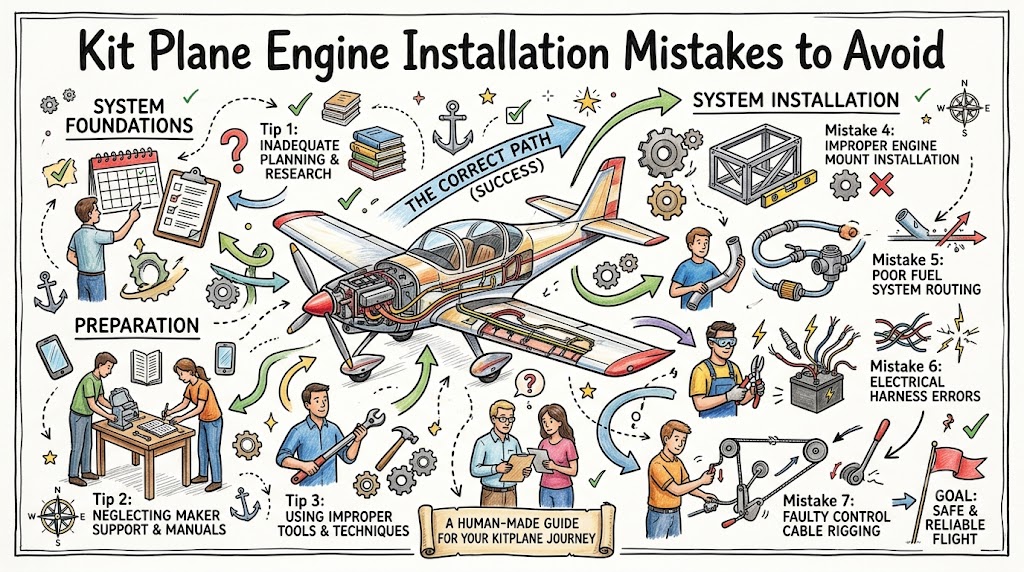
Among all stages of kit aircraft construction, engine installation is one of the most important and technically sensitive processes. The engine is the heart of an aircraft, directly influencing performance, reliability, efficiency, and flight characteristics.
A properly installed engine can provide dependable performance and a smooth flying experience. However, mistakes during installation can lead to problems such as excessive vibration, poor engine performance, overheating, maintenance difficulties, and unexpected repair requirements.
Many engine-related challenges are not caused by the engine itself but by incorrect installation decisions, unsuitable components, poor planning, or insufficient testing.
Whether you are an experienced aircraft builder or starting your first experimental aircraft project, understanding common engine installation mistakes can help you make better decisions and build a safer, more reliable aircraft.
Why Proper Engine Installation Matters in Kit Aircraft
Unlike factory-produced aircraft, kit planes require builders to make important decisions during the construction process. Engine installation involves more than simply attaching an engine to the airframe.
A successful installation requires careful consideration of:
- Aircraft design
- Engine compatibility
- Weight distribution
- Cooling requirements
- Fuel systems
- Electrical connections
- Vibration management
- Testing procedures
The engine affects nearly every aspect of aircraft operation. An incorrect installation approach can impact aircraft handling, performance, and long-term reliability.
Proper engine installation helps ensure:
- Efficient engine operation
- Improved aircraft balance
- Reduced component stress
- Better fuel efficiency
- Reliable flight performance
Common Kit Plane Engine Installation Mistakes to Avoid
1. Choosing the Wrong Engine for the Aircraft
One of the biggest mistakes builders make is selecting an engine without considering the complete aircraft design.
Every kit aircraft has specific requirements related to:
- Aircraft weight
- Wing design
- Intended use
- Performance goals
- Balance limitations
An engine that produces excessive power or adds unnecessary weight may negatively affect aircraft characteristics.
Similarly, an engine that does not provide enough performance may prevent the aircraft from achieving expected results.
Before selecting an engine, builders should carefully evaluate compatibility with the aircraft design and intended mission.
Important considerations include:
- Engine weight
- Power output
- Fuel requirements
- Mounting requirements
- Operating characteristics
Choosing the right engine creates the foundation for a successful aircraft build.
2. Incorrect Engine Mount Installation
The engine mount is a critical connection between the engine and aircraft structure.
Improper engine mounting can create issues such as:
- Excessive vibration
- Structural stress
- Alignment problems
- Increased component wear
Common installation concerns include:
- Incorrect positioning
- Improper hardware selection
- Incorrect torque application
- Poor alignment
A properly installed engine mount helps distribute loads effectively and reduces unnecessary stress on aircraft components.
Builders should always follow appropriate technical guidance and verify installation details carefully.
3. Ignoring Weight and Balance Calculations
Weight and balance is one of the most important aspects of aircraft construction.
The engine represents a significant portion of the aircraft’s total weight, and its position affects the aircraft’s center of gravity.
Incorrect weight distribution can influence:
- Aircraft stability
- Handling characteristics
- Takeoff performance
- Landing behavior
Builders should carefully evaluate how engine selection and installation affect overall aircraft balance.
A complete weight and balance review after installation helps ensure the aircraft remains within acceptable operating conditions.
4. Poor Cooling System Planning
Aircraft engines generate significant heat during operation. Proper cooling is essential for maintaining engine reliability.
A common mistake is underestimating cooling requirements during installation.
Cooling-related issues may occur because of:
- Poor airflow management
- Incorrect cooling system design
- Improper placement of components
- Insufficient temperature monitoring
Effective cooling planning helps prevent overheating and supports consistent engine performance.
Builders should carefully consider airflow, cooling components, and temperature monitoring during the installation process.
5. Incorrect Fuel System Installation
The fuel system plays a critical role in engine operation.
Fuel installation mistakes can affect:
- Engine performance
- Reliability
- Operational safety
Common concerns include:
- Poor fuel line routing
- Incorrect connections
- Inadequate filtration
- Potential leaks
A properly designed fuel system ensures consistent fuel delivery and supports reliable engine operation.
Builders should carefully inspect fuel-related components and ensure proper installation practices are followed.
6. Improper Electrical and Wiring Setup
Modern aircraft engines often depend on electrical systems for monitoring, ignition, sensors, and other functions.
Electrical installation mistakes can create reliability issues.
Common problems include:
- Incorrect wiring connections
- Poor grounding
- Insufficient protection
- Loose connections
A properly organized electrical system helps improve reliability and simplifies future maintenance.
Builders should focus on:
- Clear wiring organization
- Proper component protection
- Accurate documentation
7. Ignoring Vibration Management
Engine vibration is a natural part of aircraft operation, but excessive vibration can create problems.
Poor vibration management may lead to:
- Component fatigue
- Loose hardware
- Increased maintenance needs
- Damage to connected systems
Builders should consider vibration control during installation by paying attention to:
- Mounting quality
- Component security
- Regular inspections
Managing vibration properly helps protect both the engine and surrounding aircraft systems.
8. Skipping Proper Testing After Installation
Completing engine installation does not mean the aircraft is ready for operation immediately.
Testing is a critical stage that helps identify potential problems before flight.
Important checks include:
- System inspections
- Engine operation monitoring
- Leak checks
- Temperature observation
- Component verification
Proper testing allows builders to identify issues early and make necessary adjustments.
A careful testing process improves confidence before the aircraft enters service.
Best Practices for Successful Kit Plane Engine Installation
Plan Before Beginning Installation
Good preparation prevents many problems.
Before installation, builders should review:
- Aircraft plans
- Engine information
- Required components
- Installation requirements
Having a clear plan reduces mistakes and improves efficiency.
Follow Technical Documentation
Aircraft building requires attention to technical details.
Builders should carefully review available documentation related to:
- Engine specifications
- Aircraft requirements
- Component compatibility
Following recommended procedures helps maintain consistency and reliability.
Use Quality Aircraft Components
The quality of aircraft parts directly affects the success of an aircraft build.
Reliable components help support:
- Better performance
- Improved durability
- Easier maintenance
Using suitable aircraft engine components, mounting hardware, and supporting systems contributes to a stronger final aircraft.
Maintain Detailed Records
Documentation is valuable throughout the aircraft ownership journey.
Builders should maintain records related to:
- Installed components
- Maintenance activities
- System changes
- Inspection details
Good records make future maintenance easier and help track aircraft history.
Tools and Knowledge Required for Engine Installation
Successful engine installation requires understanding multiple aircraft systems.
Important areas include:
Aircraft Mechanics
Understanding mechanical relationships between components helps builders make better installation decisions.
Engine Systems
Knowledge of engine operation helps identify potential problems.
Fuel and Electrical Systems
Understanding supporting systems improves installation quality.
Safety Procedures
A safety-focused approach should guide every stage of aircraft construction.
Builders should recognize when professional aviation guidance is necessary.
The Importance of Quality Kit Aircraft Parts
Quality components play an important role in successful aircraft construction.
Using appropriate aircraft parts helps builders achieve:
- Better compatibility
- Reliable performance
- Improved durability
- Easier maintenance
Every component installed on an aircraft contributes to overall reliability.
For kit aircraft builders, choosing suitable parts and understanding their application are essential steps toward creating a dependable aircraft.
How kitplanepart.com Supports Kit Aircraft Builders
Building an experimental aircraft requires access to reliable information and suitable aviation components.
kitplanepart.com supports aircraft enthusiasts by providing resources and solutions related to kit aircraft construction and aviation components.
From engine-related parts to aircraft building supplies, having access to appropriate components helps builders make informed decisions throughout their aircraft projects.
A successful aircraft build combines careful planning, quality materials, and attention to detail at every stage.
Common Mistakes New Kit Aircraft Builders Should Avoid
Rushing the Installation Process
Aircraft construction requires patience and accuracy. Rushing can lead to mistakes that may create future problems.
Ignoring Manufacturer Guidance
Technical documentation provides important information about compatibility and installation requirements.
Selecting Components Only Based on Price
The cheapest option may not always provide the reliability required for aircraft applications.
Skipping Inspections
Regular inspections help identify issues before they become larger concerns.
Underestimating Testing
Testing is essential for confirming that aircraft systems operate properly.
Questions Builders Should Ask Before Installing an Engine
Before starting an engine installation, builders should consider:
- Is this engine compatible with my aircraft design?
- Are all required components available?
- Has weight and balance been reviewed?
- Are cooling requirements properly planned?
- Are fuel and electrical systems correctly designed?
- Has proper testing been planned?
These questions help create a more organized and reliable aircraft-building process.
FAQs
1. Why is engine installation important in a kit plane?
Engine installation is important because the engine directly affects aircraft performance, reliability, balance, and flight characteristics.
2. What are common kit plane engine installation mistakes?
Common mistakes include selecting the wrong engine, incorrect mounting, poor cooling planning, fuel system errors, and insufficient testing.
3. How do I choose the right engine for my aircraft kit?
The right engine should match the aircraft design, weight requirements, performance goals, and operational needs.
4. Why is weight and balance important during engine installation?
Weight and balance affect aircraft stability and handling. Incorrect calculations can negatively impact flight characteristics.
5. How can improper cooling affect aircraft engines?
Poor cooling can cause overheating, reduced performance, and increased engine stress.
6. What checks should be completed after engine installation?
Builders should perform system inspections, operational checks, temperature monitoring, and detailed reviews before flight.
7. Should beginners install kit plane engines themselves?
Beginners can participate in aircraft building, but they should seek proper guidance and follow approved technical information.
8. Why are quality aircraft parts important for engine installation?
Quality components improve reliability, compatibility, durability, and long-term aircraft performance.
9. How does vibration affect aircraft engine performance?
Excessive vibration can create component wear, loosen hardware, and increase maintenance requirements.
10. What tools are needed for kit aircraft engine installation?
Tools depend on the aircraft and engine type but generally include appropriate mechanical tools, inspection equipment, and technical documentation.
Conclusion
Engine installation is one of the most important stages of building a kit aircraft. A successful installation requires careful planning, proper component selection, attention to detail, and thorough testing. Avoiding common mistakes such as choosing an unsuitable engine, ignoring weight balance, overlooking cooling requirements, or skipping inspections can significantly improve aircraft reliability. For kit aircraft builders, every decision made during construction contributes to the final aircraft’s safety, performance, and longevity.

