
Introduction
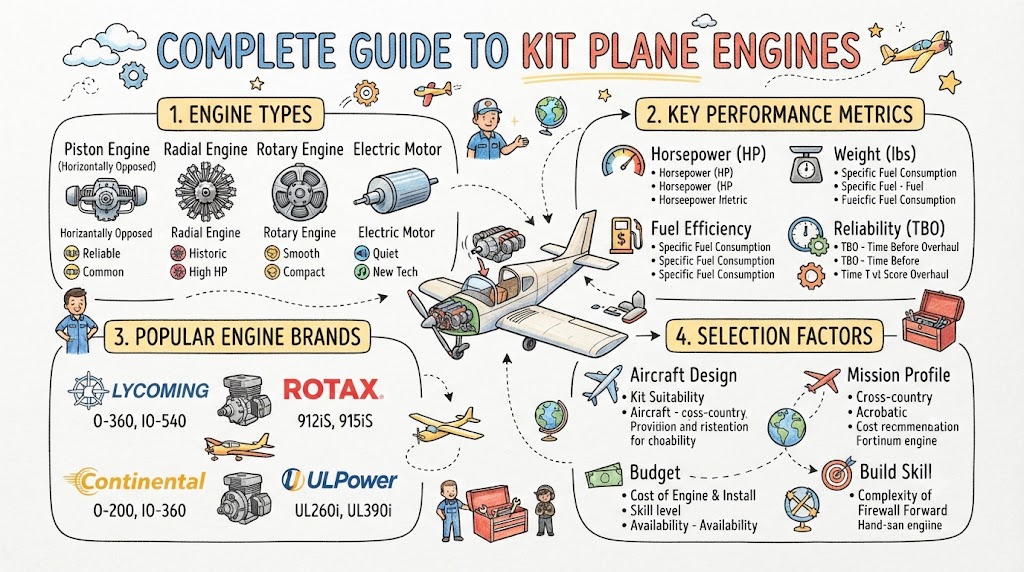
Selecting the right engine is one of the most important decisions in any kit aircraft project. While the airframe determines the aircraft’s structure and aerodynamics, the engine provides the power that influences takeoff performance, climb capability, cruise efficiency, payload capacity, fuel consumption, and overall flying experience. An engine that matches the aircraft’s design and intended mission can improve reliability, handling, and long-term ownership satisfaction.
Unlike factory-built certified aircraft, kit planes offer builders greater flexibility when choosing an engine. This freedom allows owners to select a powerplant that fits their performance goals, budget, and maintenance preferences. However, it also means that engine selection requires careful planning, research, and an understanding of compatibility, installation requirements, and ongoing maintenance.
What Are Kit Plane Engines?
A kit plane engine is the powerplant installed in a homebuilt or experimental aircraft assembled from a kit. The engine converts fuel into mechanical power, driving the propeller to produce thrust and enable flight.
Unlike many certified production aircraft that are limited to approved engine models, experimental aircraft often allow builders greater flexibility in selecting an engine, provided the installation is appropriate for the aircraft design and complies with applicable regulations.
Depending on the aircraft and intended use, kit plane engines may vary in:
- Configuration
- Cooling method
- Power output
- Weight
- Fuel system
- Maintenance requirements
- Operating costs
The engine should always be selected as part of the overall aircraft design rather than as an independent component.
Why Choosing the Right Engine Matters
The engine affects nearly every aspect of aircraft performance and ownership.
Flight Performance
The selected engine influences takeoff distance, climb rate, cruise speed, and payload capability.
Weight and Balance
Engine weight affects the aircraft’s center of gravity, which plays a critical role in handling characteristics and overall safety.
Reliability
A properly matched and well-maintained engine contributes to dependable aircraft operation.
Operating Costs
Fuel consumption, maintenance requirements, replacement parts, and overhaul planning all influence long-term ownership expenses.
Maintenance Planning
Some engines may require more frequent inspections or specialized maintenance than others.
Choosing the right engine requires balancing performance goals with practicality and long-term support.
Common Types of Kit Plane Engines
Air-Cooled Piston Engines
Air-cooled engines dissipate heat through airflow over cooling fins.
Advantages
- Simpler design
- Fewer cooling system components
- Lower overall system complexity
- Easier routine maintenance
Considerations
- Cooling effectiveness depends on proper airflow.
- Engine temperature management is important during different phases of flight.
Liquid-Cooled Engines
Liquid-cooled engines circulate coolant to help regulate operating temperatures.
Advantages
- More consistent temperature control
- Potentially quieter operation
- Improved cooling in some operating conditions
Considerations
- Additional components increase system complexity.
- Cooling system maintenance becomes an important part of ownership.
Four-Stroke Engines
Four-stroke engines are commonly used in many experimental aircraft because they offer smooth operation, durability, and fuel efficiency.
They are suitable for:
- Cross-country flying
- Recreational aviation
- Business travel
- General experimental aircraft
Two-Stroke Engines
Two-stroke engines are often lighter and mechanically simpler but may require different operating and maintenance considerations.
They are sometimes used in lightweight experimental aircraft where weight reduction is a priority.
Automotive Engine Conversions
Some builders adapt automotive engines for experimental aircraft after appropriate modifications.
Potential advantages include:
- Parts availability
- Familiar technology
- Cost considerations
However, successful conversions require careful engineering, cooling design, and compatibility evaluation.
Modern Experimental Aircraft Engines
Several manufacturers produce engines specifically intended for experimental aviation, offering designs optimized for homebuilt aircraft while supporting a range of performance requirements.
Factors to Consider When Selecting a Kit Plane Engine
Horsepower Requirements
The engine should provide sufficient power for the aircraft’s intended mission without adding unnecessary weight or complexity.
Aircraft Weight
The selected engine should be compatible with the aircraft’s structural design and recommended weight and balance limits.
Mission Profile
Ask yourself:
- Will the aircraft be used for local recreational flights?
- Will it primarily fly cross-country?
- Will it carry one or two occupants?
- Will it operate from shorter runways?
The answers influence engine selection.
Fuel Type
Different engines may be designed for different fuel types or fuel system configurations.
Builders should verify compatibility with manufacturer guidance and local fuel availability.
Cooling System
Proper cooling is essential for engine reliability.
The aircraft design should provide adequate airflow or coolant management based on the selected engine type.
Propeller Compatibility
The engine and propeller should be selected as a compatible system to achieve the desired performance and efficiency.
Maintenance Requirements
Routine inspections, parts availability, and maintenance complexity should all be considered before making a final decision.
Budget
The purchase price represents only one part of total ownership costs.
Builders should also consider:
- Installation expenses
- Maintenance
- Fuel
- Replacement parts
- Future overhaul planning
Engine Installation Considerations
Installing an aircraft engine involves more than simply attaching it to the airframe.
Important areas include:
Engine Mount
The mount must support the engine while managing operational loads and vibration.
Firewall-Forward Components
This area generally includes:
- Fuel system components
- Electrical systems
- Oil system
- Cooling arrangements
- Exhaust system
- Engine controls
Proper planning improves accessibility and long-term maintenance.
Weight Distribution
Correct engine placement supports safe center-of-gravity limits and predictable handling characteristics.
Cooling Systems
Effective cooling helps maintain proper engine operating temperatures.
Builders should inspect:
- Cooling airflow
- Baffles
- Ducting
- Radiators where applicable
- Hoses
- Temperature monitoring systems
Routine inspections help identify developing issues before they become larger problems.
Fuel Systems
Reliable fuel delivery is essential for safe engine operation.
Important considerations include:
- Fuel quality
- Fuel filtration
- Fuel line routing
- Fuel pumps where applicable
- Leak inspections
- Fuel system maintenance
Engine Maintenance Best Practices
Routine maintenance supports reliability and long engine life.
Recommended practices include:
- Regular oil changes
- Oil filter inspection
- Spark plug inspection
- Compression testing where appropriate
- Fuel system inspection
- Cooling system inspection
- Engine monitoring
- Accurate maintenance records
Preventive maintenance often reduces unexpected repairs.
Common Engine Problems
Builders and owners should monitor for:
- Excessive engine temperatures
- Oil leaks
- Fuel contamination
- Ignition issues
- Abnormal vibration
- Corrosion
- Cooling inefficiencies
- Starting difficulties
Prompt investigation of unusual symptoms helps maintain safe operation.
Engine Performance Optimization
Performance can often be improved through:
- Proper engine break-in
- Balanced weight distribution
- Suitable propeller selection
- Regular maintenance
- Accurate engine monitoring
- Correct operating procedures
Optimization focuses on reliability as much as performance.
Engine Upgrades
Common upgrades include:
- Electronic ignition systems
- Fuel injection improvements
- Advanced engine monitoring
- Improved cooling components
- Lightweight accessories
Any modification should be evaluated carefully for compatibility with the aircraft and engine.
Cost of Owning a Kit Plane Engine
Engine ownership involves ongoing expenses beyond the initial purchase.
Typical costs include:
- Engine acquisition
- Installation
- Routine maintenance
- Fuel
- Replacement components
- Repairs
- Overhaul planning
A long-term maintenance budget helps owners prepare for future expenses.
Safety Considerations
Safe engine operation begins before every flight.
Builders and owners should:
- Perform thorough preflight inspections.
- Monitor engine instruments during flight.
- Follow manufacturer guidance.
- Address maintenance issues promptly.
- Maintain accurate records.
- Avoid operating with unresolved mechanical concerns.
Common Mistakes Builders Should Avoid
Some common errors include:
- Selecting an engine without considering aircraft compatibility.
- Ignoring weight and balance.
- Poor cooling system design.
- Inadequate installation planning.
- Delaying preventive maintenance.
- Using incompatible components.
- Maintaining incomplete documentation.
Careful planning reduces many of these risks.
Air-Cooled vs Liquid-Cooled Kit Plane Engines
| Feature | Air-Cooled Engines | Liquid-Cooled Engines |
|---|---|---|
| Cooling Method | Airflow | Coolant circulation |
| System Complexity | Lower | Higher |
| Components | Fewer | More |
| Maintenance | Generally simpler | More system inspections |
| Temperature Stability | Varies with airflow | More consistent |
| Weight | Typically lighter | Usually heavier |
| Installation | Simpler | More involved |
| Cooling Hardware | Minimal | Radiators and hoses |
| Inspection Requirements | Standard | Additional coolant checks |
| Potential Leak Points | Fewer | More |
| Operational Considerations | Airflow management | Coolant management |
| Field Accessibility | Often easier | Depends on design |
| Builder Familiarity | Common | Varies |
| Long-Term Maintenance | Straightforward | Additional cooling maintenance |
| Overall Design | Simpler | More complex |
Kit Plane Engine Selection Checklist
Before purchasing an engine, consider the following:
- Confirm compatibility with the aircraft kit.
- Review weight and balance requirements.
- Define the aircraft’s intended mission.
- Evaluate horsepower needs.
- Compare cooling systems.
- Review maintenance requirements.
- Consider parts availability.
- Plan installation carefully.
- Budget for long-term ownership.
- Keep detailed documentation.
Frequently Asked Questions
1. What is a kit plane engine?
A kit plane engine is the powerplant used in a homebuilt or experimental aircraft, selected to match the aircraft’s design and intended mission.
2. How do I choose the right engine?
Consider aircraft compatibility, weight, power requirements, mission profile, maintenance needs, and long-term operating costs.
3. Can automotive engines be used?
Some builders use automotive engine conversions, but they require careful engineering, testing, and compatibility evaluation.
4. Why is weight and balance important?
The engine’s weight affects the aircraft’s center of gravity, which influences stability, handling, and safety.
5. Are air-cooled engines better than liquid-cooled engines?
Each design has advantages. The right choice depends on the aircraft, operating conditions, builder preferences, and installation requirements.
6. How often should engine maintenance be performed?
Maintenance schedules vary depending on the engine model, manufacturer recommendations, operating conditions, and applicable regulations.
7. What is engine break-in?
Engine break-in is the initial operating period during which the engine is run according to manufacturer guidance to help components seat properly.
8. What are common engine problems?
Overheating, oil leaks, fuel contamination, ignition issues, vibration, and cooling system problems are among the issues owners should monitor.
9. What records should owners keep?
Maintain detailed logbooks covering inspections, maintenance, repairs, upgrades, and component replacements.
10. Why is engine selection so important?
The engine influences performance, safety, reliability, operating costs, and the overall flying experience.
Conclusion
The engine is one of the most critical components of any kit aircraft, influencing performance, reliability, maintenance, and long-term ownership. Selecting the right powerplant requires balancing factors such as aircraft compatibility, intended mission, weight, cooling, maintenance needs, and budget. A thoughtful approach to engine selection, careful installation, and consistent preventive maintenance can help builders create an aircraft that performs safely and reliably for years to come.

