
Introduction
Building a kit plane is one of the most rewarding projects an aviation enthusiast can undertake. From selecting the airframe to assembling the final components, every decision influences the aircraft’s safety, performance, and long-term reliability. Among these decisions, choosing the right engine is one of the most important. While horsepower and cost often receive the most attention, engine compatibility plays a much larger role in determining how successfully the aircraft performs.
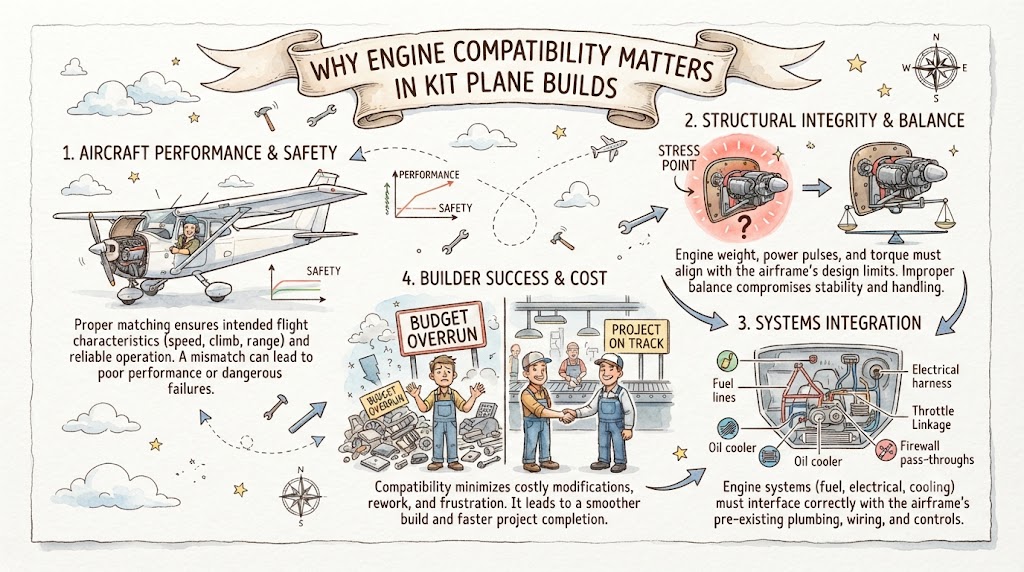
Engine compatibility goes beyond simply fitting an engine to the airframe. It involves ensuring that the engine works efficiently with the aircraft’s structure, weight distribution, fuel system, cooling system, electrical components, propeller, and overall design. Even a powerful engine can create operational challenges if it is not properly matched to the aircraft.
Understanding Engine Compatibility
Engine compatibility refers to how well an engine integrates with every major system of a kit aircraft. A compatible engine supports the aircraft’s intended performance while working efficiently with supporting components.
Compatibility affects areas such as:
- Aircraft performance
- Weight and balance
- Structural integrity
- Fuel delivery
- Cooling efficiency
- Electrical systems
- Propeller selection
- Flight characteristics
- Maintenance requirements
Choosing an engine should never be based solely on horsepower or price. Instead, builders should evaluate how the engine fits into the complete aircraft design.
Why Engine Compatibility Is So Important
Every component in an aircraft works together as part of a complete system. An incompatible engine can affect not only performance but also handling, reliability, maintenance, and safety.
Proper engine compatibility helps achieve:
- Better climb performance
- Efficient cruise speeds
- Stable handling
- Lower maintenance requirements
- Improved fuel efficiency
- Longer engine life
- Greater flight safety
The goal is to create a balanced aircraft rather than simply installing the most powerful engine available.
Aircraft Performance Depends on Proper Matching
An engine directly influences how the aircraft performs during every phase of flight.
Performance considerations include:
Takeoff Performance
A properly matched engine provides adequate power for safe acceleration and climb without placing unnecessary stress on the aircraft.
Climb Rate
Engine output should support the aircraft’s intended mission while maintaining acceptable climb performance.
Cruise Efficiency
The right engine allows efficient cruise speeds while optimizing fuel consumption.
Fuel Economy
Engines operating within their intended design parameters generally consume fuel more efficiently than oversized or mismatched installations.
Matching engine performance to the aircraft’s mission profile creates a more enjoyable and economical flying experience.
Weight and Balance Are Critical
Every aircraft has carefully designed center-of-gravity limits.
Installing an engine that is significantly heavier or lighter than intended can affect:
- Aircraft stability
- Takeoff performance
- Landing characteristics
- Stall behavior
- Control responsiveness
Additional components such as propellers, batteries, and accessories also influence weight distribution.
Before selecting an engine, builders should carefully evaluate the complete weight-and-balance calculations to ensure the aircraft remains within its designed operating limits.
Engine Mount Compatibility
The engine mount forms the structural connection between the engine and the aircraft.
Proper compatibility ensures:
- Secure engine installation
- Correct alignment
- Vibration control
- Structural strength
- Efficient load distribution
Attempting to modify incompatible engine mounts without proper engineering can compromise aircraft safety and increase maintenance requirements.
Builders should always select engine mounts specifically designed or approved for the chosen airframe and engine combination.
Cooling System Compatibility
Every aircraft engine requires effective cooling to operate safely.
Different engines have different cooling requirements.
Examples include:
- Air-cooled systems
- Liquid-cooled systems
- Oil cooling arrangements
- Cowling airflow management
Poor cooling compatibility may lead to:
- Engine overheating
- Reduced performance
- Premature wear
- Increased maintenance
- Lower reliability
Proper cowling design, airflow management, and cooling component selection are essential parts of successful engine integration.
Fuel System Integration
The fuel system must deliver the correct amount of fuel under every operating condition.
Builders should evaluate:
- Fuel pumps
- Fuel lines
- Fuel filters
- Fuel tank configuration
- Fuel pressure
- Fuel flow requirements
Whether using carbureted or fuel-injected engines, every component must work together reliably.
Poor fuel system compatibility can affect engine performance and increase operational risk.
Electrical System Compatibility
Modern aircraft engines often depend on electrical systems for ignition, monitoring, charging, and avionics.
Builders should ensure compatibility between:
- Alternators
- Batteries
- Ignition systems
- Wiring
- Circuit protection
- Engine monitoring equipment
Electrical systems should provide sufficient power for both engine operation and onboard avionics without overloading the aircraft’s electrical capacity.
Propeller Compatibility
Selecting the correct propeller is just as important as selecting the engine.
The propeller should match:
- Engine power
- RPM range
- Aircraft mission
- Performance objectives
- Aircraft weight
Common options include:
Fixed-Pitch Propellers
Simple, lightweight, and cost-effective.
Constant-Speed Propellers
Offer improved performance by adjusting blade pitch during different phases of flight.
A mismatched propeller may reduce climb performance, cruise efficiency, and overall aircraft handling.
Firewall-Forward Planning
The firewall-forward section includes all components installed between the firewall and the propeller.
Typical components include:
- Engine mount
- Exhaust system
- Cooling system
- Oil cooler
- Fuel system
- Engine controls
- Electrical wiring
- Sensors
- Propeller installation
Planning these systems together helps reduce installation challenges and improves long-term reliability.
Common Engine Choices for Kit Planes
Builders often consider several categories of engines depending on their aircraft design and intended mission.
Common options include:
- Traditional aircraft engines
- Modern experimental aircraft engines
- Lightweight powerplants
- Automotive conversion engines
Each option offers unique advantages and challenges.
The best choice depends on compatibility rather than popularity.
Common Engine Installation Mistakes
Many first-time builders encounter similar challenges.
Common mistakes include:
Selecting an Oversized Engine
More horsepower is not always better. Excessive power can affect weight distribution and aircraft handling.
Ignoring Weight Calculations
Failure to calculate center of gravity may create handling issues during flight.
Poor Cooling Design
Improper airflow management can lead to overheating.
Incompatible Fuel Components
Incorrect fuel pumps or plumbing may affect engine reliability.
Improper Propeller Selection
Using the wrong propeller reduces aircraft efficiency.
Electrical Planning Errors
Insufficient charging capacity may affect engine monitoring and avionics.
Careful planning helps prevent these issues before installation begins.
Choosing the Right Engine
Selecting an engine should involve evaluating the aircraft as a complete system.
Consider:
- Intended mission
- Passenger capacity
- Performance goals
- Fuel consumption
- Reliability
- Parts availability
- Maintenance support
- Installation requirements
- Long-term operating costs
Builders who carefully compare these factors often achieve better long-term ownership experiences.
The Importance of Quality Components
Engine compatibility depends not only on the engine itself but also on the quality of supporting components.
Reliable installations typically include:
- Engine mounts
- Certified-quality hardware
- Proper hoses
- Fuel fittings
- Electrical connectors
- Cooling components
- Engine monitoring systems
Using compatible, high-quality parts reduces maintenance while improving aircraft reliability.
Engine Compatibility Checklist
Before Purchasing an Engine
- Review aircraft manufacturer recommendations.
- Define aircraft mission requirements.
- Compare engine specifications.
- Evaluate maintenance support.
- Confirm parts availability.
Before Installation
- Verify engine mount compatibility.
- Review cooling requirements.
- Confirm fuel system design.
- Plan electrical integration.
- Select compatible propeller.
Before First Engine Start
- Inspect fuel lines.
- Check electrical connections.
- Verify cooling components.
- Confirm oil levels.
- Complete system inspections.
Before First Flight
- Review weight and balance.
- Verify engine monitoring systems.
- Inspect firewall-forward installation.
- Complete ground testing.
- Confirm all maintenance documentation.
Frequently Asked Questions
1. Can any engine be installed in a kit plane?
Not every engine is suitable for every kit aircraft. Compatibility depends on the airframe design, structural limitations, weight, performance requirements, and supporting systems.
2. Why is engine compatibility more important than horsepower?
A well-matched engine provides balanced performance, improved reliability, and safer handling, while excessive horsepower alone may create operational challenges.
3. How does engine weight affect flight?
Engine weight influences the aircraft’s center of gravity, stability, takeoff performance, landing characteristics, and overall handling.
4. What is a firewall-forward package?
A firewall-forward package typically includes the engine installation components located between the aircraft firewall and the propeller, such as mounts, cooling systems, fuel components, and related hardware.
5. Does the propeller need to match the engine?
Yes. Proper propeller selection ensures efficient power transfer, better climb performance, and improved cruise efficiency.
6. Can automotive engines be used?
Some builders use automotive engine conversions in experimental aircraft, but compatibility, engineering, reliability, and maintenance considerations should be carefully evaluated.
7. How important is engine cooling?
Effective cooling is essential for maintaining safe operating temperatures, maximizing engine life, and preventing performance issues.
8. Should I follow the kit manufacturer’s recommendations?
Yes. Manufacturer recommendations provide valuable guidance based on engineering, testing, and operational experience.
9. Can incorrect compatibility increase maintenance?
Yes. Poorly matched components often lead to increased wear, troubleshooting, and more frequent maintenance.
10. What is the biggest mistake first-time builders make?
Many first-time builders focus primarily on engine power rather than evaluating how the engine integrates with the aircraft as a complete system.
Conclusion
Engine compatibility is one of the most important factors in the success of any kit plane build. A properly matched engine contributes to safe flight characteristics, efficient performance, reliable operation, and easier long-term maintenance. From weight and balance to cooling, fuel delivery, electrical integration, and propeller selection, every supporting system must work together as part of a carefully planned aircraft design. By choosing compatible components, following manufacturer recommendations, and investing in quality parts, builders can avoid costly mistakes and create an aircraft that delivers dependable performance for years to come.

